15th Shanghai Urologic Oncology Academic Conference
Editor’s Note: Hosted by the Shanghai Anti-Cancer Association and jointly organized by the Urologic Oncology Committee of the Shanghai Anti-Cancer Association and Fudan University Shanghai Cancer Center, the 15th Shanghai Urologic Oncology Academic Conference was successfully held in Shanghai from December 12 to 14, 2025. Centered on the theme “Precision Integration · Intelligent Leadership,” the conference brought together leading national and international experts to discuss and exchange insights on the most disruptive advances in urologic oncology over the past year.
At this year’s meeting, Professor Yao Zhu of Fudan University Shanghai Cancer Center delivered a keynote lecture entitled “A 2025 Update on Radioligand Therapy for Prostate Cancer.” In an exclusive interview with Oncology Frontier – Urology Frontier, Professor Zhu further elaborated on recent research progress in radioligand therapy (RLT) and shared his perspectives on its future clinical impact.
01 | Oncology Frontier: What were the most important research advances in prostate cancer radioligand therapy over the past year? How will studies such as PSMAddition influence clinical practice?
Professor Yao Zhu: In the field of prostate cancer radioligand therapy—particularly PSMA-targeted radionuclide therapy—two landmark studies were reported over the past year: the UpFrontPSMA trial and the PSMAddition trial.
The PSMAddition study was a large-scale, randomized phase III clinical trial notable for both its scope and depth. It evaluated the efficacy and safety of ^177Lu-PSMA-617 combined with standard of care (SoC) versus SoC alone in patients with PSMA-positive metastatic hormone-sensitive prostate cancer (mHSPC). The results demonstrated a significant improvement in radiographic progression-free survival (rPFS) with early use of ^177Lu-PSMA-617 (NR vs. 29.7 months; HR 0.72; 95% CI: 0.58–0.90). These findings provide strong evidence supporting the earlier integration of PSMA-targeted radionuclide therapy, specifically at the mHSPC stage, to achieve superior disease control.
The phase II UpFrontPSMA trial adopted a distinct treatment strategy. Rather than administering chemotherapy concurrently with PSMA-targeted therapy, patients in the experimental arm received two cycles of ^177Lu-PSMA-617 upfront, followed six weeks later by docetaxel chemotherapy, while the control group received docetaxel alone. The results showed that 41% of patients in the experimental arm achieved undetectable PSA levels at 48 weeks, compared with only 16% in the control group. Both PSA progression-free survival and castration-resistant–free survival were significantly improved in the experimental group. These findings suggest that upfront PSMA-targeted therapy can effectively suppress tumor activity and provide improved disease control in a subset of patients.
Taken together, these two studies convey a consistent message: moving PSMA-targeted radioligand therapy earlier in the disease course—into the mHSPC setting—can deliver meaningful clinical benefit. They offer new perspectives that may reshape existing treatment paradigms and allow more patients to benefit from PSMA-targeted radionuclide therapy.
However, important questions remain unanswered. For example, should PSMA-targeted radionuclide therapy be preferentially combined with novel hormonal therapies (NHTs) or with chemotherapy? Is this approach suitable for all patients, or does it confer greater benefit in those with high metastatic burden? These unresolved issues represent both challenges and opportunities. For patients, an expanded range of treatment options increases the likelihood of effective disease control; for clinicians, it underscores the need for further clinical trials and refined analyses to identify the patients most likely to benefit from early PSMA-targeted therapy, thereby enabling truly individualized treatment strategies.
02 | Oncology Frontier: ^177Lu-PSMA therapy has been approved in China. How should clinicians select appropriate patients and manage safety in real-world practice?
Professor Yao Zhu: We are genuinely encouraged that prostate cancer patients in China now have access to this important therapeutic option. In the past, many patients seeking radionuclide therapy had to travel overseas, which required substantial time, effort, and financial resources. The domestic approval of ^177Lu-PSMA therapy marks a significant milestone, and we look forward to observing its performance in real-world clinical practice.
As demonstrated in studies such as PSMAddition and UpFrontPSMA, treatment strategies were carefully designed by multidisciplinary teams based on individual patient characteristics. In the Chinese clinical setting, our efforts should focus on two key areas.
First, multidisciplinary collaboration is essential. Prostate cancer management involves multiple specialties, including urology, medical oncology, radiology, and nuclear medicine. Establishing a well-coordinated multidisciplinary team (MDT) enables comprehensive evaluation and individualized treatment planning, ensuring that ^177Lu-PSMA therapy is optimally integrated with other modalities to maximize efficacy while preserving quality of life.
Second, treatment protocols must be optimized for real-world application. While clinical trials follow strict inclusion criteria and standardized procedures, patients encountered in daily practice are far more heterogeneous. Clinicians must therefore adapt trial-based evidence to real-world conditions, carefully selecting suitable candidates based on age, performance status, tumor burden, and prior therapies, while closely monitoring treatment-related toxicities and ensuring timely intervention to maintain safety.
03 | Oncology Frontier: Looking ahead, what are the prospects for combining RLT with chemotherapy or NHT? Do antibody–drug conjugates (ADCs) have a role in prostate cancer?
Professor Yao Zhu: In recent years, the therapeutic landscape of prostate cancer has evolved rapidly. Earlier, androgen receptor pathway inhibitors (ARPIs) significantly expanded treatment options, and more recently, radionuclide therapy has further enriched our therapeutic armamentarium. Looking forward, the next truly transformative advance may depend less on a single “breakthrough drug” and more on precision patient selection and rational treatment combinations.
At present, it is increasingly difficult for any single agent to achieve optimal outcomes on its own. Most meaningful clinical successes now arise from combination strategies or precision medicine approaches. Combination therapies exploit complementary mechanisms of action to enhance antitumor activity, while precision medicine focuses on matching therapies to specific biological features of the tumor or patient.
We anticipate that advances in genomic profiling and molecular imaging will allow us to better identify patients who respond poorly to existing effective treatments. For these patients, novel strategies—such as RLT combined with chemotherapy or NHT—may offer synergistic benefits and improved survival outcomes. Similarly, although antibody–drug conjugates (ADCs) have already transformed the management of urothelial carcinoma and other solid tumors, their role in prostate cancer remains an area of active investigation. Determining the optimal combinations and identifying the patients most likely to benefit will require further well-designed clinical studies.

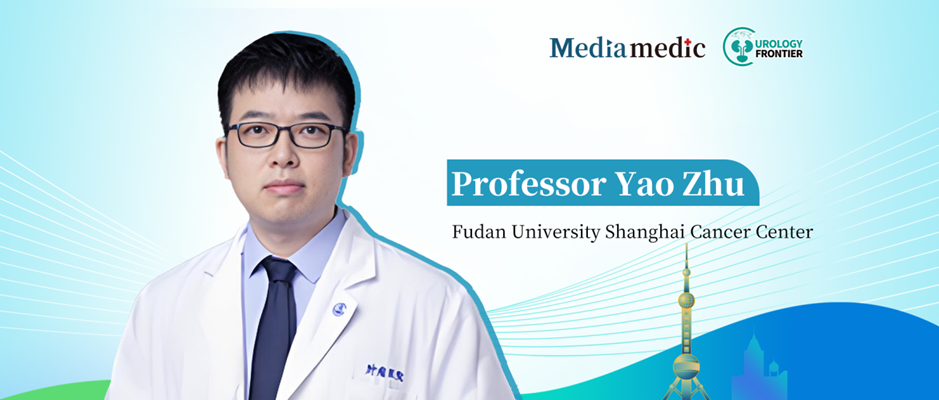
Professor Yao Zhu Fudan University Shanghai Cancer Center