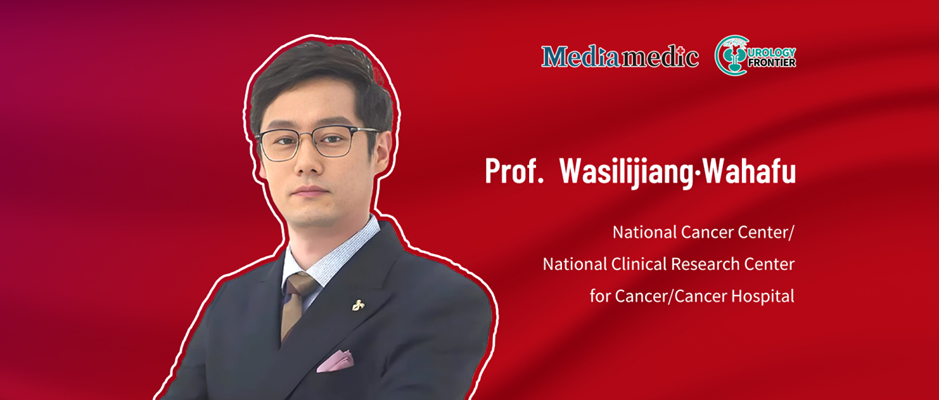
Editor’s Note: Advanced urothelial carcinoma is a highly aggressive malignancy associated with poor prognosis, posing a serious threat to patient survival and quality of life. In recent years, continuous breakthroughs in targeted therapy combined with immunotherapy have significantly extended survival in this disease setting. At the West China Urological Oncology Tianfu Academic Conference, Urology Frontier invited Professor Wasilijiang·Wahafu from National Cancer Center/National Clinical Research Center for Cancer/Cancer Hospital, to share insights on the clinical impact of targeted–immunotherapy combinations in advanced urothelial carcinoma, the role of multidisciplinary team (MDT) management, and future directions in the field.
01 Urology Frontier: In recent years, antibody–drug conjugates combined with immunotherapy have markedly improved survival in advanced urothelial carcinoma. How do you view the specific impact of these targeted–immunotherapy strategies on clinical practice in China?
Professor Wasilijiang·Wahafu : The treatment of advanced urothelial carcinoma has indeed entered a new era. At the ESMO Congress in October 2023, the EV-302 study established enfortumab vedotin plus pembrolizumab (EV+P) as a new first-line standard for locally advanced or metastatic urothelial carcinoma, and this regimen was approved for clinical use in China in 2024. Shortly thereafter, the RC48-C016 study from China, presented at ESMO, demonstrated encouraging efficacy with disitamab vedotin combined with toripalimab (DV+T), which is also expected to be incorporated into first-line guideline recommendations. In parallel, studies of immunotherapy combined with chemotherapy have further expanded clinical benefits for advanced-stage patients.
Compared with the situation just two years ago, when platinum-based regimens such as GC chemotherapy dominated treatment, targeted–immunotherapy combinations now provide several clear advantages. First, these regimens are no longer constrained by cisplatin eligibility, making them effective options even for patients with renal dysfunction or significant comorbidities. Second, both EV+P and DV+T have demonstrated markedly superior efficacy compared with traditional chemotherapy, effectively doubling response rates and allowing some patients who were previously considered candidates only for palliative care to receive more proactive treatment. EV+P offers broad applicability, while DV+T, targeting HER2, opens a new chapter in precision medicine by enabling biomarker-driven patient selection.
Finally, the use of these novel regimens places higher demands on MDT collaboration. Whether with EV+P or DV+T, close coordination among surgery, medical oncology, and other specialties is essential to manage adverse events effectively while maximizing survival benefits and preserving quality of life.
02 Urology Frontier: As you mentioned, multidisciplinary collaboration is becoming increasingly important in urothelial carcinoma. How can MDT resources be integrated to further optimize patient quality of life?
Professor Wasilijiang·Wahafu : Multidisciplinary collaboration lies at the core of modern oncology care. From initial diagnosis through the entire treatment journey, coordinated input from multiple specialties is indispensable. In advanced urothelial carcinoma, urologists may address issues such as obstruction or bleeding at diagnosis, while medical oncologists design and manage systemic therapy. Radiotherapy can be used to control oligometastatic lesions, and imaging and pathology teams are essential for accurate response assessment and biomarker-guided treatment selection, such as identifying HER2 expression.
As treatment continues or regimens are adjusted, patients may develop adverse events or complications that require support from other specialties. Pulmonologists may assist with pneumonia, gastroenterologists with diarrhea, and dermatologists with cutaneous toxicities. Nutritionists and psychologists also play vital roles, helping patients cope physically and emotionally and improving adherence to therapy.
When disease progresses further, MDT discussions become even more important for planning subsequent treatment strategies. If the disease enters an end-stage phase with limited therapeutic options, care should increasingly focus on quality of life, incorporating pain control, psychological support, and palliative care. Through comprehensive, multi-level collaboration, the ultimate goal is to maximize patient well-being throughout the disease course.
03 Urology Frontier: Looking ahead in urothelial carcinoma, which areas deserve further exploration, such as biomarker development or the use of ADCs in earlier disease stages?
Professor Wasilijiang·Wahafu: The success of targeted–immunotherapy combinations in advanced disease has opened new avenues for research. Biomarkers are playing an increasingly important role. While earlier immunotherapy strategies relied heavily on PD-L1 expression, a broader range of factors, including tumor burden and features of the immune microenvironment, are now being considered. The clinical introduction of ADCs has further expanded this perspective, with enfortumab vedotin targeting Nectin-4 and disitamab vedotin targeting HER2, thereby accelerating the development of personalized treatment approaches.
However, challenges remain. Some patients develop resistance either early or later in treatment, underscoring the need to better understand resistance mechanisms and optimize subsequent therapy choices. With longer treatment durations and more complex regimens, effective management of adverse events has become increasingly critical. In cases of oligometastatic disease, the role of local therapies such as radiotherapy also requires careful MDT deliberation.
Further optimization of treatment strategies is another key direction, including combinations of chemotherapy with immunotherapy, different targeted–immunotherapy pairings, and even dual-target approaches. Sequencing strategies also warrant attention. Although traditional GC chemotherapy may appear less effective than newer combinations, it still retains clinical value in certain contexts. Rational sequencing of available therapies remains essential for maximizing overall outcomes. In the coming years, continued advances in precision treatment are expected not only to extend survival in advanced urothelial carcinoma but also to meaningfully improve patients’ quality of life.
Professor Profile
Wasilijiang·Wahafu , MD, PhD National Cancer Center/National Clinical Research Center for Cancer/Cancer Hospital