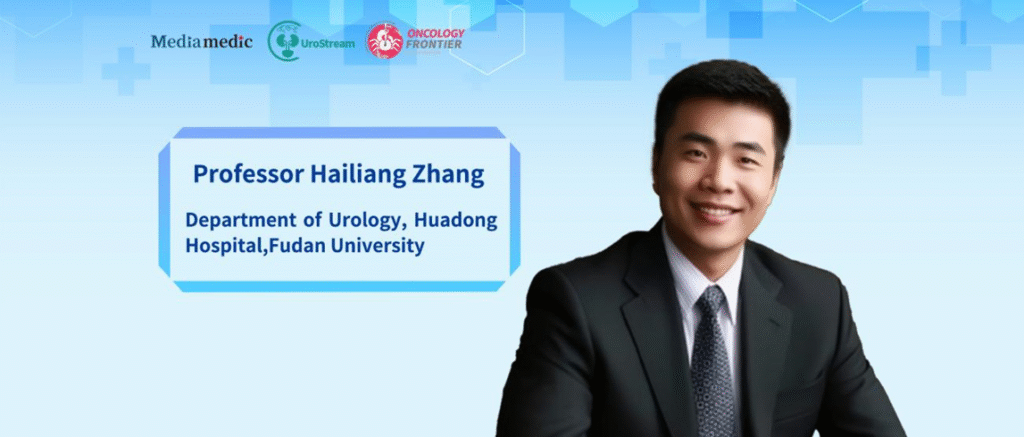
Recently, the Beijing Academic Exchange Conference for Young Physicians in Urologic Oncology was successfully held in Beijing. The meeting focused on cutting-edge topics in the diagnosis and treatment of urologic malignancies, aiming to establish a high-level academic exchange platform and to promote innovation in clinical thinking and standardized practice among young physicians.At the meeting, invited by Professor Xinan Sheng, Hailiang Zhang from Huadong Hospital affiliated with Fudan University delivered a comprehensive interpretation of the 2026 NCCN Clinical Practice Guidelines in Oncology: Kidney Cancer (Version 1). Professor Zhang not only analyzed key updates in imaging assessment, the redefined role of radiotherapy, perioperative management, and systemic treatment for advanced disease, but also provided cross-comparisons with real-world evidence and the Chinese CSCO guidelines.
Based on Professor Zhang’s presentation, this article systematically summarizes the core updates of the new guideline for the benefit of readers.
Imaging Assessment: The Re-Emerging Value of FDG-PET/CT in Special Subtypes and Bone Metastases
In routine kidney cancer management, FDG-PET/CT (fluorodeoxyglucose positron emission tomography/computed tomography) has not traditionally been recommended as a first-line imaging modality for all patients. However, in the 2026 NCCN Guidelines, its indications have been clarified and meaningfully strengthened.
Professor Zhang pointed out that the updated guideline explicitly recommends whole-body FDG-PET in specific clinical scenarios for diagnosis and follow-up.
First, for two highly aggressive non–clear cell renal carcinoma subtypes—fumarate hydratase (FH)–deficient renal cell carcinoma and succinate dehydrogenase subunit B (SDHB)–deficient renal cell carcinoma—the guideline clearly recommends FDG-PET as an important tool for both preoperative evaluation and postoperative surveillance. These tumors are metabolically active, and PET-CT is more sensitive in detecting disease changes.
Second, for renal cancer patients with bone-only metastases and no measurable soft-tissue lesions, FDG-PET has been shown to outperform traditional 99mTc-MDP bone scintigraphy. Professor Zhang emphasized that FDG-PET demonstrates superior sensitivity and accuracy compared with bone scans. This update reflects the guideline’s emphasis on precision imaging, enabling earlier detection of occult metastases and more accurate treatment planning.
Stereotactic Body Radiotherapy (SBRT):
From an “Alternative Option” to a “Preferred Strategy”**
One of the most striking changes in the updated guideline is the substantial elevation of SBRT in the treatment paradigm for kidney cancer.
Professor Zhang noted that in the 2025 NCCN Guidelines, SBRT was primarily listed as an alternative option for limited scenarios such as brain metastases, bone metastases, or oligometastatic/oligoprogressive disease, and it was not explicitly recommended for localized kidney cancer. In contrast, the 2026 Guidelines establish SBRT as an important modality for localized disease through stage-specific recommendations.
SBRT recommendations by stage include:
- T1a/T1b disease: Category 2A recommendation for patients who are poor candidates for surgery or percutaneous ablation, or in whom these approaches are ineffective.
- T2 disease: Category 2B recommendation.
- T3 disease: Category 3 recommendation for patients with significant comorbidities who are unable to tolerate surgery.
The guideline also provides detailed technical guidance. For tumors <10 cm in T1 or T2a disease, SBRT may be considered. For tumors >7 cm, caution is advised due to limited supporting data. When tumors are adjacent to bowel structures, standard SBRT carries higher risk; if treatment is unavoidable, five-fraction regimens or every-other-day schedules are recommended to reduce gastrointestinal toxicity. For small tumors ≤4 cm, single-fraction high-dose SBRT may be used.
In terms of dosimetry, the guideline recommends a biologically effective dose (BED) ≥80 Gy to ensure adequate local control. Typical regimens include single-fraction doses of 25–26 Gy, 48 Gy in three fractions, or 40–50 Gy in five fractions, with per-fraction doses generally ≥10 Gy.
Professor Zhang cited a meta-analysis demonstrating excellent local control rates with SBRT in kidney cancer, typically 90%–100%. Even in highly complex cases—such as tumors with high RENAL scores, solitary kidney tumors, or tumors with inferior vena cava thrombus—SBRT achieved effective local control. This update marks a major rise of radiotherapy within the comprehensive management of kidney cancer.
Perioperative Management:
Clarifying Lymph Node Dissection and Exploring Neoadjuvant Therapy**
Regarding lymph node dissection, an issue of particular interest to surgeons, the 2026 Guidelines do not introduce new high-level evidence but provide more standardized definitions of dissection fields.
Professor Zhang explained that the guideline clearly outlines lymph node dissection regions, largely consistent with retroperitoneal lymph node dissection (RPLND):
- Left-sided tumors: Para-aortic, pre-aortic, retro-aortic, common iliac, and renal hilar nodes.
- Right-sided tumors: Paracaval, precaval, retrocaval, common iliac, and renal hilar nodes.
Importantly, neoadjuvant therapy for localized kidney cancer is explicitly acknowledged for the first time in the guideline, representing a meaningful clinical advance. The guideline suggests that for clear cell RCC with T3/T4 disease or solitary kidney, neoadjuvant therapy may be considered to achieve tumor downsizing.
Professor Zhang highlighted the PADRES trial, which evaluated axitinib as neoadjuvant therapy for complex renal tumors. Results showed an overall partial response rate of 33.3%, a disease control rate of 66.6%, a clinical downstaging rate of 33%, and successful nephron-sparing surgery in 74% of patients. These findings provide valuable support for a “neoadjuvant plus nephron-sparing” strategy in high-risk, technically challenging cases.
First-Line Therapy in Advanced Disease:
Upgraded Evidence for Dual Immunotherapy in Low-Risk Patients**
In first-line treatment of advanced kidney cancer, a key update concerns nivolumab plus ipilimumab. Professor Zhang explained that based on 9.3-year follow-up data from CheckMate 214, the recommendation level for dual immunotherapy in low-risk patients has been upgraded from Category 2A to Category 1.
This change is driven by durable long-term survival benefits. In the ITT population, nivolumab plus ipilimumab demonstrated a significant survival advantage over sunitinib (9-year OS rate: 31% vs 20%). In risk-stratified analyses, although low-risk patients initially showed better survival with sunitinib, the immunotherapy arm exhibited a pronounced “long-tail effect”, eventually surpassing sunitinib. At year 9, OS in low-risk patients reached 35% with dual immunotherapy versus 22% with sunitinib.
Professor Zhang further discussed the durability of response. At 8 years, 48% of patients in the dual-immunotherapy arm maintained ongoing responses. By contrast, while KEYNOTE-426 (pembrolizumab plus axitinib) demonstrated strong overall results, its long-term survival curve in low-risk patients appeared less robust. This suggests that for low-risk patients pursuing long-term survival, dual immunotherapy may offer greater strategic value.
Summary and Outlook
In closing, Professor Zhang addressed gene testing in non–clear cell RCC and post-SBRT surveillance. The guideline strongly recommends tumor genomic testing in non–clear cell RCC to identify clinical trial opportunities or actionable targets. For SBRT follow-up, a structured schedule is recommended: every 3 months in year 1, every 6 months in year 2, every 9 months in years 3–4, and annually thereafter, including chest/abdominal CT and renal function assessment.
Professor Zhang concluded that although the 2026 NCCN Kidney Cancer Guideline—being a first version—may appear less frequently updated than prior editions and differs from the rapidly iterating CSCO guidelines, its recognition of SBRT, refined PET-CT indications, introduction of neoadjuvant concepts, and reclassification of immunotherapy evidence all demonstrate a clear shift toward real-world clinical needs.
Through in-depth interpretation of international guidelines, the Beijing Academic Exchange Conference not only provided young physicians with standardized clinical benchmarks, but also stimulated deeper reflection on kidney cancer practice in China. As strategies such as SBRT and neoadjuvant therapy continue to mature with accumulating evidence, comprehensive kidney cancer management will move steadily toward greater precision and longer survival.

Professor Hailiang Zhang