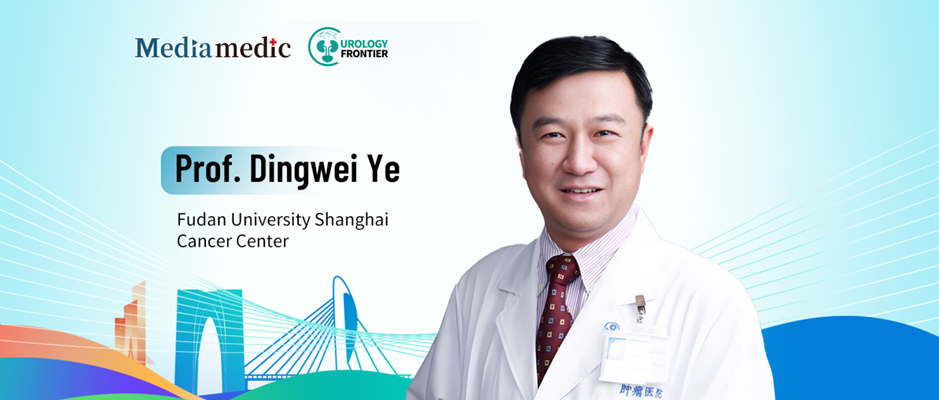
Editor’s Note: With sails raised and talents converging, the 15th Shanghai Urologic Oncology Academic Conference, hosted by the Shanghai Anti-Cancer Association and jointly organized by the Urologic Oncology Committee of the Shanghai Anti-Cancer Association and Fudan University Shanghai Cancer Center, was grandly held in Shanghai from December 12 to 14, 2025. Centered on the theme “Precision Integration · Intelligent Leadership,” the conference brought together renowned experts and scholars from China and abroad to engage in in-depth discussions and exchanges, offering comprehensive analyses of paradigm-shifting advances in urologic oncology over the past year. UroStream invited Professor Dingwei Ye, Chair of the Conference and from Fudan University Shanghai Cancer Center, to share the key highlights of this year’s meeting as well as the major research achievements of the Fudan Urologic Oncology team over the past year.Precision Integration · Intelligent Leadership The 15th Shanghai Urologic Oncology Academic Conference Continues Its Distinguished Legacy
UroStream
Q: The Shanghai Urologic Oncology Academic Conference has now reached its 15th edition. Could you introduce the development of this conference over the years and highlight the key features of this year’s meeting?
Professor Dingwei Ye: Time flies, and this year marks the fifteenth milestone of the Shanghai Urologic Oncology Academic Conference. Rooted in Shanghai, oriented toward the nation, and connected to the world, the conference has, over fifteen years of continuous effort and accumulation, developed into a well-recognized academic brand. It has become an important platform for academic exchange among urologic oncology professionals both in China and internationally. This year’s conference once again featured rich content and numerous highlights.
First, we invited many leading international speakers. These experts are globally renowned principal investigators who have led large-scale phase III clinical trials published in top-tier medical journals and have directly influenced international guidelines in urologic oncology. Their participation ensured a meeting of truly international caliber.
Second, the conference brought together experts from four authoritative national academic organizations, including the Chinese Urological Association, the Chinese Urologists Association, the Chinese Anti-Cancer Association, and the Chinese Society of Clinical Oncology. Top experts in urology and urologic oncology across China gathered at this meeting to jointly contribute ideas and strategies for standardized diagnosis, treatment, and discipline development in urologic oncology.
Third, beyond innovations in urologic surgery, the conference featured multiple dedicated sessions on multidisciplinary integrated care and standardized management of urologic tumors. These sessions covered both common and rare urologic malignancies such as renal cancer, bladder cancer, and prostate cancer. They addressed cutting-edge developments in innovative drug research for advanced disease, as well as perioperative comprehensive treatment strategies for localized and locally advanced tumors. The program spanned the entire disease continuum, from early cancer screening and novel minimally invasive surgical techniques, to neoadjuvant and adjuvant therapies for early-stage disease, and salvage treatments for advanced disease. In doing so, it provided valuable insights into the full-spectrum management of urologic cancers, encompassing prevention, screening, diagnosis, treatment, and rehabilitation.
To further promote the international dissemination of original Chinese research, we also invited editors-in-chief or deputy editors from leading journals such as Annals of Oncology (ESMO), Journal of Clinical Oncology (ASCO), and European Urology (EAU). Through the “Editor Face-to-Face” sessions, Chinese scholars were given a unique opportunity to engage directly with international journal editors and showcase their work on the global academic stage.
Summit Encounters · Walking Forward Together Driving Advances in Urologic Oncology Through the “Fudan Strength”
UroStream
Q: As the year draws to a close, could you share the major clinical research achievements your urologic oncology team has accomplished over the past year?
Professor Dingwei Ye: Over the past year, our team has achieved a number of highly encouraging milestones. In the field of prostate cancer, our clinical research successfully led to the domestic approval of deutenzalutamide (HC-1119), filling a critical gap in China for deuterated androgen receptor signaling inhibitors. This approval provides a new second-line treatment option for patients with metastatic castration-resistant prostate cancer. To achieve this, the Fudan team led a nationwide, multicenter phase III trial, the results of which were presented on the ASCO international stage, and ultimately gained approval from the National Medical Products Administration in 2025. This accomplishment represents the collective wisdom and dedication of investigators from more than fifty centers across China and stands as a testament to collaborative effort and shared commitment.
Equally notable progress was made in urothelial carcinoma research. Our team conducted in-depth studies on antibody–drug conjugates, including a bispecific ADC targeting EGFR and HER3, as well as a Trop-2 ADC incorporating a novel topoisomerase I inhibitor payload. The results of these studies were published in internationally renowned journals such as Journal of Clinical Oncology and Annals of Oncology. These findings offer new therapeutic concepts and directions for the treatment of urothelial carcinoma, with the potential to improve patient outcomes and quality of life.
In renal cell carcinoma, after extensive foundational research and clinical exploration, we led a second-line treatment strategy combining quinitinib fumarate with the PD-1 inhibitor sintilimab. This combination achieved positive results in the nationwide multicenter phase II/III FRUSICA-2 study, which involved principal investigators from seventy centers. Through close collaboration and perseverance, the results of FRUSICA-2 were presented at the 2025 ESMO Congress. This combination therapy is now on the verge of receiving approval from the Chinese NMPA.
Overall, the past year has been exceptionally rewarding for our team. Across prostate cancer, urothelial carcinoma, and renal cell carcinoma, we have made meaningful advances in clinical research. These achievements reflect the “Fudan wisdom” and “Fudan strength” contributing to innovation and progress in the treatment of urologic malignancies in China.

Professor Dingwei Ye