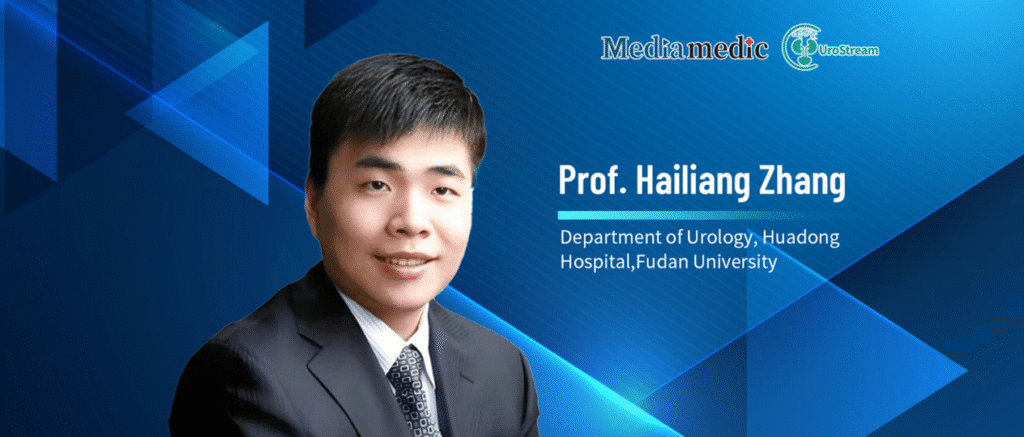
Editor’s Note: In the era of precision medicine for prostate cancer, individualized clinical decision-making has become a central focus of daily practice. At a recent academic conference on urologic oncology, Professor Hailiang Zhang from Huadong Hospital affiliated with Fudan University shared his clinical perspectives on novel hormonal therapy (NHT) in metastatic prostate cancer. He emphasized that, based on solid evidence from randomized clinical trials, NHT combined with androgen deprivation therapy (ADT) has become the standard first-line treatment for both metastatic hormone-sensitive prostate cancer (mHSPC) and metastatic castration-resistant prostate cancer (mCRPC). Nevertheless, optimal treatment selection requires an integrated assessment of tumor burden, genomic characteristics, patient age, and comorbidities, enabling a truly “tailor-made” approach.With improving survival outcomes, quality-of-life management has gained increasing importance. Professor Zhang highlighted differentiated strategies for younger and older patients—focusing on functional preservation in younger individuals and cardiovascular and skeletal risk management in elderly patients. Approaches such as intermittent therapy may help balance treatment efficacy with long-term quality of life. These insights provide valuable clinical guidance for advancing refined, comprehensive prostate cancer management.
01
Oncology Frontier – Urology Frontier
Question: For patients with mHSPC and mCRPC, multiple NHT-based combination regimens are currently available. How do you make individualized treatment decisions based on evidence-based medicine and patient-specific factors?
Professor Hailiang Zhang: In both metastatic hormone-sensitive prostate cancer (mHSPC) and metastatic castration-resistant prostate cancer (mCRPC), NHT combined with androgen deprivation therapy (ADT) has been established as the standard first-line treatment. This approach is consistently endorsed by both domestic and international clinical guidelines. Landmark trials such as LATITUDE and STAMPEDE have demonstrated significant survival benefits in the hormone-sensitive setting, while studies including TALAPRO and PRESERVE have shown favorable efficacy in the castration-resistant stage.
In clinical practice, treatment selection should adhere to three fundamental principles: robust evidence from clinical trials, approved drug indications, and guideline recommendations. Building on this foundation, a comprehensive patient assessment is essential to achieve individualized therapy. Key factors include tumor burden, Gleason score, performance status, and genomic profiling results, such as homologous recombination repair (HRR) mutations. Importantly, patients must be evaluated holistically, with careful consideration of comorbidities, treatment tolerance, and potential drug–drug interactions.
Among the many variables influencing clinical decision-making, tumor burden remains one of the most practical and actionable stratification tools. Patients with high tumor burden or visceral metastases generally require more intensive treatment strategies, such as NHT combined with chemotherapy. For elderly patients or those with multiple comorbidities, we are actively exploring more objective and scientific evaluation methods, including the use of frailty indices to assess biological rather than chronological age. This approach allows for a more accurate estimation of treatment tolerance and helps prevent patients from being denied optimal therapy solely because of advanced age.
Looking ahead, with continued advances in artificial intelligence and related technologies, individualized treatment decision-making is expected to become increasingly precise, structured, and systematic.
02
Oncology Frontier – Urology Frontier
Question: As patient survival continues to improve, quality-of-life management has become increasingly important. Could you share your experience in managing NHT-related adverse effects across different disease stages and age groups?
Professor Hailiang Zhang: Effective management of NHT-related adverse effects is a cornerstone of sustained treatment and improved quality of life. It is directly linked to treatment adherence and overall therapeutic outcomes. Taking abiraterone as an example, common adverse effects include hypertension, electrolyte disturbances, and adrenal dysfunction, all of which require systematic and standardized monitoring and management.
In daily clinical practice, patient education is indispensable. Physicians should avoid the misconception that prescribing medication alone completes the treatment process. Instead, patients should be fully informed about potential adverse effects, necessary monitoring, and the importance of active cooperation during treatment. Such education enhances patient engagement, improves adherence, and ultimately optimizes treatment outcomes.
Younger patients, particularly those under 65 years of age, are often more concerned about the impact of ADT and NHT on physical, sexual, and social functioning. While these therapies are highly effective in controlling androgen-dependent tumor growth, they may lead to adverse effects such as decreased libido and erectile dysfunction. These issues are especially relevant for younger individuals, who are often at the peak of their professional and social lives, where physical and sexual health play a critical role in overall well-being and psychological resilience.
When tumor control is satisfactory and disease remains stable, clinicians may consider alternative strategies—such as modified androgen blockade approaches—based on a comprehensive evaluation of disease status, patient health, treatment expectations, and potential risks. The goal is to maintain oncologic control while minimizing negative effects on sexual function and daily life. Such strategies may also help reduce the impact of treatment on work performance and social activities, thereby preserving self-esteem and social participation.
In elderly patients, management priorities focus primarily on cardiovascular risk reduction and prevention of osteoporosis. In real-world clinical practice, it is not uncommon for elderly patients to experience non-cancer-related mortality due to cardiovascular events rather than disease progression. This highlights the importance of regular cardiovascular risk assessments. For patients with complex or high-risk cardiovascular profiles, timely collaboration with cardiology specialists is strongly recommended.
To mitigate bone loss, elderly patients should be encouraged to supplement with calcium and vitamin D, which are essential for bone health. Regular bone mineral density assessments are also necessary to enable early detection of osteoporosis and timely intervention.
In selected patient populations, treatment adjustments may help balance efficacy with quality of life. Data from the EMBARK study suggest that for patients whose prostate-specific antigen (PSA) levels remain ≤0.2 ng/mL following induction therapy, intermittent treatment may be a viable option, maintaining therapeutic benefit while reducing treatment-related toxicity. Similarly, patients with low-risk disease and slow progression may be considered for lower-intensity or dose-reduced regimens. In contrast, patients with high-risk disease or a short PSA doubling time (e.g., <6 months) should continue sustained, high-intensity therapy to ensure maximal survival benefit.
In conclusion, prostate cancer management must be grounded in evidence-based medicine while being tailored to the individual characteristics of each patient. Through refined clinical strategies—including precise disease assessment, rational treatment selection, and comprehensive supportive care—we aim to achieve the dual goals of prolonged survival and preserved quality of life throughout the entire treatment course.

Professor Hailiang Zhang