2026 Beijing Young Urologic Oncology Physicians Academic Exchange Conference
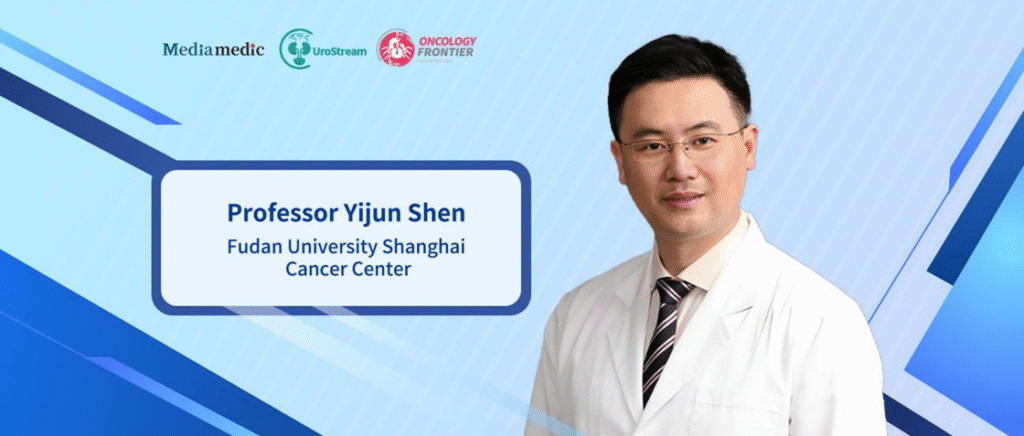
Editor’s Note: From January 10 to 11, 2026, the Beijing Young Urologic Oncology Physicians Academic Exchange Conference was successfully held in Beijing. The meeting brought together leading experts and young physicians in urologic oncology to discuss cutting-edge scientific advances and real-world clinical challenges, with the goal of fostering academic innovation and supporting the development of young clinicians.On this occasion, Oncology Frontier – Urology Frontier invited Professor Yijun Shen from Fudan University Shanghai Cancer Center to provide an in-depth interpretation of the latest bladder-preserving strategies for muscle-invasive bladder cancer (MIBC), addressing current challenges, future directions, and the multidisciplinary team (MDT) decision-making framework developed at his institution.
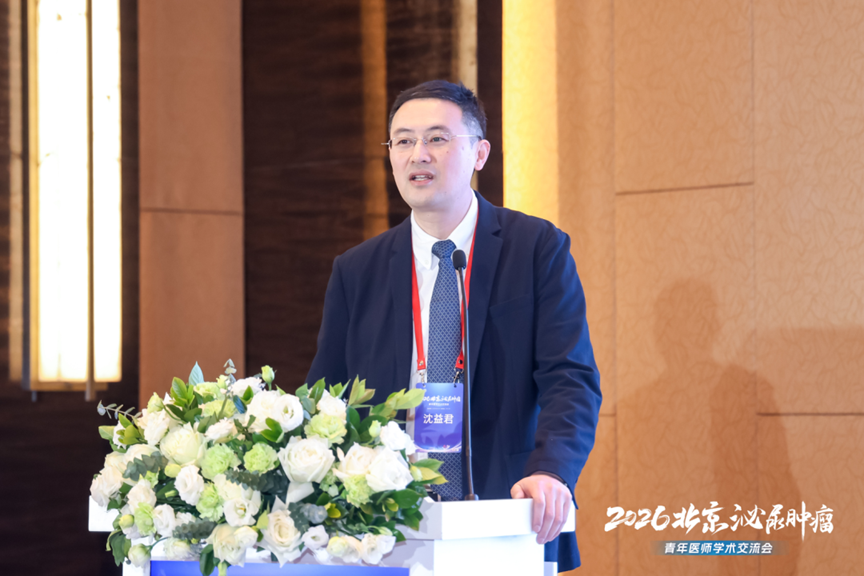
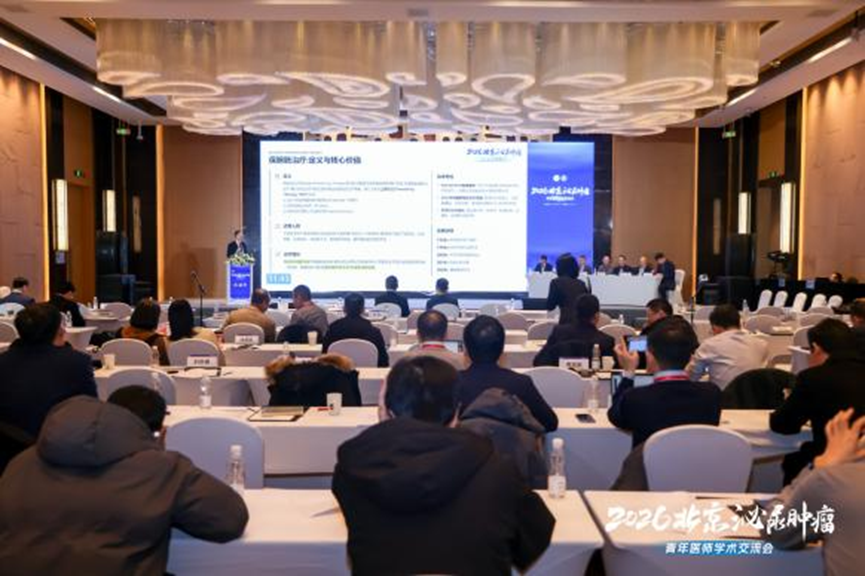
Professor Yijun Shen’s Featured Presentation
01
Oncology Frontier – Urology Frontier
The trimodal therapy (TMT) bladder-preserving approach has been used for many years but remains limited in applicability. What are the major challenges facing bladder-preserving treatment today?
Professor Yijun Shen: Bladder preservation remains a major unmet clinical need in bladder cancer management. Many patients have a strong psychological resistance to radical cystectomy and place high expectations on functional, bladder-sparing approaches. Trimodal therapy (TMT)—combining surgery, radiotherapy, and chemotherapy—has long been regarded as the standard bladder-preserving strategy, with over a decade of clinical exploration both in China and internationally. However, its real-world adoption remains limited.
Radiotherapy can result in long-term toxicities, including radiation cystitis and enteritis. Although the incidence of grade ≥3 adverse events appears relatively low in clinical trials, real-world experience suggests that urinary and gastrointestinal complications may be more pronounced than those associated with radical cystectomy. Notably, 10–20% of patients ultimately require cystectomy not due to tumor recurrence, but because of severe radiation-related complications, such as intractable bleeding. These limitations continue to challenge the traditional TMT model.
In recent years, efforts to improve bladder-preserving strategies have focused on two main directions:
- Optimization of radiotherapy techniques, including hypofractionation and stereotactic radiotherapy, to enhance tumor control while minimizing damage to surrounding organs
- Advances in systemic therapy, as neoadjuvant treatment in advanced urothelial carcinoma and MIBC now achieves pathologic complete response (pCR) rates of 50–70%, prompting reconsideration of whether drug-based approaches could partially or fully replace traditional TMT
These developments introduce new challenges, particularly in identifying ideal candidates and assessing the durability of treatment responses.
Furthermore, all patients undergoing bladder-preserving therapy require intensive longitudinal surveillance, including emerging molecular tools such as urinary tumor DNA (utDNA) and circulating tumor DNA (ctDNA), to enable early detection of recurrence and timely intervention. Ultimately, the future of bladder preservation lies in integrating molecular biomarkers, genetic profiling, and individualized risk assessment to balance long-term bladder retention with robust oncologic control.
02
Oncology Frontier – Urology Frontier
How do you view the role of novel agents such as antibody–drug conjugates (ADCs) in bladder-preserving multimodal therapy? With multiple treatment options available, how should clinicians prioritize strategies across disease stages?
Professor Yijun Shen: ADC–immunotherapy combinations have demonstrated highly encouraging efficacy in both advanced urothelial carcinoma and neoadjuvant MIBC. Whether used before radical cystectomy or in the adjuvant setting, these regimens appear to offer advantages over upfront surgery or conventional neoadjuvant chemotherapy, including higher pCR rates and improved event-free survival (EFS).
As systemic therapies continue to evolve, traditional TMT bladder-preserving protocols may be refined or partially redefined. I remain optimistic, but the critical determinant is accurate patient selection.
Not all patients are appropriate candidates for bladder preservation, yet many express a strong desire to retain their bladder. This places a responsibility on clinicians to balance patient preferences with objective eligibility criteria. Physicians must engage in thorough shared decision-making while leveraging molecular biomarkers, target expression profiling, and clinical risk stratification to identify those most likely to benefit.
Different ADCs target distinct molecular pathways, resulting in variable efficacy across patient subgroups. Future treatment optimization will require an integrated approach combining biomarker-driven selection, tumor staging, and patient tolerability.
03
Oncology Frontier – Urology Frontier
Successful bladder preservation relies on multidisciplinary collaboration. How does your MDT approach personalize treatment decisions for different patients?
Professor Yijun Shen: A multidisciplinary team (MDT) plays a central role in bladder-preserving cancer care. At Fudan University Shanghai Cancer Center, we have established a comprehensive MDT framework, incorporating specialists from urologic surgery, radiation oncology, medical oncology, radiology, nuclear medicine, psycho-oncology, and nursing care.
This collaborative model enables cross-disciplinary integration of expertise, ensuring truly personalized treatment planning. Our MDT holds weekly case conferences every Friday, where patients expressing a desire for bladder preservation undergo real-time, structured evaluation.
MDT input extends across the entire disease course—from initial diagnosis to key milestones during neoadjuvant therapy, post-radiotherapy follow-up, and recurrence management. The team jointly determines:
- Whether radiotherapy strategies should be modified
- When salvage cystectomy should be considered
- How and when to communicate the potential need for cystectomy to patients
Through this highly coordinated MDT process, we have observed improved bladder-preservation success rates and greater patient satisfaction. We hope our experience can serve as a reference model for advancing standardized bladder-preserving care nationwide.
04
Oncology Frontier – Urology Frontier
Bladder preservation is not always definitive, and some patients experience local recurrence or distant metastasis. How should salvage treatment strategies be selected in these scenarios?
Professor Yijun Shen: For MIBC patients, salvage therapy may represent the final opportunity for cure. However, several real-world challenges persist—most notably patient acceptance and optimal timing of intervention.
After traditional chemoradiation-based bladder preservation, muscle-invasive recurrence typically necessitates salvage radical cystectomy. These procedures are often technically complex, and urinary diversion options may be limited to ileal conduit diversion (“urostomy bag”), which can significantly impact quality of life. Therefore, optimizing the timing and modality of salvage intervention remains an important area for further research.
Additionally, in patients who achieve a clinical complete response (cCR) following neoadjuvant therapy but later develop early-stage recurrence (e.g., T1 or non–muscle-invasive disease), retrospective and small prospective studies suggest a risk of progression. Whether earlier salvage cystectomy should be pursued in such cases remains an open clinical question, due to limited high-level evidence.
Overall, salvage treatment decisions must be individualized, and there is an urgent need for more prospective trials to guide management at critical decision points. Our goal is to help patients make well-informed choices at pivotal moments and to ensure they retain the best possible chance for long-term cure.

Professor Yijun Shen