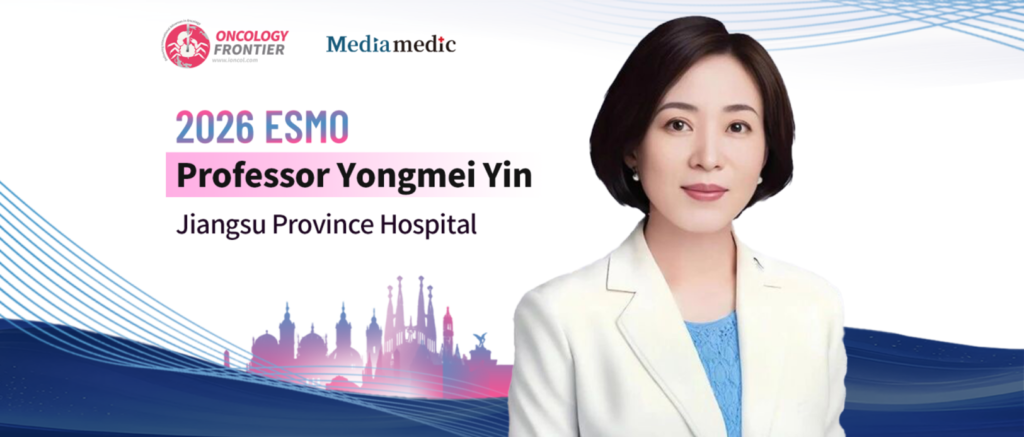
Editor's Note: The 2026 Congress of the European Society for Medical Oncology (ESMO) is fast approaching. Yizekang (lunvenlatug vedotin, BL-B01D1/iza-bren), the world's first approved EGFR×HER3 bispecific antibody–drug conjugate (ADC), has achieved the primary endpoint in PANKU-Breast01, a randomized, controlled Phase III clinical trial in patients with HR+/HER2− advanced breast cancer whose disease progressed after endocrine therapy plus a CDK4/6 inhibitor and who had failed one to two lines of chemotherapy. The study has been selected for a Late-Breaking Abstract (LBA), one of the highest-profile presentation categories at the ESMO Congress. Oncology Frontier invited Professor Yongmei Yin of Jiangsu Province Hospital to discuss unmet clinical needs, analyze the potential clinical value of bispecific ADCs, and share her expert insights.01. Unmet Needs in the Post-CDK4/6 Inhibitor Era
In recent years, treatment options for HR+/HER2− advanced breast cancer have expanded considerably. Nevertheless, clinicians continue to report that available options are insufficient for some patients. What are the most prominent unmet needs in the post-CDK4/6 inhibitor era?
Professor Yongmei Yin: HR+/HER2− breast cancer accounts for approximately 70% of all breast cancer cases, making it the most common molecular subtype. The combination of a CDK4/6 inhibitor and endocrine therapy has significantly improved first-line outcomes—this is indisputable. However, once resistance develops, the patient populations covered by subsequent treatment strategies, their efficacy, and their tolerability often become new challenges.
Current later-line treatment faces four major limitations.
First, targeted treatment strategies rely heavily on biomarkers. Whether involving inhibitors of the PI3K/AKT/mTOR (PAM) pathway or anti-HER2 ADCs, these strategies require biomarker testing to identify eligible patients, limiting the number of patients who can benefit. In real-world clinical practice, a considerable proportion of patients do not carry actionable biomarkers, and access to the relevant testing is also frequently limited.
Second, the benefits of switching and rechallenging with CDK4/6 inhibitors are limited. The postMONARCH study showed that rechallenge with a CDK4/6 inhibitor across treatment lines provided an absolute median progression-free survival (PFS) benefit of only 0.7 months (6.0 vs. 5.3 months). This magnitude of benefit falls short of clinical expectations. Moreover, relatively few studies have demonstrated positive results with CDK4/6 inhibitor rechallenge across treatment lines, leaving its clinical application controversial.
Third, chemotherapy has a persistent efficacy ceiling. In Phase III studies involving patients previously treated with CDK4/6 inhibitors, the median PFS in the investigator-selected chemotherapy arm was only 4.1 months. Furthermore, as patients receive more lines of treatment, tumor sensitivity to subsequent therapies continues to decline, while patients’ ability to tolerate treatment deteriorates in parallel.
Fourth, ADCs have potential resistance-related limitations. For patients previously treated with CDK4/6 inhibitors who are no longer suitable candidates for endocrine therapy, single-target ADCs have already established an important role. However, because these agents target a single antigen, their efficacy may be limited in tumors with heterogeneous antigen expression. They may also be affected by antigen downregulation, which can lead to resistance. Mechanistically, therefore, there remains room for improvement.
The real challenge is not the absence of drugs, but the absence of a clear, evidence-based answer. Switching to another CDK4/6 inhibitor, using a novel oral selective estrogen receptor degrader (SERD), inhibiting the PAM pathway, administering an HDAC inhibitor, or choosing among various ADCs—all offer potential options. However, each depends on specific biomarkers or sensitivity to previous treatments, and high-level evidence to guide the optimal sequencing of these therapies remains limited.
02. What to Watch for in PANKU-Breast01
PANKU-Breast01 is the first Phase III study of a first-in-class EGFR×HER3 bispecific ADC in HR+/HER2− advanced breast cancer. Its results will be presented as a high-profile LBA at this year’s ESMO Congress. Before the data are unveiled, what aspects of the study do you consider most important?
Professor Yongmei Yin: I believe there are four key aspects to watch.
First, the patient population: Does it reflect real-world clinical practice? According to the study registration information, PANKU-Breast01 enrolled patients with unresectable locally advanced or metastatic HR+/HER2− breast cancer who had previously received endocrine therapy and a CDK4/6 inhibitor, and who had received at least one line of chemotherapy in the advanced-disease setting. These are precisely the patients for whom clinical management is particularly challenging, standard precision-treatment options are lacking, and improved efficacy is urgently needed. The study design closely reflects real-world clinical practice, making its results potentially relevant and actionable for clinicians.
Second, tumor shrinkage: Early data have already demonstrated an encouraging signal. In the published Phase Ib study, iza-bren achieved a confirmed objective response rate (ORR) of 37.3% in heavily pretreated patients with HR+/HER2− breast cancer. In a Phase III study in triple-negative breast cancer, the confirmed ORR (cORR) was 51.7%, compared with only 20.5% in the chemotherapy control group. These findings suggest that iza-bren has substantial tumor-shrinking activity.
Third, PFS: Both the magnitude and consistency of benefit matter. In the HR+/HER2− cohort of the Phase Ib study, median PFS was 7.0 months, despite the patients having received multiple prior lines of treatment. In the Phase III study in triple-negative breast cancer, median PFS was 8.5 months with iza-bren versus 3.1 months with chemotherapy—an absolute improvement of 5.4 months and a 71% reduction in the risk of disease progression or death (HR=0.29, P<0.0001). Significant and consistent PFS benefits were observed regardless of HER2 expression level.
For the data being presented at this ESMO Congress, I am particularly interested in whether the treatment benefit remains consistent across HER2 expression levels, the presence or absence of visceral metastases, and different numbers of prior chemotherapy lines. Can the PFS advantage and consistency observed in triple-negative breast cancer also be demonstrated in HR+/HER2− breast cancer? We look forward to the data providing answers.
Fourth, safety: This is critical to whether a drug can be successfully integrated into clinical practice. Safety plays a major role in determining whether an ADC can be used effectively in routine care. Published Phase Ib data show that adverse events associated with iza-bren were primarily hematologic toxicities. The most common treatment-related adverse events (TRAEs) of Grade 3 or higher were neutropenia (55.6%) and anemia (42%). Most related events could be managed with supportive care and dose modifications, and no cases of interstitial lung disease (ILD) were reported during the study.
In clinical practice, established approaches are available for preventing and managing hematologic toxicities. If the incidence of ILD is low, this would also increase clinicians’ confidence in using the drug. We look forward to more comprehensive data on safety and tolerability from the Phase III study.
In summary, my expectations for these results are straightforward: clear baseline characteristics, convincing tumor shrinkage, robust PFS outcomes, and manageable toxicity.
03. The Potential Clinical Impact of a First-in-Class EGFR×HER3 Bispecific ADC
PANKU-Breast01 recently announced positive results, and more detailed data will be disclosed at ESMO. How do you view the prospects of this first-in-class EGFR×HER3 bispecific ADC in later-line treatment for HR+/HER2− advanced breast cancer? What changes might it bring to patients previously treated with endocrine therapy—including CDK4/6 inhibitors—and chemotherapy?
Professor Yongmei Yin: From the perspective of clinical practice, the most urgent need in later-line treatment for HR+/HER2− advanced breast cancer is a new precision-treatment option that improves efficacy and can be tolerated over the long term, offering an alternative to chemotherapy. Bispecific ADCs combine the advantages of multi-targeting and chemotherapy-like cytotoxic activity in a single drug, opening up a new dimension for later-line treatment.
If the findings are ultimately confirmed, I believe the impact will be reflected in two major areas.
First, delaying chemotherapy could improve patients’ quality of life. The success of PANKU-Breast01 could enable these patients to delay or even avoid chemotherapy, achieving effective disease control for a longer period and with better quality of life. Advanced breast cancer remains difficult to cure, and the goals of treatment are to prolong survival and support long-term survival with the disease while preserving quality of life. The significance for patients extends far beyond the numbers: it could help lay the foundation for a return to normal daily life.
Second, it could prompt us to rethink the sequencing and selection of later-line treatments. As treatment options continue to expand, how should we optimize the treatment sequence? Individualized decisions must take into account prior treatment exposure, tumor burden, tumor biology, and patient preferences. The findings from PANKU-Breast01 are likely to influence treatment pathways for HR+/HER2− advanced breast cancer and encourage further consideration of potential guideline updates and changes in clinical decision-making.
Ultimately, in clinical practice, the value of an innovative drug depends on patient access. I hope that innovative therapies with demonstrated efficacy and safety advantages will receive regulatory approval as soon as possible and be included in China’s National Reimbursement Drug List at an early stage. This would meaningfully improve access and affordability, allowing more patients to obtain and afford these treatments.
I look forward to clinicians and innovative pharmaceutical companies working together to advance the development of innovative medicines in China, bring breast cancer diagnosis and treatment to the forefront internationally, and benefit more patients.

Professor Yongmei Yin