

ESMO 2026 Congress Coverage
The phase III INTerpath-001 trial has reported positive interim results at the 2026 European Society for Medical Oncology (ESMO) Congress, opening a new chapter in cancer immunotherapy. In patients with completely resected, high-risk stage IIB–IV melanoma, the individualized neoantigen mRNA therapy intismeran autogene combined with pembrolizumab significantly improved recurrence-free survival (RFS) compared with pembrolizumab alone, reducing the risk of recurrence or death by 42% (hazard ratio [HR] 0.58; P<0.001). Distant metastasis-free survival (DMFS) showed a consistent, significant benefit (HR 0.62; P=0.002).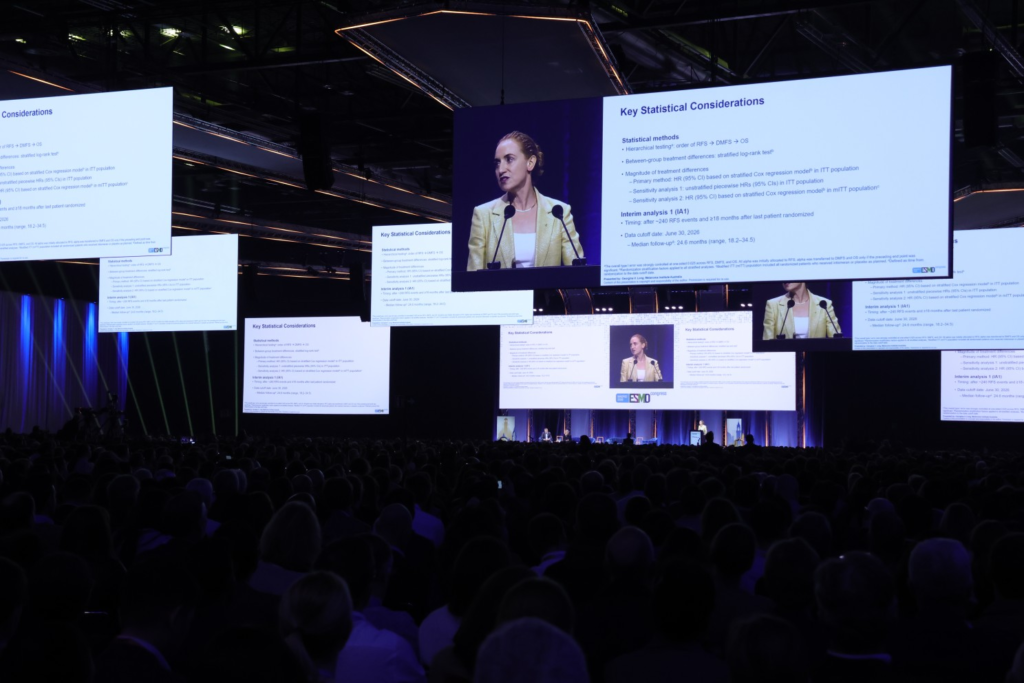

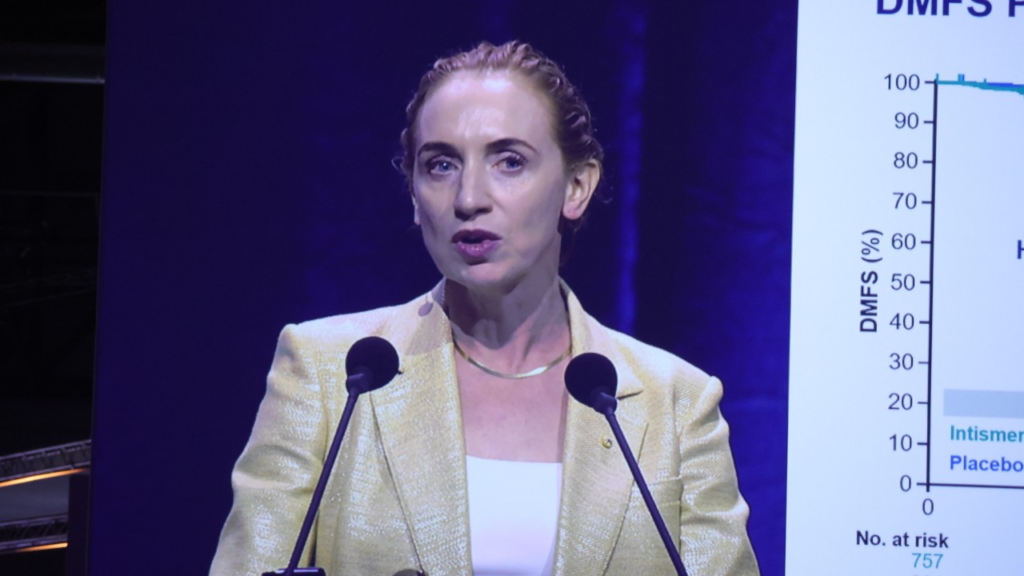
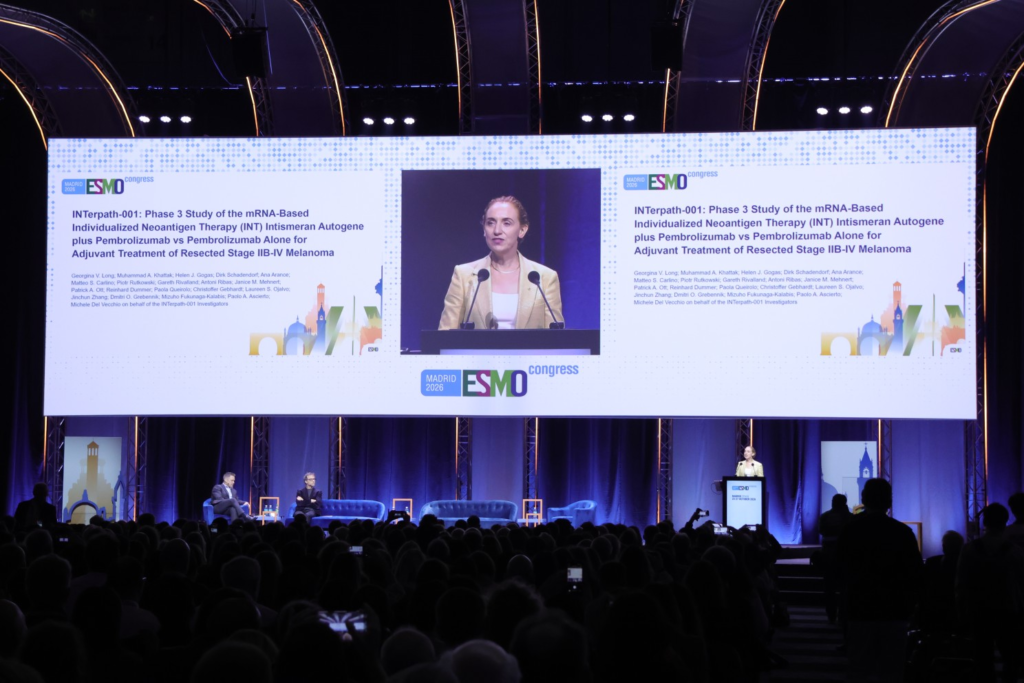
Professor Georgina V. Long of Melanoma Institute Australia presented the findings in the first Presidential Symposium as ESMO 2026 got underway (abstract LBA1). INTerpath-001 is the world’s first phase III trial of an individualized neoantigen cancer vaccine. As the first positive phase III study in therapeutic cancer vaccines, it moves beyond the efficacy ceiling of adjuvant immune checkpoint inhibition and establishes a milestone for individualized neoantigen mRNA therapy in precision immunotherapy for solid tumors.
Study presentation
LBA1 – INTerpath-001: Phase 3 study of the mRNA-based individualized neoantigen therapy (INT) intismeran autogene (intismeran) plus pembrolizumab (pembro) vs pembro alone for adjuvant treatment of resected stage IIB-IV melanoma (MEL) Invited Discussant LBA1
Why a new adjuvant approach is needed
Anti-PD-1 monoclonal antibody monotherapy has become standard adjuvant treatment for melanoma after several large phase III trials demonstrated significant clinical benefit. Yet substantial risk remains: at five years of follow-up, 44% of patients with stage III disease and 33% with stage IIB/C disease had experienced recurrence or death. Several landmark phase III trials have tested the addition of CTLA-4, LAG-3, or TIGIT inhibitors to anti-PD-1 therapy without further improving adjuvant efficacy, creating an urgent need for a new treatment strategy.
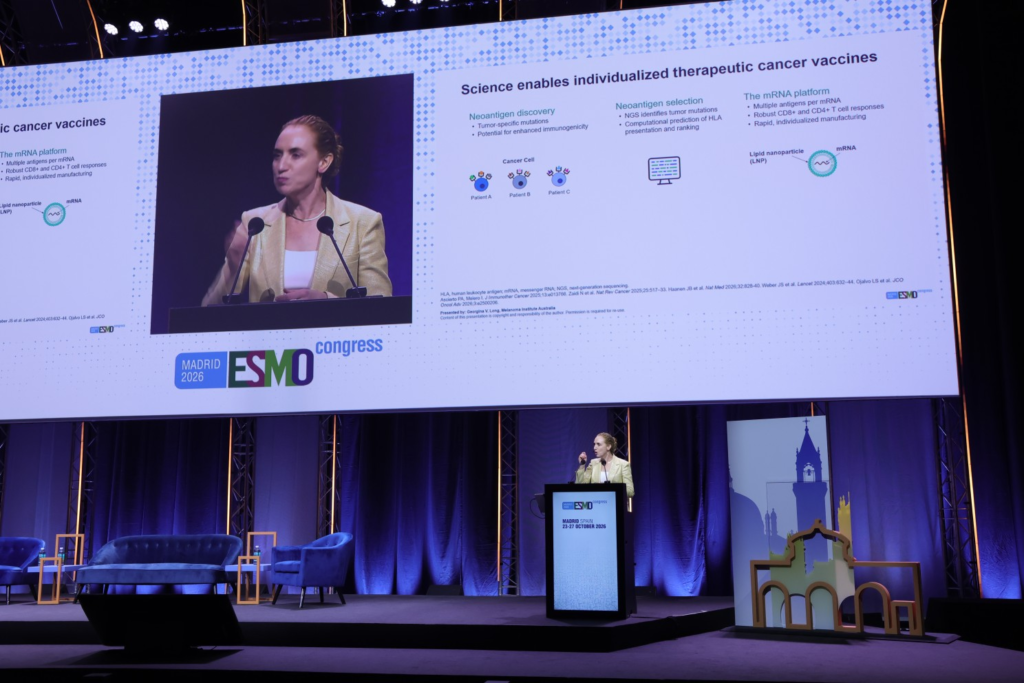
Individualized neoantigen therapy builds on advances in tumor biology and immunology. Neoantigens arise from somatic mutations specific to tumor cells and are highly immunogenic. Next-generation sequencing, together with bioinformatic algorithms that predict human leukocyte antigen (HLA) presentation, allows researchers to efficiently identify and rank the neoantigen epitopes most likely to elicit strong antitumor responses. The mRNA platform can encode up to 34 neoantigens on a single strand, tailored to each patient’s mutation profile and HLA phenotype. The mRNA is packaged in lipid nanoparticles and administered by intramuscular injection.
After administration, intismeran autogene is taken up and translated by antigen-presenting cells. This activates and expands specific T-cell clones, which then migrate into the tumor microenvironment to kill tumor cells. Pembrolizumab relieves immunosuppression mediated by the PD-1 pathway, complementing the de novo antigen-specific immune response induced by the vaccine. Five-year follow-up from the earlier phase IIb trial demonstrated durable clinical benefit with the combination (RFS HR 0.51; DMFS HR 0.41), and the induced antigen-specific T-cell clones were directly associated with remaining recurrence-free. These findings provided the basis for the large, randomized, double-blind phase III INTerpath-001 trial.
How the trial was conducted
INTerpath-001 was an international, multicenter, randomized, double-blind phase III trial. Eligible patients had histologically confirmed cutaneous melanoma that had been completely resected and was classified as stage IIB–IV under the eighth edition of the American Joint Committee on Cancer (AJCC) staging system. Patients were required to have paraffin-embedded tumor tissue suitable for next-generation sequencing and vaccine manufacture, and no previous systemic anticancer treatment for melanoma.
Patients were randomized 2:1 to intismeran autogene plus pembrolizumab or placebo plus pembrolizumab. Intismeran autogene was given intramuscularly at 1 mg every three weeks for nine doses; pembrolizumab was given every six weeks for nine doses. Randomization was stratified by disease stage according to recurrence risk. Pembrolizumab began after randomization and within 13 weeks of surgery. Intismeran autogene began once manufacture was complete and the product had reached the trial center, within a window from cycle 1, day 22 to cycle 4, day 1. The primary endpoint was investigator-assessed RFS; key secondary endpoints were DMFS and overall survival (OS).
The statistical design used a strict hierarchical testing procedure, with RFS tested first, followed by DMFS and then OS. Between-group differences were analyzed using a stratified log-rank test and a Cox proportional hazards model in the intention-to-treat (ITT) population. Because active immunotherapy takes time to generate an effect, two sensitivity analyses were prespecified: an unstratified piecewise HR analysis in the ITT population to examine benefit during and after the first six months, and an analysis in the modified ITT (mITT) population, which included only patients who received at least one dose of vaccine or placebo. The interim analysis was conducted once at least 240 RFS events had occurred and the last patient randomized had completed 18 months of follow-up.
Lower risks of recurrence and distant metastasis
At a median follow-up of 24.6 months, 1,749 patients had been screened and 1,137 randomized: 757 to the combination arm and 380 to the pembrolizumab-alone arm, which received placebo alongside pembrolizumab. Insufficient tumor tissue was the most common reason for screening failure. Baseline characteristics were balanced between the groups, and most patients had stage III disease.
The primary RFS analysis showed a 42% reduction in the risk of recurrence or death with the combination (HR 0.58; P<0.001). The 24-month RFS rates were 82.2% with intismeran autogene plus pembrolizumab and 70.0% with pembrolizumab alone.
The sensitivity analyses showed how the benefit developed over time. During the first six months, the piecewise HR for RFS was 0.99, consistent with the time needed for the vaccine to induce antigen-specific immunity. After six months, the HR fell to 0.42, with a confidence interval that did not cross 1, indicating a 58% reduction in the risk of recurrence or death. In the mITT population, the RFS HR was 0.51, corresponding to a 49% risk reduction.
The key secondary endpoint, DMFS, also significantly favored the combination, with a 38% reduction in the risk of distant metastasis or death (HR 0.62; P=0.002). The piecewise HR was 1.01 during the first six months and decreased significantly to 0.50 thereafter. In the mITT population, the DMFS HR was 0.55, representing a 45% reduction in risk. Prespecified subgroup analyses consistently favored the combination across disease stages and risk categories. OS data remain immature, and follow-up is continuing.
Personalized vaccine production and treatment delivery
The trial also demonstrated the feasibility of individualized vaccine manufacture. The maximum of 34 neoantigens was successfully identified in 91% of patients, and the manufacturing success rate in the combination arm exceeded 99%. The median time from randomization to the first dose was 64 days.
In both groups, 96% of patients received vaccine or placebo, and nearly 70% completed the full course of treatment. Adverse events were the leading reason for discontinuation in the combination arm, whereas disease recurrence was the main reason in the pembrolizumab-alone arm.
Safety and tolerability
All-grade adverse events were slightly more frequent with the combination, but the incidence of grade 3 to 5 adverse events and serious adverse events was similar between groups. Two treatment-related deaths were reported in the combination arm. Both occurred before the first vaccine dose and were attributed to pembrolizumab. Among deaths from all causes, five occurred before the first vaccine dose and three after it; none of the three deaths after the first vaccine dose was attributed to treatment.
Vaccine-related adverse reactions occurring in more than 10% of patients were predominantly transient and low grade, including fever, injection-site pain, erythema, and local reactions. These could be effectively managed with routine clinical care. Pembrolizumab-related immune toxicities occurring in more than 1% of patients were comparable between groups, confirming that the vaccine did not exacerbate immune checkpoint inhibitor toxicity.
Study conclusion
In the adjuvant treatment of high-risk, resectable stage IIB–IV melanoma, intismeran autogene plus pembrolizumab significantly prolonged RFS and DMFS, reducing the risks of recurrence or death and distant metastasis or death by 42% and 38%, respectively. The longer-term protective effect became more pronounced after six months of treatment. Together with favorable tolerability and the feasibility of manufacturing at a global scale, these findings establish a new benchmark for individualized cancer vaccines in the adjuvant setting.
ESMO expert commentary
Therapeutic cancer vaccines have faced decades of setbacks. INTerpath-001, the world’s first positive phase III trial of an individualized neoantigen mRNA therapy, therefore carries landmark clinical and academic significance. It establishes the technical feasibility of selecting tumor mutation-derived neoantigens through high-throughput sequencing and using them to activate targeted immunity, while demonstrating clear benefits in clinical survival endpoints.
The combination acts through complementary mechanisms to drive antitumor immunity. By blocking the PD-1 pathway, immune checkpoint inhibitors release the immune system’s brakes, but their efficacy depends heavily on the existing infiltration of antigen-specific T cells. Intismeran autogene precisely delivers individualized, multivalent neoantigens to actively induce and substantially expand antigen-specific CD4+ and CD8+ effector T-cell clones, effectively pressing the immune system’s accelerator. Working together, the two treatments overcome the efficacy ceiling of checkpoint blockade alone without compounding severe autoimmune toxicity.
For clinical translation, the trial demonstrated a standardized, end-to-end process across centers worldwide. A vaccine synthesis success rate above 99% and a manufacturing and delivery cycle of approximately nine weeks substantially address concerns about deploying individualized mRNA therapy at scale. The success of INTerpath-001 will reshape postoperative adjuvant treatment standards for high-risk melanoma and provides a firm evidence base for extending neoantigen therapies into neoadjuvant treatment, advanced metastatic disease, and other tumors with high mutational burdens, including lung cancer. It ushers precision immunotherapy for solid tumors into a new era of individualized treatment.