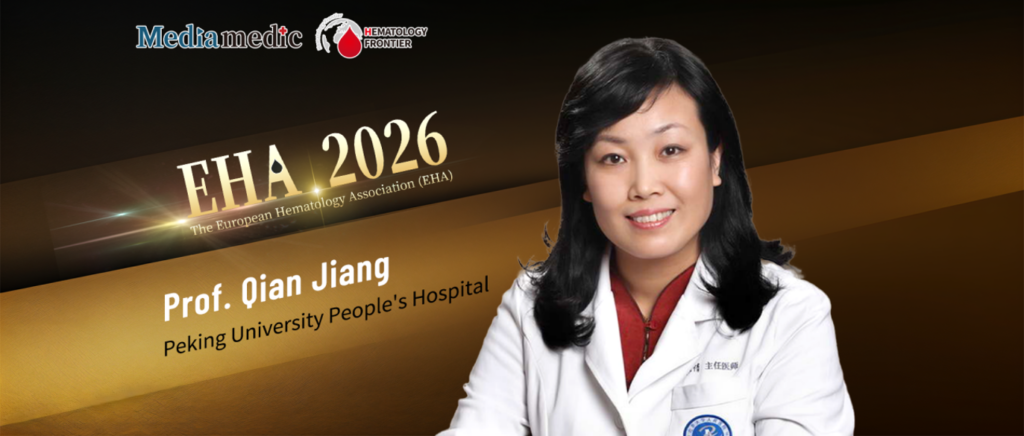
At the 2026 Congress of the European Hematology Association (EHA 2026), the team led by Professor Qian Jiang from Peking University People’s Hospital presented several important studies addressing key challenges in chronic myeloid leukemia (CML), including the biological heterogeneity of accelerated-phase disease and predictors of treatment-free remission (TFR).From identifying patients at high risk of disease progression to optimizing frontline treatment strategies, these studies not only help fill important knowledge gaps regarding accelerated-phase CML but also provide the largest multicenter real-world evidence to date supporting the role of second-generation tyrosine kinase inhibitors (TKIs) in improving TFR success rates. Together, these findings offer meaningful answers to two of the most important questions in modern CML management: how to safely discontinue therapy in patients who respond well, and how to overcome resistance in those who do not.
During the meeting, Oncology Frontier – Hematology Frontier spoke with Professor Jiang about her team’s latest findings and the future direction of CML research.
Deciphering the Biological Heterogeneity of Accelerated-Phase CML
When discussing the overall research strategy behind her team’s EHA presentations, Professor Jiang highlighted their oral presentation focusing on accelerated-phase (AP) CML, a disease stage that continues to generate debate regarding its definition and clinical significance.
Under traditional diagnostic criteria, patients classified as accelerated phase exhibit substantial clinical heterogeneity. Features such as basophilia, increased blast counts, treatment-independent thrombocytopenia, and additional high-risk cytogenetic abnormalities are all used to define accelerated phase, yet these patients often experience markedly different clinical outcomes.
Accelerated phase has traditionally been viewed as a transitional stage between chronic phase (CP) and blast phase (BP). However, Professor Jiang noted that clinical observations suggest that not all AP patients follow the same disease trajectory.
To better understand this heterogeneity, her team applied genomic and transcriptomic approaches to characterize the biological differences among patients diagnosed with accelerated-phase CML. Their goal was to determine how these molecular differences influence disease progression and clinical outcomes.
The investigators found that accelerated-phase CML can be divided into two biologically distinct subgroups based on mutational and transcriptional profiles:
- CP-like accelerated phase
- BP-like accelerated phase
Patients with BP-like disease exhibited a substantially higher risk of progression to blast phase and significantly poorer outcomes.
Professor Jiang emphasized that international data on accelerated-phase biology remain limited, largely because AP-CML is relatively uncommon. Leveraging the extensive clinical resources available at Peking University People’s Hospital, her team hopes to address this important unmet need and provide a more precise framework for risk stratification and individualized treatment.
Importantly, the findings suggest that accelerated phase should not be viewed as a uniform disease category. Instead, biological classification may help identify patients who require more intensive therapeutic approaches while sparing others from unnecessary treatment escalation.
Second-Generation TKIs Significantly Improve Treatment-Free Remission Success
Another major focus of the team’s research was treatment-free remission, which has emerged as a key therapeutic goal for selected patients with CML.
According to Professor Jiang, TFR is particularly relevant for younger patients and those with a strong desire to discontinue lifelong therapy. Although numerous studies have explored predictors of successful treatment discontinuation, long-term TFR rates have generally remained in the range of 50–60%.
The multicenter study presented at EHA represents the largest TFR analysis conducted in China to date. The original cohort included more than 900 patients, and the database has since expanded to over 1,200 patients from more than 50 participating centers nationwide.
The most important finding was clear and consistent across multiple statistical analyses: among patients diagnosed in chronic phase who ultimately met criteria for treatment discontinuation, those who received a second-generation TKI as frontline therapy achieved significantly higher rates of successful TFR than those who initially received the first-generation TKI imatinib.
Professor Jiang noted that previous international studies had primarily emphasized the ability of second-generation TKIs to help patients achieve deep molecular response (DMR) more rapidly. However, her team’s findings extend beyond this observation.
Even after accounting for baseline differences and matching patient characteristics using multiple statistical methods, patients who received second-generation TKIs not only reached treatment discontinuation criteria more quickly but also maintained significantly better long-term TFR outcomes after stopping therapy.
Implications for Clinical Practice
Professor Jiang believes these findings have important implications for treatment selection in newly diagnosed CML.
In routine clinical practice, second-generation TKIs are not always the preferred frontline option, particularly in older patients or those with cardiovascular disease, diabetes, dyslipidemia, or other comorbidities that may increase treatment-related risks.
However, for younger, medically fit patients with a clear goal of eventually discontinuing therapy, frontline treatment with a second-generation TKI may offer two distinct advantages:
First, patients can achieve deep molecular responses and eligibility for treatment discontinuation more rapidly.
Second, and perhaps more importantly, they appear more likely to maintain durable treatment-free remission after stopping therapy.
Professor Jiang summarized the clinical message succinctly: if treatment-free remission is a major therapeutic objective, selecting a more potent second-generation TKI at the time of diagnosis may be one of the most important determinants of long-term success.
Future Directions: Focusing on Both Ends of the Disease Spectrum
Looking ahead, Professor Jiang believes that future CML research must continue to address two very different patient populations.
On one end of the spectrum are patients who respond exceptionally well to therapy. For these individuals, the key challenge is determining how to safely achieve and maintain treatment-free remission.
On the other end are patients who develop resistance, fail to achieve optimal responses, or progress to advanced disease phases. For these patients, early identification of high-risk features and the development of strategies to overcome treatment resistance remain urgent priorities.
Particularly challenging are patients who progress to blast phase, where outcomes remain poor despite significant advances in targeted therapy. Professor Jiang emphasized that the development of novel therapeutic approaches for these high-risk patients should remain a central focus of future research efforts.
She also acknowledged the collaborative nature of the nationwide TFR study, expressing gratitude to physicians from more than 50 participating hospitals whose contributions made the project possible.
Conclusion
The studies presented by Professor Jiang and her colleagues at EHA 2026 address two of the most important unresolved challenges in contemporary CML management: identifying patients at risk of disease progression and maximizing the likelihood of successful treatment discontinuation.
By revealing the biological heterogeneity of accelerated-phase CML and providing robust multicenter evidence supporting the use of second-generation TKIs to improve treatment-free remission outcomes, these findings contribute valuable insights that may help refine personalized treatment strategies.
As precision medicine continues to evolve, the field of CML is moving beyond simply controlling disease toward a more ambitious goal—tailoring therapy to individual biological risk while maximizing both survival and quality of life.
Expert Profile
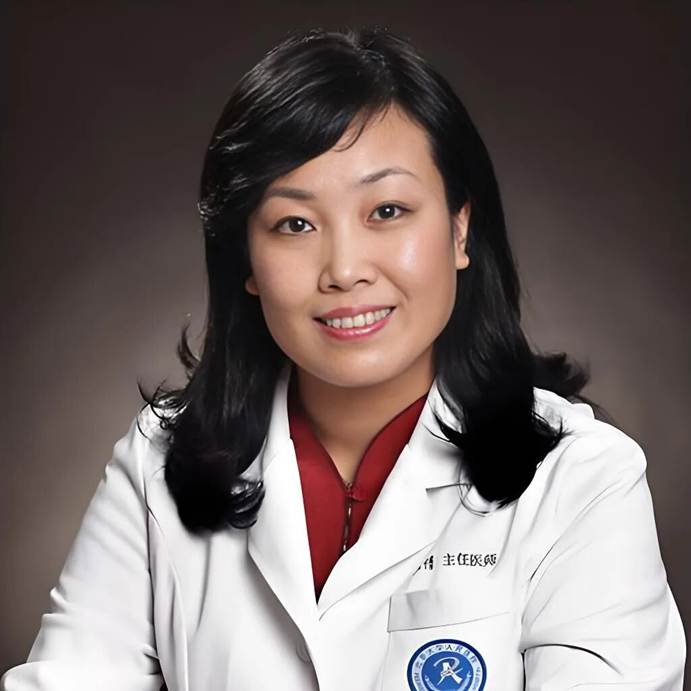
Professor Qian Jiang
Peking University People’s Hospital
Chief Physician | Second-Level Professor | Doctoral Supervisor
Deputy Director, Department of Hematology, Peking University People’s Hospital
Vice President, Qingdao Hospital, Peking University People’s Hospital
Professional Appointments
- Member, International CML Foundation National Representatives Committee
- Member, International Association for Comparative Research on Leukemia and Related Diseases
- Committee Member, Chinese Society of Hematology, Chinese Medical Association
- Deputy Head, Leukemia and Lymphoma Working Group, Chinese Society of Hematology
- Chair, Beijing Society of Hematology
- Chair, Integrative Leukemia Committee, China Anti-Cancer Association
- Chair, Leukemia Branch, China Medical Education Association
Professor Jiang is internationally recognized for her contributions to the diagnosis, treatment, and translational research of chronic myeloid leukemia and other Philadelphia chromosome–positive hematologic malignancies. Her work has played an important role in advancing precision medicine, treatment optimization, and treatment-free remission strategies for patients with CML in China and beyond.