
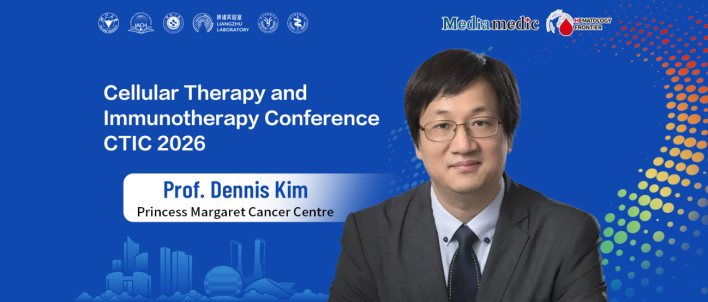
Qiantang Forum, Shaping the Future Through Innovation. From November 6 to 8, 2026, the 2026 Cellular Therapy and Immunotherapy Conference (CTIC 2026) was grandly held in Hangzhou. Taking a global perspective, the congress brought together leading experts and scholars from China and abroad to explore cutting-edge developments in cellular therapy, gene therapy, AI-enabled hematology, and translational research, addressing clinical challenges and charting a path toward high-quality development in the field. During the congress, Oncology Frontier – Hematology Frontier invited Professor Dennis Kim of Princess Margaret Cancer Centre, Canada, to share his latest research findings and academic insights into the mechanisms of immune evasion underlying post-transplant relapse, potential intervention strategies, and MRD-guided precision management. The key points are presented below.A Multidimensional Mechanistic Interplay: Leukemic Clonal Evolution and Immune Synapse Dysfunction
Oncology Frontier-Hematology Frontier: At this congress, you are focusing on “Post-transplant relapse and therapeutic intervention to prevent AML relapse after HCT.” Currently, relapse after hematopoietic stem cell transplantation remains a major bottleneck in AML treatment. From the perspective of mechanistic exploration, what do you consider to be the core immune evasion mechanisms leading to post-transplant relapse?
Professor Dennis Kim: Before talking about its immune evasion mechanisms, we need to start talking about the two aspects. There are two players contributing to the post-transplant relapse. One is the leukemic blasts. They evolve and acquire additional mutation profile. And they also shift their lineage toward a more primitive lineage which leads to the reduction of their MHC class I protein expression which will make them to be escape from the immune surveillance. Another player is the T cell or all that kind of immune cells. They become quite a bit exhausted or dysfunctional. Finally, we should not forget that these two players, the leukemic blasts and the T cells, are interacting each other. Dysfunctional immune synapse was found particularly associated with the post-transplant relapse, usually after the 12 months after transplantation. In conclusion, post-transplant relapse is multifactorial affecting several pathways.
Balancing Risks and Benefits: MRD-Stratified Maintenance Therapy and Preemptive Intervention
Oncology Frontier-Hematology Frontier: For populations at high risk of post-transplant relapse, what cutting-edge intervention strategies (such as maintenance therapy, hypomethylating agents, targeted drugs, or cellular therapies) currently show potential in balancing the graft-versus-host disease (GVHD) and graft-versus-leukemia (GVL) effects?
Professor Dennis Kim: Before talking about therapeutic intervention approach with balance of GvHD and GvL, such a post-transplant maintenance intervention require to consider two aspects. One is efficacy and another is toxicity, i.e. safety. So we should consider both aspects of efficacy side as well as toxicity. Also which group you would like to intervene is another topic for discussion. If you are aiming for the group having a standard risk, you may want to avoid any drug having significant toxicity, while if it is the group of people having a very high risk of disease, then you will take a risk of significant toxicity if drug is effective given that the reduction of relapse risk overlies toxicity risk. So it really depends on what kind of population we are aiming for therapeutic preventive intervention. Another approach is MRD-based preemptive approach. For MRD-positive group or the significant adverse group for relapse even before transplant or at the time of initial diagnosis, I would like to take the risk of toxicity given that this group is going to get a benefit from preemptive intervention. But if your patient is MRD-negative or if your patient doesn’t have that much of significant risk of relapse, preventive intervention may not be that much urgently needed. So for your decision making, we have to take account for both aspects toxicity efficacy as well as relapse risk.
What kind of treatment is going to be helpful depending on their molecular type? If there is no molecular target, I prefer to utilize some hypomethylating agents but depending on your accessibility. And the remaining piece is that if they are super high risk of relapse, then probably the DLI or if they are the full-blown relapse then you may have to consider the second transplant for the treatment of relapse.
Moving Toward Precision Medicine: Integrating Ultrasensitive MRD Monitoring and Targeted Therapies Throughout the Treatment Course
Oncology Frontier-Hematology Frontier: In your opinion, with the advancement of minimal residual disease (MRD) monitoring technologies and the application of novel immunotherapies, how should the full-course management of post-transplant AML evolve towards individualization and precision in the future?
Professor Dennis Kim: Yeah I think that right now there are lots of advances in MRD technology and also there are lots of development in therapeutics in AML. So we have to incorporate those things into our clinical practice, particularly for the MRD. The previous our MRD assay which is mainly based on the flow that is not that much sensitive. I think that particularly for the FLT3-ITD AML, we should try to develop ultra-high-sensitive MRD testing, which is the PCR followed by NGS-based MRD testing for our clinical tool for monitoring of FLT3-ITD AML patients after transplantation. And also in terms of therapeutic intervention, right now we do have FLT3 inhibitors and we do have a tyrosine kinase inhibitor targeting the BCR-ABL. But I hope in future we can include we can also have access to menin inhibitors for KMT2A-r or NPM1 AML after the transplantation. Or IDH1 inhibitor for the IDH-mutated AML after transplantation if it is indicated. And in future if they don’t have a molecular target, I hope the hypomethylating agents such as azacitidine or decitabine can be approved for the post-transplant maintenance in future.
Expert Profile
Professor Dennis Kim
President elect, Cellular Therapy Transplant Canada; Professor of Medicine, Department of Medicine at the University of Toronto, Canada; Head of malignant hematology program at Princess Margaret Cancer Centre; a core member of the Hans Messner Hematopoietic Stem Cell Transplant Program.
His research focuses on the molecular mechanisms and intervention strategies for relapse of acute myeloid leukemia (AML) after transplantation, including the investigation of immune evasion mechanisms, development of minimal residual disease (MRD) monitoring technologies, and clinical translation of post-transplant maintenance therapies. His research findings have been published in leading international journals, including Blood, Journal of Clinical Oncology, Blood advances, Haematologica, etc.