Editor's Note: The 2026 European Hematology Association (EHA) Congress in Stockholm has concluded, unveiling a series of important advances in acute myeloid leukemia (AML). To help clinicians rapidly interpret the meeting's most impactful findings, the inaugural CSCO Leukemia Young Committee Perspectives webinar was held on June 14 through a collaboration between the CSCO Leukemia Youth Committee and Hematology Frontier. The program was chaired by Professor Qiu Shaowei, Chair of the CSCO Leukemia Committee Youth Group from the Institute of Hematology & Blood Diseases Hospital, Chinese Academy of Medical Sciences (CAMS). Joining the discussion were Professor Pei Shanzhan from the First Affiliated Hospital, Zhejiang University School of Medicine and Liangzhu Laboratory, Professor Tang Feifei from Peking University People's Hospital, and Professor Cao Yigeng from the Institute of Hematology & Blood Diseases Hospital, Chinese Academy of Medical Sciences (CAMS). Together, they provided an in-depth review of the latest AML research presented at EHA 2026, highlighting its clinical significance and future implications. 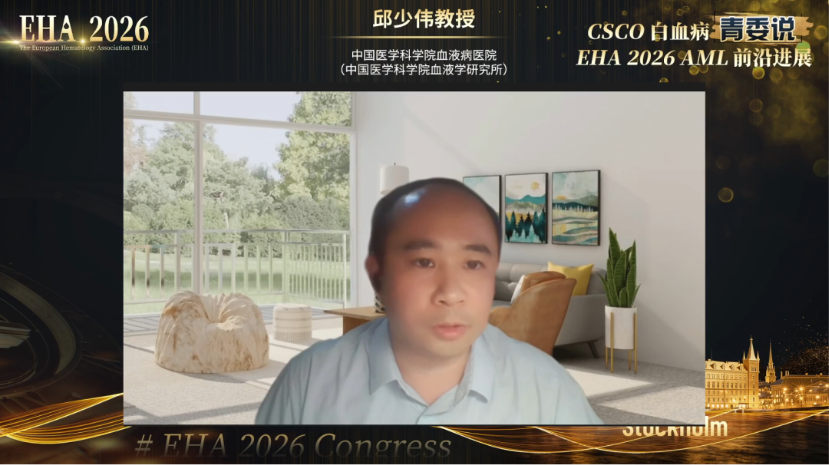
At the opening of the event, Professor Qiu Shaowei officially announced the launch of the CSCO Leukemia Young Committee Perspectives series. As the inaugural session of this new academic platform, the meeting was closely aligned with the latest developments presented at the 2026 EHA Congress, aiming to provide timely expert interpretation of cutting-edge research and enable Chinese clinicians and researchers to stay in step with the global hematology community. Moving forward, the platform will continue to bring together the insights and expertise of young investigators, fostering innovation and injecting sustained momentum into leukemia research and clinical practice in China.
Basic ResearchSeeking Answers by Beginning with the Fundamental Question: Why Does Drug Resistance Develop?
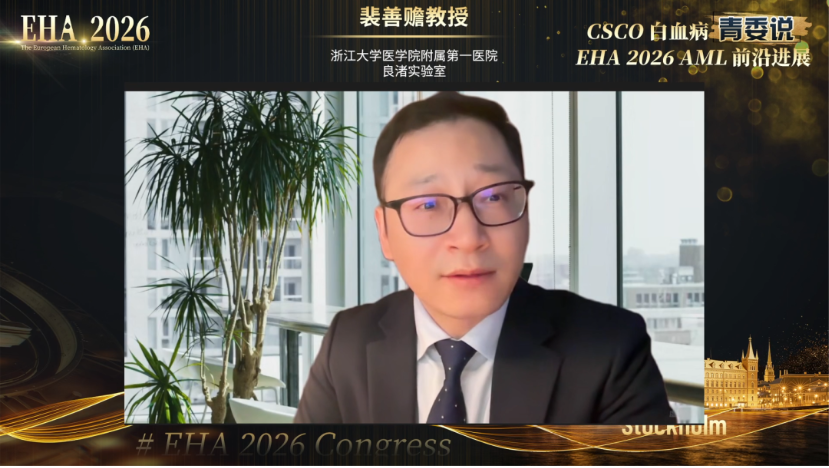
Professor Pei Shanzhan opened the session with a comprehensive overview of the key basic science highlights and emerging advances in AML research presented at EHA 2026. While the EHA Congress has traditionally emphasized clinical studies, recent meetings have placed increasing focus on fundamental research. This year’s program featured cutting-edge work spanning the molecular mechanisms of leukemogenesis, metabolic reprogramming, epigenetic regulation, single-cell and three-dimensional genomics, and cellular state heterogeneity. Among the most prominent topics were the mechanisms underlying resistance to menin inhibitors and venetoclax, reflecting the field’s ongoing efforts to uncover novel therapeutic targets and intervention strategies by dissecting the biological foundations of AML.
Professor Pei highlighted a study from a Canadian research group demonstrating that, in KMT2A-rearranged AML, the transcription factor Zeb1 drives a distinct transcriptional program that promotes resistance to menin inhibitors. Intriguingly, the investigators found that specific upstream microRNAs can suppress Zeb1 expression, raising the possibility that restoring microRNA activity may resensitize leukemia cells to menin inhibition. The study provides a new perspective on resistance mechanisms that arise independently of acquired genetic mutations. However, the precise mechanisms by which Zeb1 reshapes cellular identity and promotes drug resistance remain to be fully elucidated. Future research is expected to focus on cellular state plasticity, compensatory transcriptional networks, and key signaling pathways such as Myc to further clarify their roles in menin inhibitor resistance.
Professor Pei also discussed a technically sophisticated study from Germany, in which investigators employed ClonTracer technology to compare AML samples before and after treatment with venetoclax plus azacitidine. Unexpectedly, they identified CD22—traditionally regarded as a lymphoid antigen—as being markedly upregulated in relapsed and drug-resistant AML cells, with particularly high expression in leukemia stem cell populations. These findings not only identify a promising new target for antibody-drug conjugates (ADCs) and CAR-T cell therapy, but also establish a systematic framework for discovering therapeutic targets associated with treatment resistance in AML. Looking ahead, integrating real-world patient datasets with small-molecule therapies, cellular therapies, and immunotherapy may provide new opportunities to overcome relapse and drug resistance while improving long-term outcomes for patients with AML.
Innovation Spotlight
Advancing Cell Therapy and Novel Combination Strategies
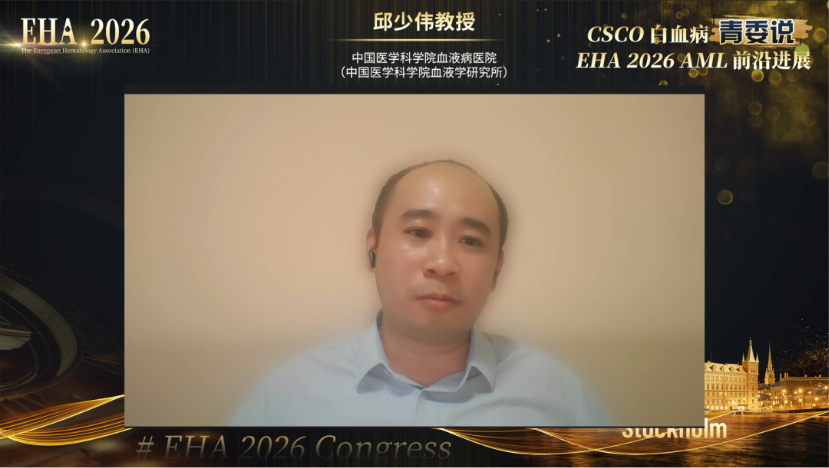
Professor Qiu Shaowei followed with a dedicated presentation on emerging therapeutic strategies for AML, highlighting two landmark studies featured at EHA 2026—one addressing whether cell therapy can be made safer, and the other exploring whether combination regimens can deliver greater efficacy. Relapsed/refractory AML, as well as older patients who are unable to tolerate intensive chemotherapy, remain among the greatest clinical challenges. Improving remission rates while minimizing toxicity and extending survival continues to be a central goal. The research presented at this year’s EHA clearly reflects a shift toward an era of precision medicine, personalized treatment, and multimodal therapeutic combinations in AML.
One of the most notable advances in cell therapy was the presentation of the world’s first switchable allogeneic CD123 CAR-T platform. Conventional myeloid CAR-T therapies have been limited by profound myelosuppression, a narrow therapeutic window, and a heavy reliance on subsequent stem cell transplantation. This innovative approach combines a universal CAR-T platform with a CD123-targeting adaptor molecule, allowing CAR-T activity to be dynamically regulated through continuous administration of the adaptor. In essence, the system functions as a “remote-controlled switch” for CAR-T cells: if adverse events such as cytokine release syndrome (CRS) occur, simply discontinuing the adaptor molecule rapidly switches off CAR-T activity, enabling more precise safety management. The study reported no significant graft-versus-host disease (GVHD) or neurotoxicity, while demonstrating encouraging safety and preliminary efficacy in patients with relapsed/refractory AML. In the high-dose cohort, the objective response rate approached 50%, with several patients achieving MRD-negative remission. These findings offer a promising new technological strategy for overcoming longstanding barriers to CAR-T therapy in AML and may provide a valuable treatment option for patients who are not candidates for consolidative transplantation.
Professor Qiu also discussed the latest findings from the TUSCANY study, which evaluated tuspetinib in combination with venetoclax and azacitidine (VA). As a novel multikinase inhibitor, tuspetinib simultaneously targets key signaling pathways including FLT3, JAK2, and KIT, addressing some of the limitations of standard VA therapy in high-risk molecular subtypes. The combination achieved a CR/CRi rate of 78.1%, an overall response rate exceeding 80%, and a high rate of MRD negativity. Particularly encouraging activity was observed in patients harboring FLT3 and TP53 mutations, both traditionally associated with poor prognosis, without a meaningful increase in infectious complications or hematologic toxicity. These results further support the therapeutic potential of the “VA plus X” strategy and reinforce the growing importance of integrating molecularly guided targeted therapy, immunotherapy, and cellular therapy to improve long-term outcomes for patients with AML.
Precision Optimization
Refining Treatment Duration and Smarter Therapeutic Decision-Making
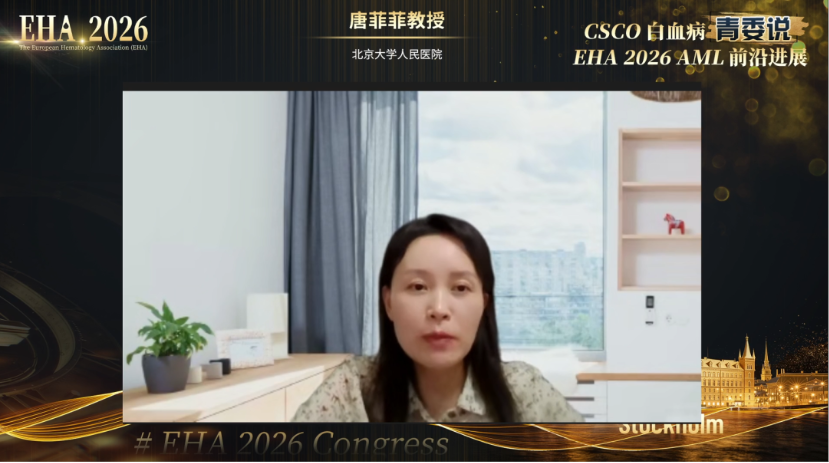
Professor Tang Feifei shifted the discussion to practical questions frequently encountered in daily clinical practice, highlighting two highly relevant studies presented at EHA 2026—one examining the optimal duration of venetoclax therapy, and the other evaluating how best to select FLT3 inhibitors. As venetoclax-based regimens and FLT3 inhibitors have become cornerstones of AML treatment, clinicians are increasingly focused on optimizing treatment intensity to preserve efficacy while minimizing toxicity, ultimately enabling more precise, individualized therapy.
Until recently, efforts to shorten the duration of venetoclax treatment were supported primarily by retrospective evidence. However, a prospective randomized phase II trial presented at this year’s EHA provided the first rigorous evaluation of this question. The study enrolled patients aged 60 years or older with newly diagnosed AML and found that a 14-day venetoclax schedule failed to meet the predefined non-inferiority endpoint. After two treatment cycles, the 28-day regimen achieved superior overall and composite remission rates, while also demonstrating favorable trends in progression-free survival and overall survival. Notably, there were no significant differences between the two treatment arms in terms of severe adverse events, infection rates, or hematologic recovery, suggesting that simply shortening the duration of venetoclax does not necessarily reduce treatment-related toxicity. The benefit of the 28-day regimen was particularly evident in patients harboring NPM1 or IDH2 mutations. This study provides important prospective evidence supporting the current standard duration of venetoclax therapy while underscoring the need for future strategies that tailor treatment duration according to molecular characteristics, rather than adopting a one-size-fits-all approach.
Professor Tang also reviewed the HOVON 156 trial, the first head-to-head randomized phase III study comparing gilteritinib and midostaurin, each combined with intensive chemotherapy, in patients with newly diagnosed FLT3-mutated AML. The study demonstrated no significant difference in overall survival between the two regimens, with both providing durable clinical benefit. However, a closer analysis revealed that the gilteritinib arm showed modest advantages in event-free survival and relapse-free survival, along with a lower relapse rate than the midostaurin arm. Overall safety profiles were comparable, although hematologic recovery during induction was slightly delayed in patients receiving gilteritinib. As the first prospective randomized trial directly comparing first-line FLT3 inhibitors, the study confirms that both agents are effective and well tolerated. Looking ahead, the optimal selection of FLT3 inhibitors will likely depend on individual molecular profiles, therapeutic objectives, and subsequent treatment strategies, including transplantation and salvage therapy, enabling truly personalized management for patients with FLT3-mutated AML.
A New Chapter in Transplantation
The Art of Balance: Unlocking Better Survival Outcomes
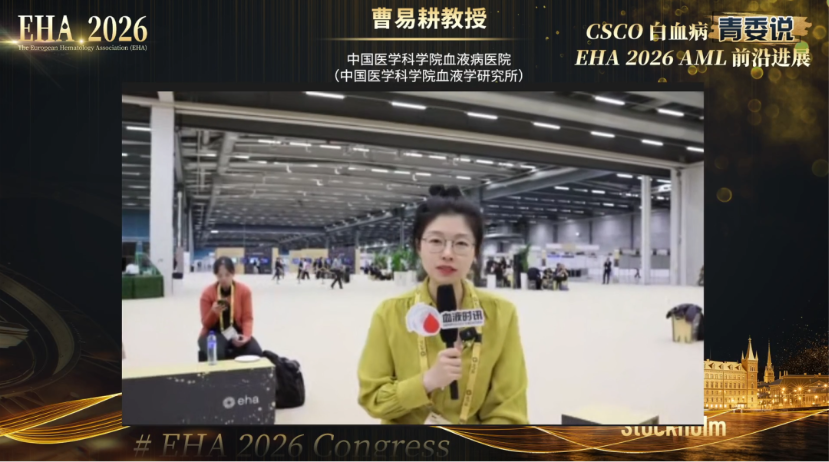
Professor Cao Yigeng concluded the session by reviewing the latest advances in AML transplantation presented at EHA 2026. She noted that, as transplantation techniques continue to evolve, the field is shifting beyond simply reducing relapse or graft-versus-host disease (GVHD) toward more refined risk stratification and personalized immune modulation, with the ultimate goal of improving long-term survival and quality of life.
Professor Cao first discussed a large retrospective study conducted by the European Society for Blood and Marrow Transplantation (EBMT). The analysis included more than 700 patients with CBFB::MYH11 AML and evaluated the impact of FLT3-ITD co-mutations on outcomes following allogeneic hematopoietic stem cell transplantation (allo-HSCT). Among transplanted patients, no significant differences were observed between FLT3-ITD-positive and FLT3-ITD-negative groups with respect to relapse, leukemia-free survival, overall survival, or GVHD incidence. Professor Cao explained that these findings suggest patients with this otherwise favorable-risk AML subtype can still achieve favorable long-term outcomes after transplantation despite the presence of an FLT3-ITD mutation. However, she also emphasized that whether all such patients truly require transplantation remains an open question. Furthermore, because FLT3-ITD-positive patients often received more intensive pre-transplant treatment, additional prospective studies incorporating broader molecular profiling will be necessary to validate these findings.
She then reviewed a study investigating DTA mutations (DNMT3A, TET2, and ASXL1) in the context of post-transplant measurable residual disease (MRD) monitoring. The study demonstrated that DTA mutations are relatively common after transplantation and typically emerge during the early post-transplant period. In some patients, these mutations were detected even before conventional molecular MRD markers became positive. Importantly, however, the presence of isolated DTA mutations did not necessarily predict disease relapse. Their variant allele frequencies (VAFs) were generally low, some resolved spontaneously over time, and donor-derived DTA clones did not represent residual leukemia. Only when DTA mutations coexisted with other molecular MRD markers did patient outcomes deteriorate significantly. Professor Cao noted that these findings challenge conventional assumptions, suggesting that DTA mutations may have predictive value in post-transplant surveillance, although their precise clinical significance requires further investigation.
Professor Cao also highlighted a landmark study comparing anti-thymocyte globulin (ATG) and post-transplant cyclophosphamide (PTCy) for GVHD prophylaxis in matched unrelated donor transplantation. The results showed that PTCy was superior to ATG in reducing both acute and chronic GVHD. However, this advantage did not translate into improved survival. Instead, the PTCy group experienced a higher rate of infection-related mortality, resulting in no overall survival benefit. Professor Cao emphasized that these findings illustrate an important principle: intensifying immunosuppression alone does not necessarily improve transplant outcomes. Future progress in transplantation should focus not only on minimizing GVHD, but also on maintaining an optimal balance between GVHD control, infection risk, and immune reconstitution. She suggested that immune monitoring, biomarker-guided management, and artificial intelligence may play increasingly important roles in achieving more precise immune regulation.
Interactive Expert Discussion
Each presentation was followed by a lively discussion, with the panel exchanging perspectives on several emerging themes in AML. The experts agreed that, as molecular classification becomes increasingly refined and therapeutic options continue to expand, AML management is evolving beyond traditional risk stratification toward a precision medicine model guided by molecular profiles, MRD status, and the immune microenvironment. The key challenge lies in identifying the right treatment for the right patient through increasingly individualized decision-making.
The panel also emphasized that the profound biological heterogeneity of AML makes long-term disease control difficult to achieve with any single therapeutic modality. Future success will depend on the integration of targeted therapies, immunotherapy, cellular therapies, and transplantation into coordinated treatment strategies. At the same time, emerging technologies—including single-cell sequencing, multi-omics analyses, and artificial intelligence—are expected to enhance the precision of MRD monitoring, relapse prediction, and immune reconstitution assessment.
The experts further highlighted China’s unique strengths in real-world AML research and multicenter collaboration. Leveraging platforms such as the CSCO Leukemia Young Committee, they expressed confidence that collaborative research efforts can generate more original evidence based on Chinese patient populations, ultimately translating into improved long-term outcomes for patients with AML.
More Than a Scientific Meeting
A Platform Empowering the Next Generation
This nearly two-hour virtual academic forum marked the inaugural session of the CSCO Leukemia Young Committee Perspectives series. Bringing together in-depth analyses of nine major AML studies presented at EHA 2026, the event enabled Chinese clinicians and researchers to access and interpret the latest international advances in real time.
Building on this successful launch, the series will continue to connect young hematology professionals across China, fostering communication between basic science, clinical practice, and translational research. Through sustained academic exchange, the initiative aims to strengthen standardized leukemia care nationwide while accelerating the translation of cutting-edge scientific discoveries into meaningful clinical benefits for patients.
Beyond serving as a platform for sharing international advances, CSCO Leukemia Young Committee Perspectives is designed to become a dedicated forum for the development of China’s next generation of hematology leaders. By breaking down barriers between basic and clinical research, medicine and science, and domestic and international collaboration, the platform seeks to encourage open dialogue among frontline clinicians, translational researchers, and multicenter collaborative teams. Ultimately, it aims to cultivate a stronger academic community that not only improves patient outcomes but also amplifies the voice of young Chinese physician-scientists on the global stage.