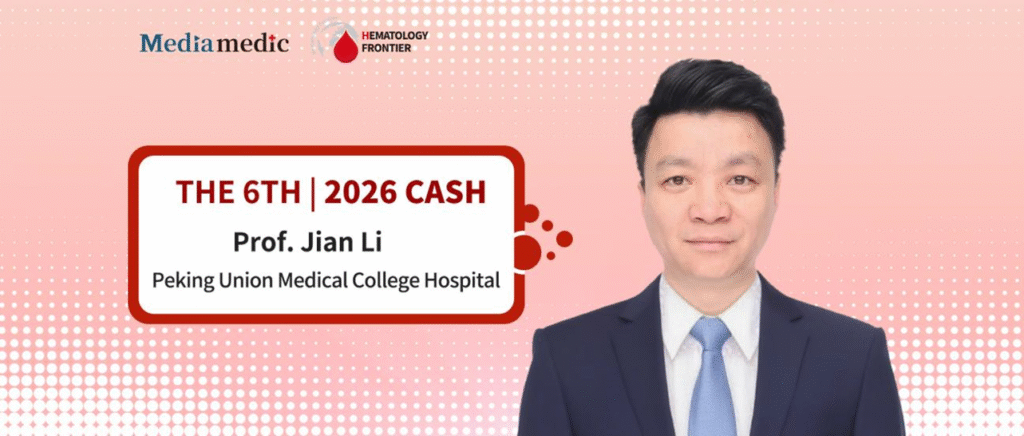
Editor’s Note: As the new year begins, leading experts gathered in Tianjin. From January 9–11, 2026, the 6th China Hematology Discipline Development Conference (CASH) was successfully held, bringing together top hematology specialists from China and abroad. The conference focused on cutting-edge scientific progress and national health priorities, fostering in-depth discussions on the future of hematology.Light-chain (AL) amyloidosis, characterized by challenging early diagnosis, complex multisystem involvement, and difficult treatment, remains a major clinical challenge. During the meeting, Oncology Frontier – Hematology Frontier invited Professor Jian Li from Peking Union Medical College Hospital (PUMCH) to share and interpret PUMCH’s clinical experience in the diagnosis and management of AL amyloidosis.
Oncology Frontier – Hematology Frontier:
AL amyloidosis is a rare and complex multisystem disease. How does PUMCH improve early diagnostic accuracy and timeliness through multidisciplinary collaboration?
Professor Jian Li:
Early diagnosis is critical in AL amyloidosis. Extensive research and clinical experience have shown that earlier disease stage is strongly associated with better outcomes. Therefore, we consistently prioritize early detection in clinical practice.
At our institution, this goal is implemented through several key approaches:
1. Establishing a Multidisciplinary Team (MDT)
We have formed a dedicated amyloidosis MDT, integrating cardiology, nephrology, imaging, and other relevant specialties. Through structured multidisciplinary case discussions—particularly for patients with early warning signs or diagnostic uncertainty—we significantly enhance early recognition and diagnostic accuracy.
2. Leveraging Advanced Imaging for Early Screening
We routinely perform contrast-enhanced cardiac MRI and actively utilize PET/CT with disease-specific tracers. The adoption of these advanced imaging modalities has substantially improved early detection rates for AL amyloidosis.
3. Strengthening Physician Education and Awareness
Equally important is continuous education across departments, especially among specialties frequently encountering amyloid-affected organs. Improving disease awareness ensures that clinicians consider AL amyloidosis early when subtle warning signs appear, allowing timely diagnostic work-up and intervention.
Oncology Frontier – Hematology Frontier:
Chemotherapy, stem cell transplantation, and emerging therapies all play key roles in AL amyloidosis. What are PUMCH’s core treatment strategies, and how do they improve patient outcomes?
Professor Jian Li:
Over the past four decades, treatment for amyloidosis has advanced substantially—from early transplant-based strategies, to the introduction of bortezomib, and now to modern first-line regimens centered on daratumumab, a CD38-targeting monoclonal antibody.
Current First-Line Standard at PUMCH
At our center, daratumumab combined with bortezomib and dexamethasone has become the preferred first-line therapy for most patients. Real-world data from PUMCH show favorable efficacy, including in patients with advanced disease (Mayo stage IIIb), where median overall survival approaches ~33 months.
Emerging Options for Relapsed/Refractory Disease
For relapsed or refractory patients, we are actively exploring innovative treatments, including:
- BCMA × CD3 bispecific antibodies
- CAR-T cell therapy
- Venetoclax for selected subgroups (e.g., patients harboring t(14;16) translocation)
Across first-line, second-line, and later-line settings, the clinical adoption of novel agents has markedly improved long-term outcomes for AL amyloidosis.
Oncology Frontier – Hematology Frontier:
Long-term management is crucial in AL amyloidosis. What experience does PUMCH have in follow-up monitoring, complication prevention, and rehabilitation? What advice would you give to primary hospitals?
Professor Jian Li:
For primary-level hospitals, AL amyloidosis remains a rare disease, and case volumes are typically limited. Therefore, clinicians should strictly follow established guidelines and expert consensus, ensuring standardized and comprehensive baseline assessments.
Key Recommendations for Community and Regional Centers
- Perform complete initial staging and risk stratification
- Select therapy based on prognostic group and guideline-recommended regimens
- Strengthen treatment response monitoring and adverse-event management
Long-Term Follow-Up and Supportive Care
Many patients may eventually develop chronic kidney disease or progress to end-stage renal failure, making renal monitoring and supportive care essential.
Equally important is patient education, including:
- Fluid and salt intake control
- Appropriate activity modification
- Ongoing symptom monitoring
These supportive strategies are critical components of comprehensive, long-term disease management.
Expert Profile — Professor Jian Li
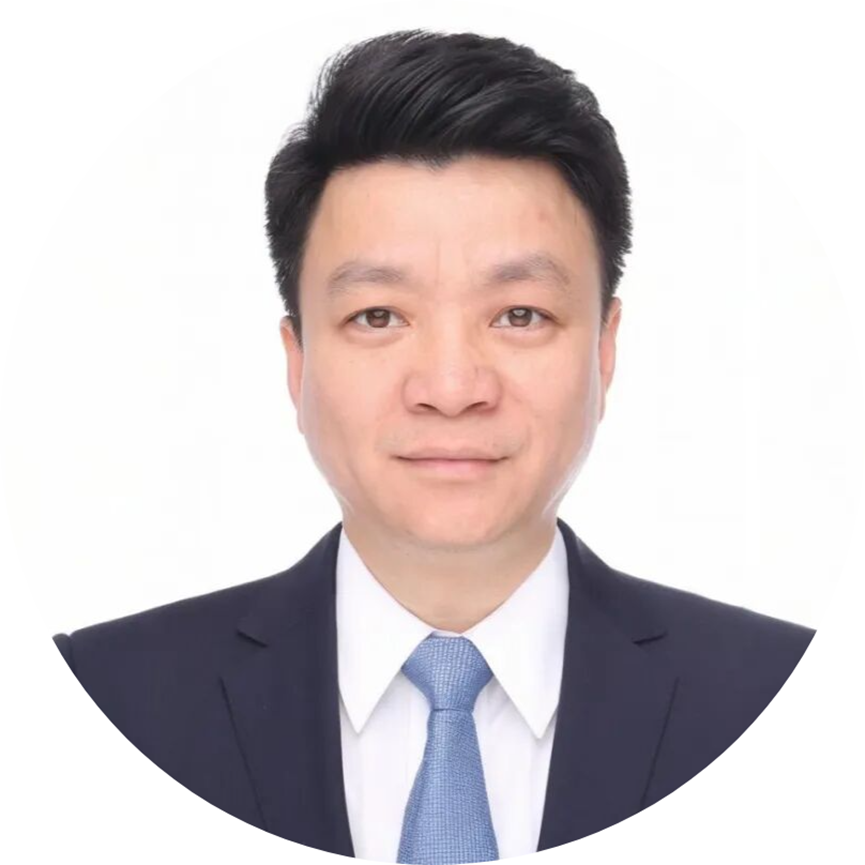
Professor Jian Li Peking Union Medical College Hospital
- Director, Department of Hematology
- Chief Physician & PhD Supervisor
- Standing Committee Member, Chinese Society of Hematology
- Vice Chair, Beijing Society of Hematology
- Vice President, Beijing Hematologists Association
- Head, Rare Diseases Working Group, Chinese Society of Hematology
- Editorial Board Member, Chinese Journal of Hematology