Advancing Long-Term Survival Strategies in Urologic Malignancies
Highlights from the 15th Shanghai Urologic Oncology Academic Conference
Editor’s Note: On December 12, 2025, the 15th Shanghai Urologic Oncology Academic Conference officially opened in Shanghai. Hosted by the Shanghai Anti-Cancer Association, the meeting centered on the theme “Precision Integration · Intelligent Leadership” and brought together leading experts from around the world to discuss recent advances in urologic oncology.
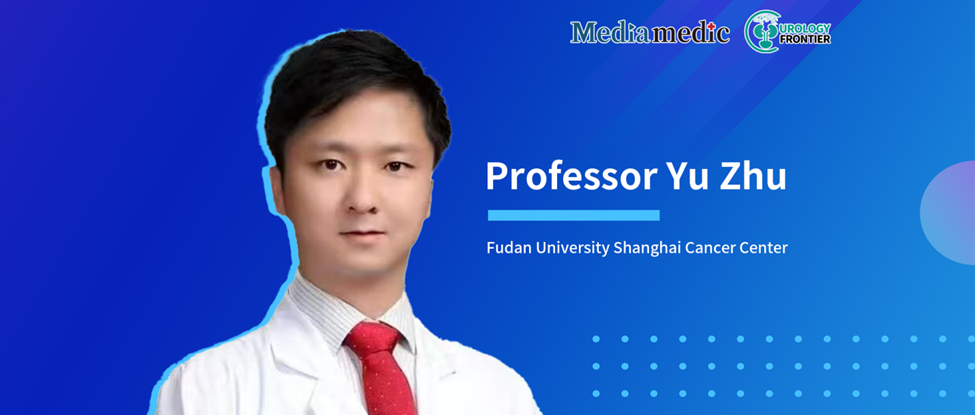
In the field of advanced renal cell carcinoma (RCC), the widespread adoption of targeted–immunotherapy combinations and the rapid evolution of later-line therapies have transformed patient survival from measured in months to measured in years. During the conference, Oncology Frontier – Urology Frontier invited Professor Yu Zhu from Fudan University Shanghai Cancer Center to share insights from the Yangtze River Delta Urologic Oncology Innovation Forum, real-world experience with decade-long survival in advanced RCC, and perspectives on future research directions.
________________________________________
01
Oncology Frontier – Urology Frontier
Professor Zhu, the Yangtze River Delta Urologic Oncology Clinical Research Consortium was officially established on December 6 last year, and an Innovation Forum was organized for this initiative at the current conference. As the Executive Chair of the forum, could you highlight the key features of its design and content?
Professor Yu Zhu:
The Yangtze River Delta Urologic Oncology Clinical Research Consortium was established to address a fundamental challenge faced by urologic cancers as so-called “small tumor types”: fragmented case distribution across regional hospitals and limited access to later-line therapies. The core highlight of this Innovation Forum lies in the “large hospitals supporting smaller hospitals” model advocated by Vice President Dingwei Ye, which promotes downward transfer of resources and coordinated regional development.
First, by integrating medical resources from county- and city-level hospitals across the region, the consortium platform enables difficult-to-treat patients—particularly those who have exhausted multiple lines of therapy and lack access to new drugs—to be precisely matched with clinical trial opportunities at major medical centers, thereby addressing issues of drug accessibility.
Second, the forum emphasized the standardized construction of Good Clinical Practice (GCP) systems. Pioneers such as Professor Qiyi He were invited to share their experience in conducting clinical trials at grassroots institutions, guiding local medical centers in building robust research quality-control frameworks so that patients can participate in high-quality clinical studies closer to home.
Finally, through comprehensive academic mentorship spanning the entire research process, the consortium aims to elevate regional research capabilities, generate clinical data with international impact, and translate these findings back into clinical practice—ultimately enhancing China’s global academic influence in urologic oncology.
________________________________________
02
Oncology Frontier – Urology Frontier
At the Innovation Forum, you also shared a case of advanced renal cancer with ten-year long-term survival. Could you describe the key factors behind this success and the clinical insights that can be drawn from this case?
Professor Yu Zhu:
This decade-long survival case of advanced renal cancer is a textbook example of multidisciplinary team (MDT) collaboration and precision, individualized therapy. The patient had severe cardiovascular comorbidities and experienced two episodes of acute cardiovascular events during anti-angiogenic targeted therapy.
The key to success was breaking disciplinary boundaries through MDT consultation and adopting a strategy of “low-dose initiation with dynamic titration,” carefully balancing tumor control with patient tolerance. This case also underscores the importance of standardized sequential therapy: first- to third-line treatments strictly followed guideline recommendations. In the fourth and fifth lines, due to limited tolerance of conventional drugs and a scarcity of available options, the patient was enrolled in cutting-edge clinical trials, using innovative therapies to delay disease progression.
Equally important was a dynamic treatment mindset. At the sixth line, after recovery of hepatic and renal function, the treatment strategy shifted back to targeted monotherapy, resulting in one full year of disease stabilization. This case teaches us that managing advanced renal cancer is akin to running a marathon—it requires strong expertise in adverse-event management and precise control of treatment sequencing.
________________________________________
03
Oncology Frontier – Urology Frontier
Could you also comment on the most noteworthy advances in renal cancer research this year? Looking ahead, where do you believe future research should focus to achieve the goals of “long survival with good quality of life” for patients with advanced renal cancer?
Professor Yu Zhu:
In advanced renal cancer, the most significant breakthrough this year has been the clinical implementation and policy approval of findings from the RENOTORCH study. Following approval by the National Medical Products Administration (NMPA), the combination of axitinib and toripalimab for first-line treatment of intermediate- and high-risk unresectable or metastatic RCC was officially included in China’s National Reimbursement Drug List this year. It is currently the only first-line targeted–immunotherapy combination for RCC in China that carries both this indication and reimbursement coverage, substantially improving access to frontline therapy for Chinese patients.
From an international perspective, global oncology entered the immunotherapy era in 2015 with nivolumab in the second-line setting. In comparison, China’s reimbursement coverage for targeted–immunotherapy combinations arrived nearly a decade later, largely due to slower early alignment of domestic clinical research with international standards. Fortunately, this gap is now closing rapidly with the rise of domestically developed innovative drugs.
Toripalimab is a prime example of this progress. In addition, the ETER100 study supported approval of the anlotinib plus benmelstobart regimen, making it the second NMPA-approved first-line targeted–immunotherapy combination for clear-cell RCC in China. Although this regimen has not yet entered the reimbursement system, its clinical value has been widely recognized, and inclusion is anticipated next year. With both regimens approved and reimbursed, treatment accessibility for advanced RCC patients is expected to improve markedly.
Moreover, clinical teams at West China Hospital, the Chinese PLA General Hospital (301 Hospital), and our own center are extending experience from advanced disease into neoadjuvant therapy for stage III RCC. Preliminary data are encouraging, particularly for patients with tumor thrombus, where neoadjuvant treatment has achieved meaningful downstaging and downgrading. Data from 301 Hospital show a thrombus downstaging rate exceeding 40% and a one-year disease control rate of 89.1%. This is clinically significant, as it can convert technically demanding, high-risk thrombectomy procedures into more routine surgeries, reducing operative risk and surgeon burden—representing a major leap in safety driven by systemic therapy.
In non–clear cell RCC, clinical attention has increased substantially in recent years. Historically, these tumors were studied as a single group, an approach now recognized as inadequate. Current research focuses on subtype-specific precision therapy. For FH-deficient RCC, studies led by Professor Hao Zeng’s team have shown that targeted–immunotherapy combinations significantly improve objective response rate (ORR) and progression-free survival (PFS), with results published in top international journals. At our center, we are concentrating on MiT family translocation RCC (such as TFE3/TFEB rearrangements), investigating genotype–phenotype correlations and treatment sensitivity. These efforts are opening precision-therapy opportunities for patients with rare subtypes that were once considered untreatable.
________________________________________
Current Hotspots and Future Directions in Advanced Renal Cancer
At present, the first-line treatment landscape for advanced RCC is relatively stable, dominated by targeted–immunotherapy or dual-immunotherapy combinations. These regimens have extended median progression-free survival from approximately one year to nearly two years and improved overall survival to around five years. Against this backdrop, research has explored triplet regimens (e.g., the COSMIC-313 study) in hopes of achieving further gains. However, results have shown that triplet therapy does not confer superior survival benefits over doublet therapy in the overall population and is associated with substantially increased toxicity, limiting clinical applicability. This suggests diminishing marginal returns when simply adding existing agents without introducing novel mechanisms of action.
In the realm of novel drug development, HIF-2α inhibitors—represented by belzutifan—have demonstrated considerable promise. As targeted agents acting on the HIF pathway, these inhibitors have shown excellent efficacy in the second-line setting. Clinical data indicate that whether used alone or combined with agents such as lenvatinib or cabozantinib, HIF-2α inhibitors can extend second-line PFS to 12–13 months or longer. This not only broadens later-line treatment options but also supports the long-term, chronic-disease management of advanced RCC.
Additionally, the success of antibody–drug conjugates (ADCs) in breast cancer and urothelial carcinoma has stimulated exploration of their role in renal cancer. By identifying renal cancer–specific molecular expression profiles, researchers are selecting suitable targets for ADC development. Combining the high specificity of monoclonal antibodies with the potent cytotoxicity of payload drugs, ADCs function as “biological missiles” and may overcome resistance to current targeted–immunotherapy regimens, emerging as a new growth point in precision RCC treatment.
Perhaps the most disruptive future direction is radioligand therapy (RLT). Inspired by the success of PSMA-targeted therapy in prostate cancer, renal cancer research has turned its focus to carbonic anhydrase IX (CA9), a highly specific molecular marker expressed in over 90% of clear-cell RCC. By labeling targeting molecules with diagnostic or therapeutic radionuclides, clinicians can achieve more precise lesion detection than conventional PET/CT and deliver targeted internal radiation to eradicate tumors. This integrated diagnostic-therapeutic paradigm holds the potential to revolutionize the treatment of advanced renal cancer.
________________________________________

Professor Yu Zhu