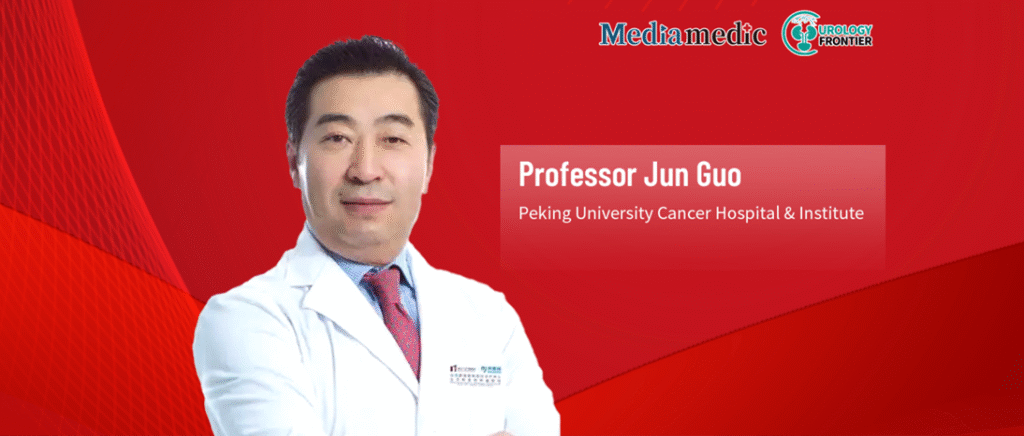
Professor Jun Guo Reviews a Decade of Perseverance as HER2-ADC Plus Immunotherapy Redefines Global UC Treatment Guidelines
Editor’s Note: At a recent academic conference on urologic oncology, Professor Jun Guo from Peking University Cancer Hospital & Institute delivered an important presentation systematically reviewing the ten-year journey of Chinese researchers in the field of drug therapy for urothelial carcinoma (UC)—from following international trends to taking a leading role. His lecture focused on the landmark achievements of China-originated antibody–drug conjugates (ADCs), represented by disitamab vedotin (RC48), particularly when combined with immunotherapy. Based on Professor Guo’s presentation, this article aims to showcase the international leap achieved by Chinese research in urologic oncology.The End of the Chemotherapy Era and the First Foray into Immunotherapy
For decades, the treatment of urothelial carcinoma remained stagnant, with platinum-based chemotherapy dominating the therapeutic landscape despite its limited efficacy. Professor Guo noted that this long-standing impasse was not broken until the advent of immune checkpoint inhibitors. As the first major therapeutic revolution, PD-1 inhibitors fundamentally changed the treatment paradigm in the second-line setting, ending the era in which chemotherapy was the sole option.
Reflecting on early contributions by Chinese investigators, Professor Guo highlighted the POLARIS-03 study as a landmark clinical trial that established the role of toripalimab in urothelial carcinoma. Although the objective response rate (ORR) of 25% may appear modest by today’s standards, in the context of post-chemotherapy failure, a median overall survival (OS) of 14.6 months was a meaningful achievement at the time.
Subsequently, domestic researchers explored various “chemotherapy plus immunotherapy” combinations, such as gemcitabine/cisplatin (GC) or nab-paclitaxel combined with PD-1 inhibitors. These regimens extended progression-free survival (PFS) to approximately 8.3 months. However, compared with the more than 13 months of PFS achieved with enfortumab vedotin (EV) plus pembrolizumab in international studies, traditional chemo-immunotherapy combinations gradually lost their competitive advantage and were relegated to a marginal role.
HER2-Targeted ADCs: A New Global Standard Defined by Chinese Researchers
China’s decisive entry onto the global urothelial carcinoma stage was driven by a re-evaluation of the HER2 target and the innovative application of ADC technology. Professor Guo emphasized that although HER2-targeted therapy had achieved remarkable success in breast cancer, repeated failures of monoclonal antibodies and small-molecule inhibitors in urothelial carcinoma led the international community to regard HER2 as a “dead end” in this disease.
Chinese investigators, however, charted a different course. They were the first to propose and validate the use of HER2-targeted ADCs in urothelial carcinoma, successfully demonstrating their clinical efficacy. This breakthrough directly inspired subsequent international studies involving agents such as DS-8201 and datopotamab deruxtecan, marking a pivotal shift in which Chinese strategies evolved from following global trends to setting them.
During this process, Chinese researchers also established a HER2 assessment system tailored specifically for urothelial carcinoma. Unlike breast cancer, which relies heavily on fluorescence in situ hybridization (FISH), Chinese expert consensus defined an immunohistochemistry (IHC)-centered evaluation framework, clarifying the clinical significance of IHC 2+ and 3+ expression. This approach has gradually gained acceptance within the international academic community.
A Decade of Perseverance: From RC48 Monotherapy to Broad Benefits with Combination Therapy
The development of disitamab vedotin (RC48) exemplifies the global journey of an original Chinese innovation. From the initiation of phase I clinical enrollment in 2015 to its spotlight appearance at the ESMO Presidential Session in 2025, the journey spanned a full decade.
Professor Guo recalled that the RC48-C005 study was first presented at the ASCO Annual Meeting in 2019. Although the study reported an ORR of 51%, surpassing the 48% observed with EV monotherapy at the time, it received only poster discussion status due to limited international recognition. Subsequently, under the guidance of the Center for Drug Evaluation (CDE) of China’s National Medical Products Administration, the confirmatory RC48-C009 trial was conducted. Pooled analyses demonstrated a median PFS of 5.9 months in chemotherapy-refractory patients, directly supporting regulatory approval in China and laying a solid foundation for widespread clinical use.
To further enhance efficacy, Professor Guo’s team initiated an investigator-initiated trial (IIT), RC48-C014, evaluating RC48 in combination with toripalimab. Despite enrolling only 40 patients, the results were striking: the combination achieved an ORR of 75% and a median OS of 33 months. These outcomes closely mirrored the latest data from EV plus pembrolizumab (EVP), which reported OS values of 31.5–33 months, while the ORR with RC48 plus immunotherapy was numerically higher (75% vs. approximately 65–67.7% with EVP). These findings not only validated the synergistic mechanism of “ADC plus immunotherapy” but also provided critical justification for subsequent large-scale phase III trials.
Reshaping the First-Line Landscape in Advanced Disease and Publication in NEJM
In 2025, the phase III confirmatory RC48-C016 trial delivered its results as the finale of the ESMO Presidential Session, with the presentation interrupted three times by applause—an unmistakable sign of international recognition. The data showed that RC48 plus toripalimab significantly outperformed chemotherapy, with a PFS hazard ratio (HR) of 0.36, notably superior to the HR of 0.45 reported for the EVP regimen in comparable studies. This indicated a greater magnitude of benefit for patients. The OS HR of 0.54 further confirmed a substantial survival advantage.
Addressing questions from international colleagues regarding the relatively low complete response (CR) rate (<5%), Professor Guo provided a rigorous scientific explanation. The discrepancy was largely attributable to differences in baseline patient characteristics. In EVP studies, approximately 30% of patients had lymph-node-only metastases (M1a), a group more likely to achieve CR. In contrast, fewer than 5% of patients in RC48-C016 had isolated nodal disease; the vast majority had visceral metastases (M1b) or extensive liver and bone involvement (M1c), representing a far more refractory population. Achieving high ORR and prolonged survival under such stringent conditions underscores the robustness of the results. Ultimately, the study was published in The New England Journal of Medicine (NEJM), marking a historic milestone for Chinese urologic oncology.
Neoadjuvant Therapy and Future Perspectives
Beyond advances in late-stage disease, the RC48 plus immunotherapy strategy has also shown promise when moved earlier into the perioperative setting. The RC48-C017 study, presented as an oral abstract at ASCO GU 2025, demonstrated a pathological complete response (pCR) rate of 63% in the neoadjuvant treatment of muscle-invasive bladder cancer—comparable to that achieved with the EVP regimen. Professor Guo emphasized that pCR is a key surrogate endpoint for long-term survival, suggesting that more patients may achieve durable disease-free survival.
Looking ahead, the momentum of Chinese pharmaceutical innovation continues. Professor Guo revealed that a novel Nectin-4–targeting peptide–drug conjugate, known as “Xingliantide,” is currently under development in China. Compared with antibody-based agents, peptide conjugates have smaller molecular sizes and superior tissue penetration. Preliminary clinical data suggest the potential to surpass existing therapies.
Conclusion
From imitation to independent innovation, and from international neglect to recognition on the world’s most prestigious academic stages, Chinese research in urothelial carcinoma has achieved a qualitative leap over the past decade. Professor Guo concluded that the RC48 program—conducted across 75 centers nationwide—not only represents a source of pride for Chinese urologic oncology, but also serves as a model of how “Chinese wisdom” can address global medical challenges.
With the continued emergence of innovative agents such as Xingliantide, Chinese research teams are poised to further reshape international treatment guidelines, enabling patients worldwide to benefit from advances driven by China’s medical innovation.

Professor Jun Guo