In recent years, the combination of targeted therapy and immunotherapy has substantially improved systemic outcomes for patients with advanced clear cell renal cell carcinoma (ccRCC). However, whether these regimens can be effectively deployed in the preoperative setting as conversion therapy—enhancing surgical resectability and nephron preservation—has lacked prospective real-world validation. Furthermore, their impact on the tumor immune microenvironment remains incompletely understood.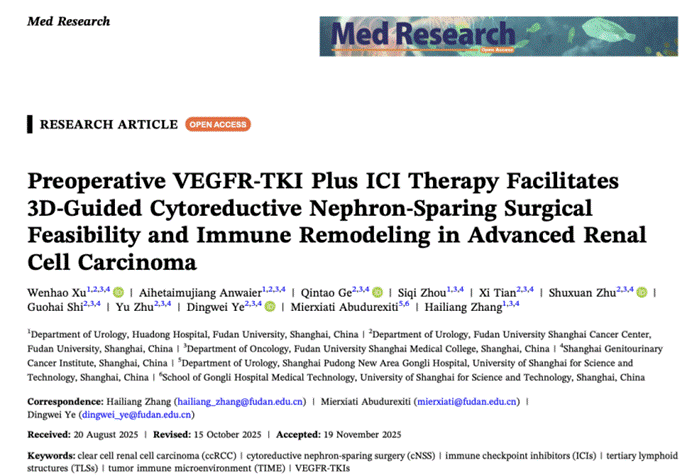
In November 2025, a multidisciplinary team led by Prof. Hailiang Zhang from Huadong Hospital affiliated with Fudan University, in collaboration with Fudan University Shanghai Cancer Center and Shanghai Pudong Gongli Hospital, published a landmark study in Med Research entitled:
“Preoperative VEGFR-TKI Plus ICI Therapy Facilitates 3D-Guided Cytoreductive Nephron-Sparing Surgical Feasibility and Immune Remodeling in Advanced Renal Cell Carcinoma.”
A Novel Multimodal Strategy: Systemic Therapy Plus Precision Surgery
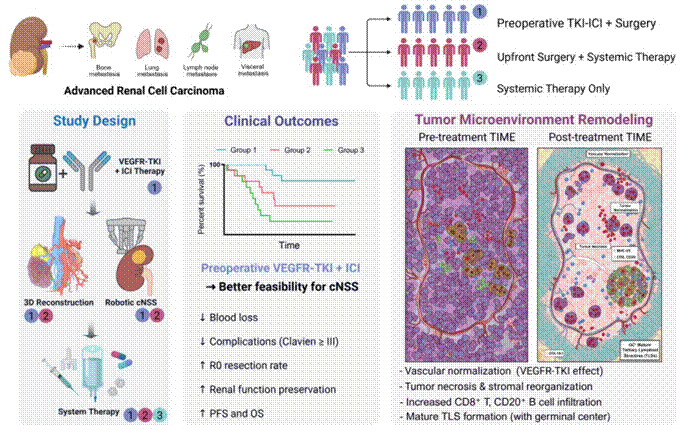
This prospective real-world study systematically evaluated a comprehensive treatment model for advanced ccRCC:
- Preoperative VEGFR–TKI combined with immune checkpoint inhibitors (ICI)
- Followed by CT-based 3D reconstruction–guided robotic cytoreductive nephron-sparing surgery (cNSS)
The goal was to assess safety, feasibility, surgical outcomes, and immunologic remodeling.
Key Clinical Findings
1️⃣ Enhanced Surgical Feasibility
Preoperative VEGFR-TKI + ICI therapy significantly reduced tumor size and complexity in advanced renal tumors. This facilitated:
- Higher rates of nephron-sparing surgery
- Reduced operative difficulty
- Lower perioperative complication rates
- Improved long-term renal function preservation
Importantly, the integration of 3D CT reconstruction guidance allowed precise anatomical planning, optimizing tumor excision while preserving maximal healthy renal parenchyma.
2️⃣ Immune Microenvironment Remodeling
Beyond tumor shrinkage, the study demonstrated meaningful immunologic changes:
- Increased formation of tertiary lymphoid structures (TLS) within tumor tissue
- More structurally mature TLS
- Evidence of reinvigorated anti-tumor immune responses
These findings suggest that preoperative systemic therapy not only downsizes tumors but also reshapes the tumor microenvironment into a more immunologically active state.
3️⃣ Survival Benefits
Patients receiving this combined “systemic therapy + precision surgery” strategy achieved:
- Prolonged progression-free survival (PFS)
- Improved overall survival (OS)
The approach provides a clinically actionable pathway for patients with advanced ccRCC who may otherwise face limited surgical options.
Clinical Implications
This study represents one of the first prospective real-world validations of integrating:
- Conversion systemic therapy
- Advanced imaging reconstruction
- Robotic cytoreductive nephron-sparing surgery
It marks a meaningful shift from traditional paradigms toward biologically guided precision surgery in advanced renal cancer.
Rather than viewing systemic therapy and surgery as sequential or isolated modalities, this strategy integrates them into a coordinated, immune-informed treatment model.
Conclusion
The work led by Prof. Hailiang Zhang demonstrates that preoperative VEGFR-TKI plus ICI therapy, combined with 3D-guided robotic nephron-sparing surgery, is safe, feasible, and biologically transformative in advanced ccRCC.
By shrinking tumors, reactivating immune surveillance, and enabling nephron preservation, this multimodal approach opens a promising new chapter in the management of advanced renal cancer.
It is a powerful example of how systemic innovation and surgical precision can converge to expand therapeutic possibilities—and ultimately improve patient outcomes.

Prof. Hailiang Zhang