"White clouds drift above the Chilechuan Plain, while the songs of Qingcheng echo like poetry." Against this vibrant midsummer backdrop, the 2026 Chinese Clinical Oncology Annual Advances Conference (BOC) & Best of CSCO 2026 China will be held in Hohhot, Inner Mongolia, from July 3–4, 2026.Jointly organized by the Chinese Society of Clinical Oncology (CSCO) and the Beijing Xisike Clinical Oncology Research Foundation, the meeting will highlight the latest international advances in clinical oncology while showcasing China’s most significant research achievements over the past year.
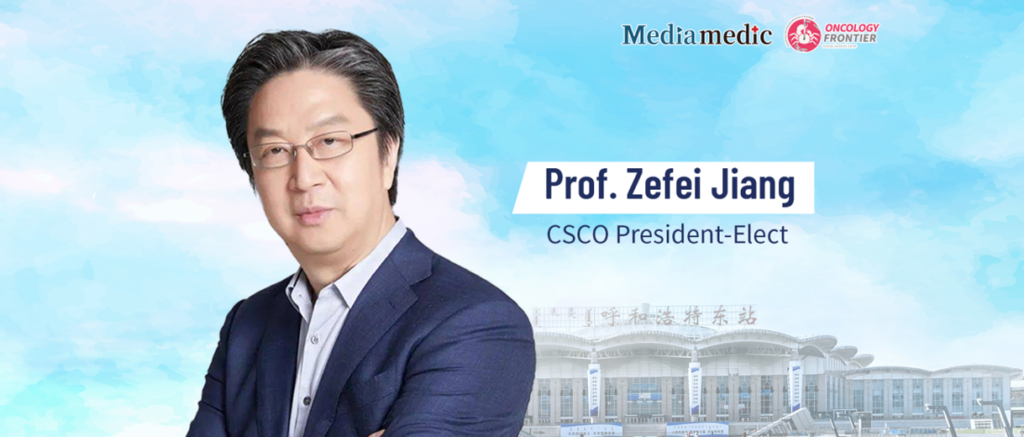
Ahead of the conference, Oncology Frontier interviewed Professor Zefei Jiang, President-Elect of CSCO, to discuss the meeting’s evolution, key highlights, and the growing global impact of Chinese oncology research.
Amplifying China’s Voice on the Global Stage
From BOC/BOA to an Expanded and Upgraded BOC Conference
Oncology Frontier:
The annual BOC conference is about to begin. What are the major changes this year, and what do they reflect about the development of oncology and clinical research in China?
Professor Zefei Jiang:
The BOC/BOA Conference has long been one of CSCO’s flagship scientific meetings, traditionally comprising two major components: Best of China, which summarizes the year’s most important Chinese clinical research, and Best of ASCO, which reviews the latest highlights presented at the ASCO Annual Meeting. Beginning this year, these components have been unified under a single conference identity—the BOC Conference.
In previous years, only a limited number of Chinese experts were able to attend the ASCO Annual Meeting in person, and access to the latest international developments within China was relatively limited. Therefore, shortly after ASCO—typically within one month—we would invite international experts and Chinese attendees to interpret the meeting’s most important findings for domestic audiences.
I remember that when I first participated in these activities, we received complete presentation slide sets from overseas, translated and organized them as a team, and then shared the information with colleagues throughout China.
Today’s information environment, however, has changed dramatically.
First, everyone can now access conference updates almost immediately through online platforms. Second, an increasing number of Chinese investigators are presenting their own research on international academic stages. Third, waiting another month to summarize conference highlights no longer provides the same value, as much of the information has already been widely disseminated.
For these reasons, and following proposals from senior experts including Professor Shukui Qin and Professor Yilong Wu, we decided to integrate and upgrade the former BOC/BOA Conference into the new BOC Conference.
This transition should not be viewed as a simplification or downsizing. Rather, it represents a significant expansion.
Chinese investigators are no longer making their voices heard solely at ASCO—they are increasingly contributing to leading international meetings such as ESMO and AACR. Across specialties including nasopharyngeal carcinoma, gastric cancer, liver cancer, lung cancer, and breast cancer, Chinese researchers continue to produce influential work and demonstrate China’s growing scientific contributions on the global stage.
Accordingly, rather than focusing exclusively on the “Best of ASCO,” we have broadened the conference to present the most important academic contributions made by Chinese clinical oncologists throughout the entire year. Dedicated sessions will systematically review major advances across different disease areas while highlighting China’s achievements.
The extensive academic exchanges that Chinese investigators have participated in over the past year have fostered mutual learning and continuous improvement.
Meanwhile, the conference’s traditional Annual Advances sessions will continue. Distinguished senior experts will comprehensively review progress across each oncology discipline, summarize the year’s major therapeutic advances, and define current standards for clinical practice.
Beyond Quantity: Celebrating the Quality of Chinese Clinical Oncology Research
Oncology Frontier:
As you mentioned, the Annual Advances in Chinese Clinical Oncology Research has long been one of the centerpiece sessions of the BOC Conference. As one of its original initiators, how do you view the development of clinical oncology research in China?
Professor Zefei Jiang:
The Annual Advances in Chinese Clinical Oncology Research has special meaning for me personally.
When I served as CSCO Secretary-General and was responsible for this initiative, the CSCO leadership and many senior experts repeatedly emphasized the importance of carefully reviewing and documenting each year’s research progress.
I still remember that five or six years ago, an article published in a journal with an impact factor of around 30 would easily rank among the year’s Top 10 research achievements.
Three to five years later, however, even papers published in journals with impact factors exceeding 80 sometimes ranked only around the top fifteen.
In the past, China might publish only one study in the New England Journal of Medicine (NEJM) every one or two years. Today, more than a dozen Chinese studies can appear in NEJM within a single year.
This remarkable transformation reflects the rapidly increasing contribution and influence of Chinese investigators within the international scientific community.
Recently, members of the CSCO Young Committee responsible for selecting the Annual Advances commented that choosing the year’s top studies has become increasingly difficult. I regard this not as a challenge, but as clear evidence of China’s extraordinary scientific productivity.
Equally important is the growing prominence of genuine Chinese innovation and Chinese contributions.
In nasopharyngeal carcinoma, the team led by Academician Jun Ma has conducted multiple internationally influential studies that have helped shape global practice.
In hepatocellular carcinoma, Academician Jia Fan and Professor Shukui Qin have made outstanding contributions.
Similarly, high-quality research continues to emerge across lung cancer, breast cancer, gastrointestinal malignancies, and many other oncology specialties, collectively forming this year’s Annual Advances in Chinese Clinical Oncology Research.
I believe this report represents both a tribute to our profession and a reflection of our respect for academic excellence. It enables the oncology community to appreciate the tremendous efforts made by Chinese clinical investigators over the past year.
Importantly, these landmark studies have not only been successfully published but have also been incorporated into CSCO Guidelines, while many have directly influenced the development of new clinical treatment strategies.
Several studies—particularly in nasopharyngeal carcinoma and liver cancer—have reached truly international standards and, in some cases, are leading global practice.
Research in lung cancer, gastric cancer, and breast cancer has likewise been incorporated not only into Chinese guidelines but also into international clinical practice guidelines.
It is deeply gratifying to see that what began as a simple annual compilation of research achievements has evolved into a comprehensive review of scientific progress across the entire discipline.
Looking ahead, as CSCO approaches its 30th anniversary, I hope we will have the opportunity to comprehensively review the remarkable journey of Chinese clinical oncology over the past two to three decades.
From initially following international developments, to keeping pace, and now to leading innovation in many areas through original study designs and practice-changing research, this journey represents both a tribute to the pioneers who came before us and a powerful source of inspiration for the next generation of Chinese oncologists.
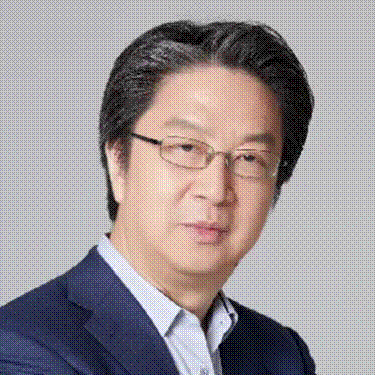
Professor Zefei Jiang
President-Elect, Chinese Society of Clinical Oncology (CSCO)