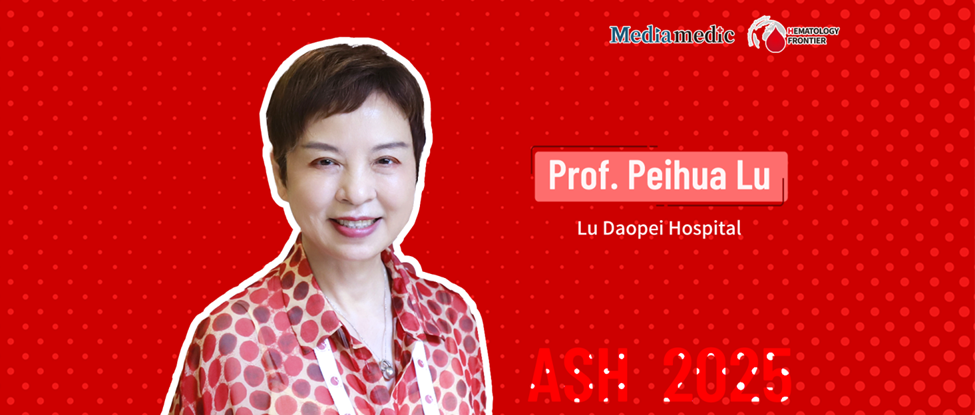
For patients with relapsed/refractory (R/R) T-cell acute lymphoblastic leukemia/lymphoblastic lymphoma (T-ALL/LBL), current treatment options remain limited and outcomes are unsatisfactory, posing major clinical challenges. At the Annual Meeting of the American Society of Hematology (ASH), Professor Lu Peihua from Lu Daopei Hospital presented the results of an investigator-initiated trial (IIT) conducted across nine centers in China (Publication No. 1042). The presentation reported clinical outcomes of patients treated at the recommended phase II dose (RP2D) of CTD402, a CD7-targeted universal CAR-T product, in T-ALL/LBL. The results were highly encouraging and represent a major therapeutic breakthrough in this field. Hematology Frontier invited Professor Lu to interpret the key findings and discuss their implications for future treatment strategies.Hematology Frontier: At this year’s ASH meeting, you reported the latest results from the RP2D cohort of CTD402. Given the extreme difficulty of treating R/R T-ALL/LBL, what do you consider the most groundbreaking findings of this study, and what is their significance in the global treatment landscape?
Professor Lu Peihua: CAR-T cell therapy has been used in hematologic malignancies for nearly a decade, with particularly mature and widely commercialized products in B-cell malignancies. These therapies have enabled many patients to achieve deep remissions, and some are potentially cured.
However, patients with T-cell malignancies still urgently need CAR-T products that are both safe and effective. CTD402 is a novel therapy described as a “universal” CAR-T product. This means the therapeutic cells are manufactured from healthy donors and can be used across multiple patients, significantly reducing cost and treatment burden.
Clinically, CTD402 has demonstrated impressive efficacy, especially in T-ALL/LBL. Even in patients with relapsed or refractory disease, there is potential to achieve cure or long-term remission. This represents not only a therapeutic breakthrough, but also offers patients a new and realistic treatment option.
Hematology Frontier: As an off-the-shelf allogeneic CAR-T product, CTD402 has attracted attention regarding safety, immune rejection, and timing of treatment. Based on current data, how would you assess its safety profile, and how might this approach improve accessibility and treatment pathways for patients with T-cell malignancies?
Professor Lu Peihua: An effective therapy must also be safe. CTD402, as a universal CAR-T product, requires only a single infusion and has shown significant efficacy in R/R T-ALL/LBL, including patients with bulky extramedullary disease. Specifically, the complete remission (CR) rate reached 74% in bone marrow disease and 59% in extramedullary lesions, demonstrating robust overall efficacy.
In terms of safety, we performed comprehensive evaluations. Although most patients experienced adverse events such as cytokine release syndrome (CRS), the majority were mild, with only a small proportion reaching grade 3 or higher. Among more than 40 patients who completed treatment in this report, no neurotoxicity was observed. To date, over 150 patients across different clinical indications have received this product, with consistently low rates of neurotoxicity and an overall favorable safety profile.
Infection risk, a major patient concern, was also carefully analyzed. Viral, fungal, and bacterial infections occurred at controllable rates and were mostly mild to moderate, responding well to standard anti-infective treatments. Overall, this universal CAR-T product combines strong efficacy with good safety and represents an important advancement in the field of cellular therapy.
Hematology Frontier: In this dataset, patients with high-risk molecular subtypes and extramedullary disease still achieved CR rates close to 60% and very high MRD-negative rates. How do you interpret the sustained efficacy of CTD402 in these highly challenging populations, and what biological mechanisms may underlie these results?
Professor Lu Peihua: One key advantage of CTD402 is that it achieves robust in vivo CAR-T expansion using only standard-dose fludarabine and cyclophosphamide (FC) lymphodepletion. After a single infusion, CAR-T cells expand effectively, with favorable pharmacokinetic parameters such as Tmax and Cmax, which are critical for achieving complete remission.
Compared with other universal CAR-T products, CTD402 has a clear advantage in its conditioning regimen. Some similar products require additional agents or higher FC doses, which may increase toxicity. CTD402 relies solely on standard FC dosing, reducing treatment-related risk.
As a result, even in high-risk populations—including post-transplant relapse and patients with bulky extramedullary disease—CTD402 demonstrates encouraging efficacy with high CR rates.
It is important to emphasize, however, that while CAR-T–induced CR is critical, it does not guarantee long-term disease control. For most patients, consolidation with allogeneic hematopoietic stem cell transplantation (allo-HSCT) after remission remains necessary. Without transplantation, relapse risk remains substantial even after initial CR.
This underscores the current paradigm of integrated cancer therapy, where multiple modalities are combined to achieve durable survival benefits and, ultimately, cure in high-risk patients.
Hematology Frontier: The study showed significantly prolonged overall survival in patients who underwent allo-HSCT after achieving remission. How do you envision CTD402 being integrated into the overall treatment strategy for R/R T-ALL/LBL? Looking ahead to global phase Ib/II studies and potential new indications, which directions are you most focused on?
Professor Lu Peihua: As mentioned, although CAR-T therapy can induce early CR, eligible patients still require allo-HSCT for consolidation. Therefore, when planning CAR-T treatment, clinicians must simultaneously prepare for subsequent transplantation. A forward-looking treatment strategy is essential—planning not only the current intervention but also the next steps—to ensure continuity and timely delivery of optimal therapy.
Currently, CD7-targeted CAR-T products are mainly used in T-ALL/LBL. Ongoing studies are also exploring applications in peripheral T-cell lymphoma and CD7-positive acute myeloid leukemia, with early data showing promising efficacy and safety. As clinical experience grows, the scope of CAR-T therapy will continue to expand. Beyond oncology, certain autoimmune diseases may also benefit, highlighting the broader therapeutic potential of this approach.
Ultimately, progress depends on continued scientific and clinical research. Through rigorous studies and high-quality clinical trials, we can deliver safer and more effective therapies and further expand the role of CAR-T treatment across diverse disease areas.
Expert Profile

Professor Lu Peihua Lu Daopei Hospital Beijing Lu Daopei Institute of Hematology
Executive Medical President, Lu Daopei Hospital President, Beijing Lu Daopei Institute of Hematology Graduated from Peking University Health Science Center; completed residency training at the University of Nebraska Medical Center, USA; subsequently trained in hematology and oncology at Stanford University Board-certified specialist in hematology and oncology in the United States; licensed to practice medicine in both the United States and China Member, 4th Standing Committee of the Department of Oncology, Capital Medical University Standing Director, China Association of Non-Public Medical Institutions Chair, Hematology Committee, China Association of Non-Public Medical Institutions Standing Member, Biotechnology and Cell Application Committee, China Association of Non-Public Medical Institutions Member, Expert Committee of the China Marrow Donor Program Standing Committee Member, Anti-Leukemia Alliance, Chinese Society of Clinical Oncology (CSCO) Standing Committee Member, Hematologic Translational Medicine Committee, Chinese Anti-Cancer Association Board Member, 7th Council of Beijing Medical Education Association Recipient of the 2021 Taishan Award for Value-Based Healthcare Management