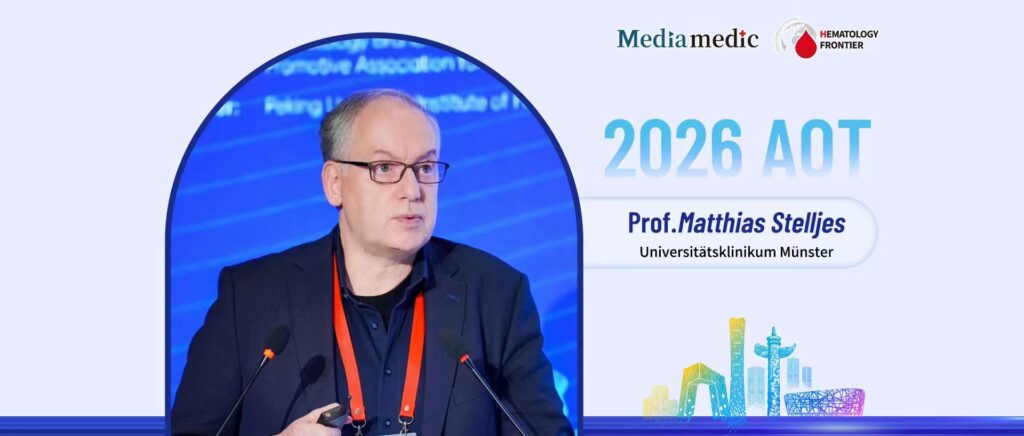
To comprehensively improve public health and strengthen strategies for the prevention and treatment of major diseases, medical innovation and international collaboration have become key drivers of clinical progress. Against this backdrop, the 2026 Beijing International Hematopoietic Stem Cell Transplantation Conference (AOT) was successfully held in Beijing from April 24 to 25, 2026. Organized by the Hematology Branch of the China International Exchange and Promotive Association for Medical and Health Care and hosted by the National Clinical Research Center for Hematologic Diseases and the Peking University Institute of Hematology, this year’s conference centered on the theme “The Art of Transplantation.” The meeting brought together leading hematology experts from around the world to discuss cutting-edge innovations and future directions in hematopoietic stem cell transplantation.During the conference, Oncology Frontier – Hematology Frontier conducted an exclusive interview with Professor Matthias Stelljes from the University Hospital Münster, Germany. The discussion focused on key clinical issues surrounding hematopoietic stem cell transplantation in relapsed/refractory acute myeloid leukemia (R/R AML), with Professor Stelljes sharing his academic insights and clinical experience to provide valuable perspectives for clinical practice.
Q1、For patients with relapsed/refractory acute myeloid leukemia (R/R AML), the timing of transplantation is critical. How do you balance the strategy of “proceeding to transplant as early as possible” with the need for bridging therapy to reduce disease burden? What are the most important parameters when defining the optimal transplant window (e.g., MRD status)?
The primary consideration in deciding whether to proceed directly to transplantation is donor availability. For an HLA-identical sibling donor, the transplant process can typically be initiated within a short time after donor confirmation. However, in clinical practice, most patients rely on unrelated donors. In such cases, obtaining hematopoietic stem cells generally takes about four weeks, and the waiting period may be even longer for some patients. Furthermore, the biological characteristics of the disease are also a key factor in decision-making. For example, for patients with a high disease burden, concurrent pancytopenia, and a bone marrow blast percentage as high as 80%, a four-week waiting period is often not a suitable option. In such situations, corresponding treatment must be administered to reduce the tumor burden. Therefore, based on clinical experience, donor availability and disease biology are the core factors in deciding whether to proceed with direct transplantation or a bridging therapy regimen.
Q2、Regarding salvage therapy prior to transplantation, a number of novel agents and combination regimens have emerged in recent years. How do you view their role in improving remission rates and optimizing pre-transplant disease status? In real-world clinical decision-making, how do you select the most appropriate salvage strategy to maximize transplant benefit?
Several targeted drugs for specific gene mutations are now available for clinical use, with FLT3 inhibitors being among the representative agents. For patients with FLT3-positive acute myeloid leukemia (AML), the standard treatment remains the use of FLT3-ITD inhibitors. Gilteritinib, in particular, is an important option as it is approved and has demonstrated significant efficacy. Additionally, IDH1 and IDH2 inhibitors can be considered. Treatment regimens combining these with azacitidine or decitabine have accumulated some clinical data, although the current supporting evidence primarily comes from Phase II clinical studies. For patients whose general condition cannot tolerate high-intensity bridging therapy, this combination may serve as an alternative. However, it should be noted that these two inhibitors are not yet approved for use in relapsed or refractory disease settings. Moreover, in clinical application, the reimbursement approval process often requires a certain amount of time, which is a practical factor that must be integrated into the overall treatment considerations.
Q3、In designing conditioning regimens for patients with R/R AML, there is a need to enhance anti-leukemic efficacy while minimizing toxicity. How do you define the boundaries between myeloablative conditioning and reduced-intensity conditioning (RIC) in this population? Looking ahead, what are the potential directions for advancing individualized conditioning strategies?
When selecting an intensified conditioning regimen, it is essential to thoroughly evaluate the patient’s performance status and comorbidities. Clearly, not all patients are suitable for a high-intensity conditioning regimen that includes high-dose melphalan and total body irradiation (TBI). For such patients, it is necessary to correspondingly reduce the melphalan dose or switch to a lower-intensity conditioning regimen, while placing greater emphasis on harnessing the graft-versus-leukemia (GVL) effect. In clinical practice, this is typically achieved by rapidly tapering or even discontinuing prophylactic immunosuppressive medications and conducting very close monitoring of the patient’s minimal residual disease (MRD). This allows for timely interventions, such as donor lymphocyte infusion (DLI) or the use of novel targeted agents.
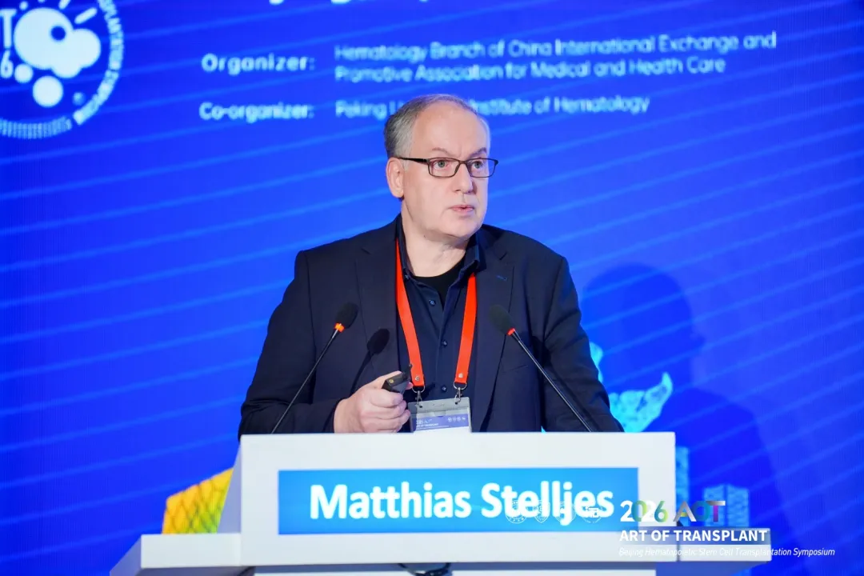

Expert Profile

Matthias Stelljes, MD
University Hospital Münster
Current affiliations
l Medical Clinic of Internal Medicine A (Hematology, Oncology, and Pneumology) (Med A)
Curriculum Vitae (CV)
l tumor immunology
l transplantation immunology
l allogeneic hematopoeitic stem cell transplantation
l acute myeloid leukemia
l akute lymphatic leukemia
Academic Education
l 1990 – 1997 Medical School at Christian-Albrechts-Universität, Kiel, Germany
Work Experience
l 02/2010 Medical Specialist for Hematology and Oncology
l 06/2007 Medical Specialist for Internal Medicine