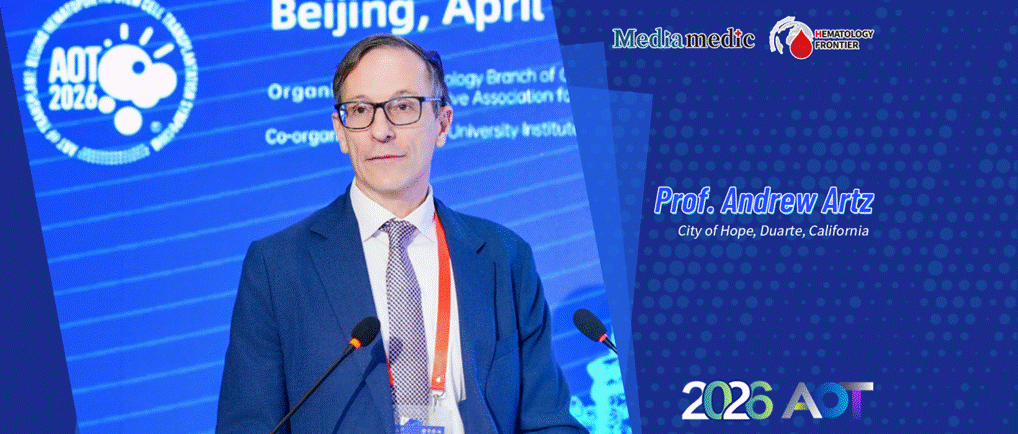
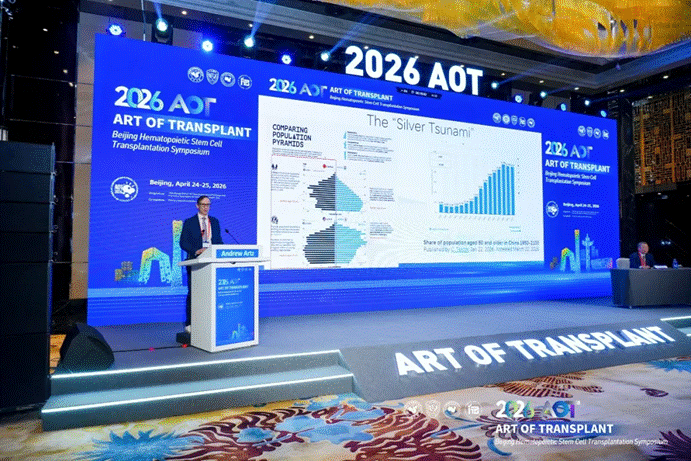
To comprehensively improve public health and strengthen strategies for the prevention and treatment of major diseases, medical innovation and international collaboration have become key drivers of clinical progress. Against this backdrop, the 2026 Beijing International Hematopoietic Stem Cell Transplantation Conference (AOT) was successfully held in Beijing from April 24 to 25, 2026. Organized by the Hematology Branch of the China International Exchange and Promotive Association for Medical and Health Care and hosted by the National Clinical Research Center for Hematologic Diseases and the Peking University Institute of Hematology, this year’s conference centered on the theme “The Art of Transplantation.” The meeting brought together leading hematology experts from around the world to discuss cutting-edge innovations and future trends in hematopoietic stem cell transplantation.During the conference, Oncology Frontier – Hematology Frontier conducted an exclusive interview with Professor Andrew Artz from City of Hope in the United States. The discussion focused on key clinical issues surrounding hematopoietic stem cell transplantation (HSCT) in older adults, with Professor Artz sharing his academic insights and practical experience to provide valuable perspectives for clinical care.
Q1、As the proportion of older patients undergoing hematopoietic stem cell transplantation (HSCT) continues to rise with population aging, how do you assess the current landscape of HSCT in older adults in the United States? Have there been any pivotal shifts in patient selection or indications?
When examining the current status of organ transplantation for the elderly population in the United States and globally, data clearly indicate a continuous increase in the proportion of older patients receiving transplants. The age limits once considered contraindications are being progressively surpassed: historically 50 years, then extending to 60, 70, and currently 80 years, with even this boundary gradually fading. Consequently, the most significant change is the increasingly widespread application of transplantation in the elderly. The proportion of older patients within the overall transplant population is rising, which is directly reflected in a notable increase in the number of elderly patients admitted to transplant units.
Simultaneously, patient selection and the scope of indications are also adapting accordingly. Specifically, as more elderly patients undergo transplantation, the disease spectrum is shifting. For instance, diseases more common in advanced age, such as acute myeloid leukemia (AML), myelodysplastic syndrome (MDS), and myelofibrosis, are becoming increasingly prominent. In contrast, previously more prevalent conditions like acute lymphoblastic leukemia (ALL) or bone marrow failure states such as aplastic anemia are relatively decreasing. Thus, the primary evolution in indications stems from the overall aging of the recipient population and the associated diseases that are more frequent or typical in the elderly.
Q2、Given the heterogeneity in comorbidities and physiological reserve among older patients, how do you balance transplant-related toxicity against potential benefits in your clinical practice? What notable advances have been made in conditioning intensity (e.g.RIC) and individualized assessment tools?
In the assessment of elderly transplant recipients, beyond age, differences in comorbidities and physiological reserve also lead to significant heterogeneity in their health status. With increasing age, reliance solely on subjective assessment often proves unreliable. Therefore, when weighing treatment-related toxicity against potential benefit to develop individualized strategies, a unified standard has not yet been established.
This assessment typically requires a multi-step process. First, prognosis should be judged based on the disease itself. For example, patients with myelodysplastic syndrome may have a longer natural history, and even acute myeloid leukemia in remission with minimal residual disease (MRD) negativity can maintain survival for several years. Thus, evaluation must always start from the natural history of the disease. Second, a comprehensive assessment of the patient’s overall condition is needed to evaluate the risk of transplant-related toxicity. It must be clarified that while transplantation can improve disease clearance rates, the associated cost must be considered. Therefore, information regarding the patient’s tolerance to treatment is a key component of this evaluation framework. Finally, at least in clinical practice, the widely adopted model is “shared decision-making,” which requires the deep involvement of patients and their families. Such decisions must also consider the patient’s cultural background and value orientation, such as their willingness and ability to tolerate long-term hospitalization, living near the treatment center, or receiving family care. Listening to patients’ views on their treatment goals often directly influences the final choice of treatment direction, thereby making decisions more aligned with the patient’s overall interests and life preferences.
Q3、From the perspective of long-term outcomes, older transplant recipients face unique challenges related to relapse, graft-versus-host disease (GVHD), and quality of life. In your view, which strategies—such as minimal residual disease (MRD) monitoring, maintenance therapy, or supportive care optimization—hold the greatest promise for improving outcomes in this population?
In the treatment of elderly transplant recipients, relapse, graft-versus-host disease (GVHD), and quality of life are all critical issues requiring focus. Although these challenges exist across all age groups, elderly patients often face more complex treatment trade-offs due to a higher incidence of high-risk diseases and lower tolerance to transplant-related toxicity. Therefore, the treatment strategies I focus on primarily center on non-transplant methods that can control the disease earlier and more effectively.
One reason transplantation can now be performed more widely and safely is the advancement of various treatment modalities, such as targeted drugs like BCL-2 inhibitors, which can help patients achieve disease control in better physical condition prior to transplantation. This allows transplantation to potentially serve as a consolidative therapy for controlled disease, rather than a forceful intervention for active disease, the latter often carrying higher risks and difficulties. Nonetheless, I believe that risk stratification based on donor characteristics, disease risk, the patient’s overall health status, and GVHD risk can still guide the development of the most suitable supportive care strategy for the individual. Although supportive care may not cure every patient, it typically carries the least harm.
Therefore, based on current progress, it is reasonable to be optimistic that through appropriate supportive and optimized treatment measures, a clinical pathway with quicker recovery and less injury can be provided for each patient. This is precisely why treatment optimization protocols are valued—they hold the potential to benefit all patients while adding almost no additional harm.
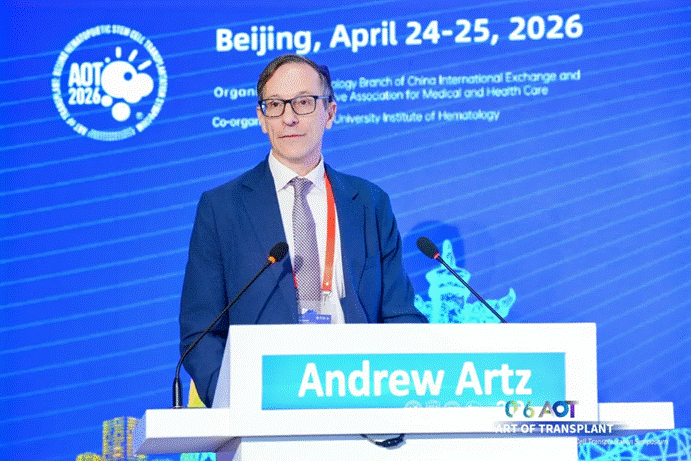
Expert Profile
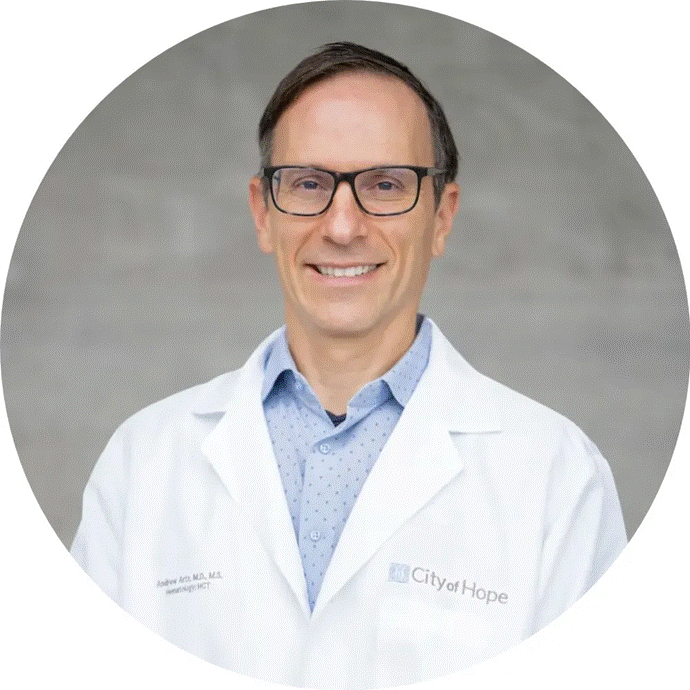
Andrew Artz, MD, MS
Andrew Artz has spent decades tending to the special needs of older people battling leukemia and blood diseases. An acknowledged leader in the field, he has created unique, multidisciplinary programs to put his senior patients in the best possible condition before they receive lifesaving stem cell transplants. He also has led research to better understand and treat anemia in older persons.
Dr. Artz received his medical degree in his home state at West Virginia University in Morgantown, West Virginia. Medicine residency was completed at Georgetown University in Washington, D.C., followed by hematology/oncology fellowship at the University of Chicago then six months of transplant training as a visiting physician at the Fred Hutchinson Cancer Center in Seattle. He was an attending hematologist and clinical director of the transplant program at the University of Chicago before moving to City of Hope®.
At City of Hope, Dr. Artz directs the Aging and Blood Cancers Program.