In recent years, rapid advances in surgical robotics and information technology have enabled remote robotic surgery to transcend geographic barriers and redefine the future of surgical care. At the same time, China’s innovative drug development efforts have achieved major international milestones. The phase III RC48-C016 study evaluating toripalimab plus disitamab vedotin (DV) as first-line treatment for urothelial carcinoma was published in The New England Journal of Medicine (NEJM), marking a landmark achievement for Chinese oncology research.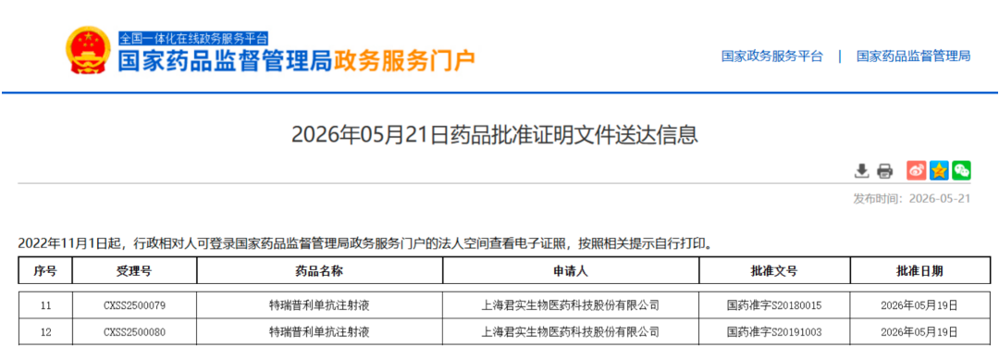
More recently, toripalimab received regulatory approval in China in combination with disitamab vedotin for patients with HER2-expressing locally advanced or metastatic urothelial carcinoma.
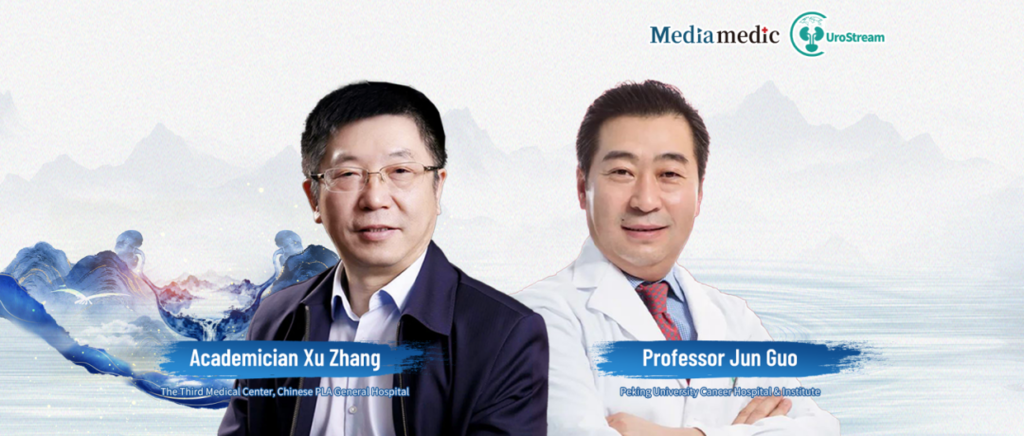
Oncology Frontier – UroStream invited Academician Xu Zhang of the Chinese PLA General Hospital and Professor Jun Guo of Peking University Cancer Hospital to discuss the clinical significance of these advances and their impact on the future development of urothelial carcinoma treatment in China.
Elevating the Global Profile of Chinese Urology
Remote Surgery Leads the World While the Toripalimab Regimen Redefines Urothelial Carcinoma Treatment
Academician Xu Zhang
Overall, Chinese urology has advanced rapidly and recently achieved major breakthroughs in both technological innovation and therapeutic development. Together, these innovations have strengthened China’s international standing in the field of urology.
From a surgical perspective, remote surgery powered by domestically developed robotic platforms and 5G communication technology has transformed the traditional model in which patients travel long distances to seek expert care. Instead, expertise can now be delivered directly to patients regardless of location.
The transcontinental ultra-long-distance robotic procedures we have performed have overcome geographical barriers and demonstrated not only Chinese ingenuity but also China’s global leadership in surgical precision, network stability, and systems integration.
Importantly, a randomized controlled trial evaluating remote robotic surgery was published in The BMJ, one of the world’s leading medical journals. This study provided high-level evidence supporting the feasibility and safety of remote robotic surgery in real-world clinical practice. It marked an important transition for remote surgery—from being merely a technological possibility to becoming a clinically validated treatment modality.
On the pharmaceutical innovation front, the RC48-C016 study represents another landmark achievement. It was the first phase III uro-oncology study from China to be presented at the ESMO Presidential Symposium and simultaneously published in The New England Journal of Medicine.
The study demonstrated for the first time that the combination of China’s domestically developed PD-1 inhibitor toripalimab and disitamab vedotin significantly outperformed conventional chemotherapy as first-line treatment for urothelial carcinoma, nearly doubling both progression-free survival (PFS) and overall survival (OS).
This achievement signals China’s transition from validating and following international treatment paradigms to becoming a source of original innovation—developing therapies based on the characteristics of Chinese patients, utilizing Chinese-developed medicines, and generating globally competitive efficacy data through independently designed clinical trials.
These two achievements collectively demonstrate that Chinese urology is no longer merely a participant in global innovation. China is now helping define new technical standards, as exemplified by remote robotic surgery, and providing new therapeutic solutions, as demonstrated by innovative drug regimens.
We have entered a new era characterized by independent innovation and global contribution. Our goal is no longer limited to solving domestic clinical challenges; we are increasingly contributing solutions to important global medical questions and providing evidence-based “Chinese wisdom” to the international uro-oncology community.
Professor Jun Guo
For many years, chemotherapy dominated first-line treatment for urothelial carcinoma.
Regimens such as gemcitabine plus cisplatin (GC) and paclitaxel, gemcitabine, and cisplatin (TGP) established the historical standards of care.
More recently, the international EV-302 study demonstrated that the combination of enfortumab vedotin and immunotherapy could dramatically improve outcomes, doubling both progression-free and overall survival and creating a new benchmark for first-line treatment.
Against this backdrop, China’s independently developed DVT regimen—toripalimab plus disitamab vedotin—emerged only one year later and once again reshaped the treatment landscape.
Clinical data showed that DVT also doubled both PFS and OS compared with conventional chemotherapy.
As a result, the Chinese-developed DVT regimen now stands alongside leading international treatment strategies as a new global standard for first-line urothelial carcinoma therapy.
What is particularly remarkable is that this original Chinese treatment strategy has achieved international prominence through its outstanding efficacy.
Toripalimab’s sustained modulation of the tumor immune microenvironment appears to contribute to durable antitumor activity and long-term clinical benefit.
This achievement represents a defining moment for Chinese uro-oncology and is something in which we can all take great pride.
Translating Innovation Into Clinical Practice
International Recognition and Improved Accessibility Through Domestic Approval
Academician Xu Zhang
The ESMO Presidential Symposium and The New England Journal of Medicine represent two of the most prestigious platforms in global oncology.
The fact that the toripalimab plus disitamab vedotin study was showcased in both venues reflects the highest level of international recognition for the study’s scientific rigor, data quality, and clinical importance.
Historically, these platforms have largely been dominated by Western cooperative groups and multinational pharmaceutical companies. This achievement has earned Chinese investigators a prominent place on the global stage.
The recent approval of this regimen, centered on the domestically developed PD-1 inhibitor toripalimab, represents more than a scientific breakthrough. It embodies the accumulated wisdom of Chinese innovation and provides a practical “Chinese solution” for the treatment of urothelial carcinoma.
Its availability within China means that more patients can access a highly effective treatment that is both relevant to local clinical needs and readily accessible within the domestic healthcare system.
Looking ahead, this regimen may contribute to future updates of international treatment guidelines, allowing Chinese innovation to become part of global standards of care and further expanding China’s influence in oncology drug development.
The success of toripalimab in combination therapy is largely attributable to several distinctive mechanistic advantages.
Its high-affinity, durable blockade of PD-1 enables more effective reversal of immune suppression within the tumor microenvironment.
In addition, its optimized IgG4 backbone minimizes antibody-dependent cellular cytotoxicity (ADCC), reducing unintended depletion of activated T cells and helping preserve immune function and long-term immunologic memory.
These characteristics have translated into meaningful survival improvements. Compared with traditional chemotherapy, toripalimab-based therapy significantly prolongs overall survival and increases the possibility of long-term disease control and even potential cure for some patients.
The regimen also demonstrates a favorable safety profile, with substantially lower rates of grade 3 or higher adverse events compared with chemotherapy. This allows patients to complete planned treatment courses and provides a valuable first-line option for elderly patients and those with significant comorbidities who may not tolerate cytotoxic chemotherapy.
Professor Jun Guo
Toripalimab was the first domestically developed PD-1 inhibitor approved in China and has played a pioneering role in the country’s immunotherapy landscape.
Although it was initially approved for melanoma, development in uro-oncology began at an early stage and has explored multiple treatment settings across the disease continuum.
During the chemotherapy era, toripalimab already demonstrated encouraging activity as second-line monotherapy in patients with chemotherapy-refractory urothelial carcinoma.
Even without patient selection based on PD-L1 expression, objective response rates approached 40%.
These early findings highlighted several strengths:
- Meaningful clinical efficacy
- Relatively low toxicity
- Manageable safety profile
- Good patient tolerability
These attributes provided a strong foundation for future development.
Toripalimab has also demonstrated excellent compatibility in combination regimens, particularly when paired with innovative therapies such as disitamab vedotin.
Importantly, relatively few patients required treatment discontinuation or dose modification because of adverse events, further supporting its clinical utility.
In my view, toripalimab is an outstanding example of a Chinese-developed PD-1 inhibitor and has played a significant role in elevating China’s position within the global immuno-oncology community.
As the DVT regimen has gained increasing international attention, awareness of toripalimab among overseas experts has also grown substantially.
Many international colleagues are now familiar with the drug, and some have direct clinical experience using it. Feedback from the global oncology community has been overwhelmingly positive, reflecting growing recognition of the quality and potential of Chinese-developed immunotherapies.
Building a Healthier Future Together
Bringing Cutting-Edge Innovations to More Patients and Establishing New Benchmarks for Chinese Urology
Academician Xu Zhang
The success of toripalimab plus disitamab vedotin, combined with China’s leadership in areas such as remote robotic surgery, demonstrates that China now possesses the complete capability to identify important scientific questions, design and execute practice-changing clinical studies, and develop globally competitive innovative medicines.
These accomplishments have fundamentally changed international perceptions of the quality and impact of Chinese urologic research.
One of the key missions of the Chinese Urological Association (CUA) is to translate these breakthrough discoveries into routine clinical practice.
This includes coordinating with national strategies and industry partners at the highest level while also supporting physicians across all levels of healthcare delivery through guideline development and standardized clinical implementation.
In urothelial carcinoma, toripalimab plus disitamab vedotin has already established a new treatment benchmark based on high-level evidence.
It is also among the very few PD-1 inhibitors globally that have generated clinical evidence across the entire disease continuum, including promising results in neoadjuvant and adjuvant settings. This represents a true model of clinical innovation.
Chinese urology is entering a new era driven by innovation.
As the leading professional organization in the field, the CUA will continue promoting the development, clinical translation, and standardized application of domestically developed technologies and original therapies such as toripalimab.
Our goal is to ensure that Chinese innovation serves Chinese patients while simultaneously bringing Chinese solutions to the global medical community.
Professor Jun Guo
Over the past decade, China’s pharmaceutical industry has achieved remarkable progress in innovative drug development.
From original research capabilities to manufacturing quality standards, the industry has undergone a profound transformation and is now fully capable of competing among the world’s leading innovators.
This progress continues to inject Chinese expertise and creativity into uro-oncology and oncology as a whole.
The Chinese Society of Clinical Oncology (CSCO) has consistently identified uro-oncology as a major priority area and closely follows advances in the field.
Today, Chinese-developed treatment strategies centered on toripalimab have achieved major breakthroughs in first-line urothelial carcinoma treatment while also demonstrating exciting potential in organ-preservation approaches.
For example:
- In non–muscle-invasive bladder cancer (NMIBC), adjuvant treatment combined with radiotherapy has achieved a 1-year disease-free survival rate of 62.5%.
- In muscle-invasive bladder cancer (MIBC), neoadjuvant toripalimab plus disitamab vedotin has achieved a pathologic complete response (pCR) rate of 63.6%.
- Neoadjuvant toripalimab combined with chemotherapy has achieved a pCR rate of 40.7% along with encouraging long-term survival outcomes.
These studies demonstrate that toripalimab now has clinical evidence supporting its use across virtually every stage of urothelial carcinoma management.
As these findings continue to be translated into clinical practice, they have the potential to further optimize treatment pathways and improve patient outcomes.
CSCO will continue to play a leading role by updating clinical guidelines based on high-quality evidence, promoting standardized care, and helping transform innovative Chinese research into tangible benefits for patients.
Featured Experts
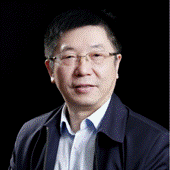
Academician Xu Zhang

Professor Jun Guo