
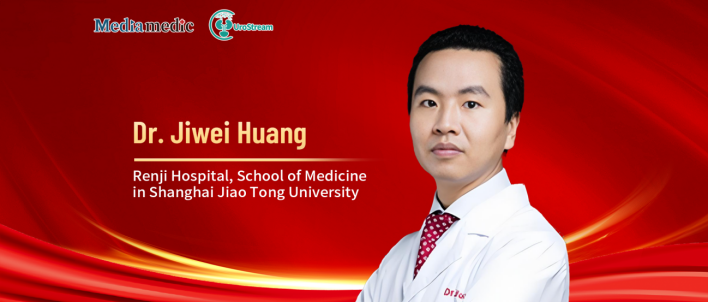
Editor's Note: The 10th West China Urologic Oncology Tianfu Academic Conference was successfully held from November 5 to 7, 2026. The conference focused on cutting-edge developments in genitourinary cancers. Kidney-sparing treatment for upper tract urothelial carcinoma (UTUC), an important approach that seeks to balance tumor control with preservation of renal function, attracted considerable attention from participating experts. On this occasion, Oncology Frontier – UroStream invited Professor Jiwei Huang of Renji Hospital, Shanghai Jiao Tong University School of Medicine, to share insights and experience from Renji Hospital regarding patient selection, treatment strategies, and follow-up management in kidney-sparing treatment for UTUC.01
Oncology Frontier – UroStream: The central goal of kidney-sparing treatment for upper tract urothelial carcinoma (UTUC) is to control tumor risk while preserving renal function. Based on Renji Hospital’s experience with kidney-sparing treatment for UTUC, how do you determine which patients are suitable candidates in clinical practice? Which factors directly influence your treatment decisions?
Professor Jiwei Huang: Several factors need to be considered when determining which patients are suitable for kidney-sparing treatment. The EAU, CUA, and CSCO guidelines provide relatively consistent recommendations: when kidney preservation is achieved through surgery alone, kidney-sparing treatment is primarily recommended for patients with low-risk disease.
To be classified as low risk, patients must meet several criteria. First, the tumor must be low grade, as confirmed by biopsy or exfoliative cytology. Second, imaging must show no evidence of invasion, corresponding to Ta–T1 disease. Third, the tumor should preferably be unifocal. In addition, the tumor should be smaller than 2 cm.
For patients who strictly meet all these low-risk criteria, current guidelines recommend kidney-sparing treatment, which can be achieved directly through surgery.
However, such patients account for only a relatively small proportion of the overall UTUC population. If even one of the above criteria is not met, the disease is classified as high risk, for which guidelines recommend radical treatment. Nevertheless, with continued advances in systemic therapies, radiotherapy, and other techniques, some high-risk patients can now be converted into candidates for surgery with relatively well-controlled disease following systemic treatment, creating an opportunity for kidney preservation.
The multicenter national DISTINCT-I trial conducted at our center specifically targeted this patient population. All enrolled patients had high-risk disease. Following systemic treatment, they underwent a second efficacy assessment to determine whether kidney-sparing treatment was appropriate. The results were very encouraging. The study showed that, after systemic treatment and reassessment, a considerable proportion of patients met the criteria for kidney preservation.
02
Oncology Frontier – UroStream: Are there differences in the choice of kidney-sparing surgical approaches for renal pelvic tumors and ureteral tumors? How can systemic therapy be integrated with local surgery through comprehensive management to create kidney-sparing opportunities for more patients?
Professor Jiwei Huang: It is very important to adopt different treatment approaches according to the anatomical location of UTUC. UTUC is primarily divided into renal pelvic tumors and ureteral tumors.
For renal pelvic tumors, kidney-sparing treatment is mainly achieved through endoscopic procedures, such as flexible ureteroscopy, percutaneous nephroscopy, or a combination of the two. For ureteral tumors, segmental ureterectomy is more commonly used. Its advantages include complete removal of the tumor-bearing segment, the ability to obtain surgical margins, and the opportunity to perform lymph node dissection, making it a good surgical option.
Regarding local instillation therapy, relevant studies are already underway internationally, and companies in China are also preparing to develop corresponding intraluminal agents.
I believe systemic therapy is playing an increasingly important role in this setting. We can draw on the principles of bladder-preserving treatment for bladder cancer, as illustrated by the EV-303 and EV-304 studies. Through comprehensive management incorporating systemic treatment, surgery (transurethral resection of bladder tumor, or TURBT, in bladder cancer), and subsequent adjuvant therapy, a substantial number of patients can preserve their bladders.
Similarly, in kidney-sparing treatment for UTUC, combining comprehensive management with surgery can help more patients achieve meaningful renal preservation. Our own DISTINCT-I trial has demonstrated this as well. Through systemic treatment with RC48 (disitamab vedotin) combined with immunotherapy, approximately 75% of patients became eligible for kidney-sparing treatment. Kidney preservation could then be achieved through ablation or segmental resection.
Whether additional adjuvant treatment is needed after surgery remains controversial. Some patients may benefit, but this requires further investigation. Radiotherapy may also represent a potential direction for future exploration.
03
Oncology Frontier – UroStream: Kidney-sparing treatment does not mean that treatment is complete. Postoperative recurrence and the development of new lesions in the upper urinary tract remain important concerns. How does follow-up management differ between patients who undergo kidney-sparing treatment and those who undergo radical surgery? How can patients who need to transition to radical treatment be identified in a timely manner?
Professor Jiwei Huang: As you pointed out, follow-up strategies after kidney-sparing surgery and radical surgery are indeed quite different.
After radical surgery, ureteroscopy is generally not required, although cystoscopy remains necessary. Follow-up primarily relies on imaging, exfoliative cytology, blood and routine urine tests, as well as biomarker assessments such as FISH and urinary methylation testing.
After kidney-sparing treatment for UTUC, however, the kidney remains in place and patients face a relatively high risk of recurrence. Therefore, ureteroscopic examinations need to be performed more frequently.
In our study, we recommended that patients undergo imaging, exfoliative cytology, blood tests, and routine urine examinations every three months. This approach can help identify early recurrence. This is particularly important for patients who have undergone ablation, as their recurrence rate is relatively high.
In the DISTINCT-I trial, three patients experienced recurrence during subsequent follow-up after kidney-sparing treatment with ablation, accounting for approximately one-third of this subgroup. Early detection is therefore particularly important for these patients. However, recurrence does not necessarily mean that radical surgery is required. Among the three patients who experienced recurrence in the study, two underwent repeat ablation or other surgical procedures and still achieved favorable kidney-sparing outcomes. Only one patient experienced a higher-risk recurrence and subsequently underwent radical surgery.
With active and close follow-up, together with the use of molecular biomarkers such as circulating tumor DNA (ctDNA), urinary tumor DNA (utDNA), and methylation testing, we should be able to make substantial progress toward achieving both oncological control and better preservation of renal function in patients receiving kidney-sparing treatment.

Professor Jiwei Huang