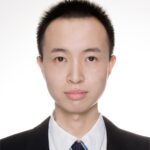

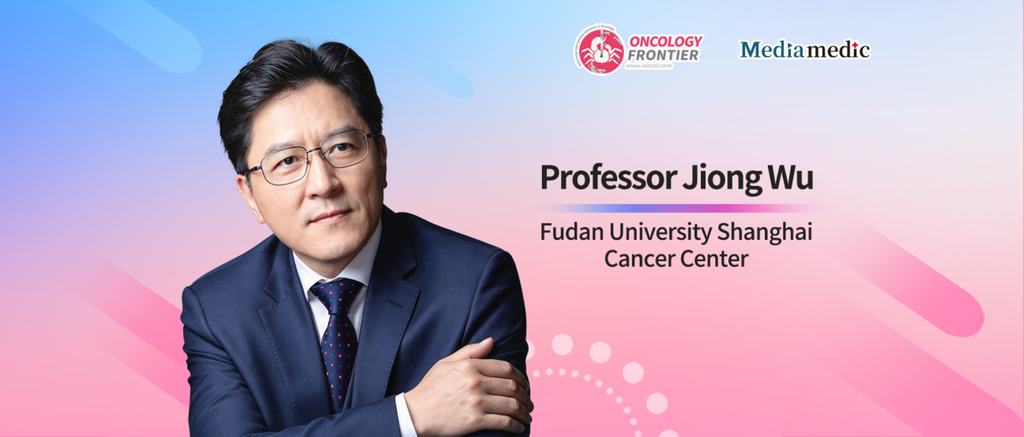
Editor's Note: The 18th Shanghai Breast Reconstruction Conference, jointly organized by the Shanghai Anti-Cancer Association and the Shanghai Foundation for Cancer Prevention and Treatment, guided by the Breast Cancer Committee of the Chinese Anti-Cancer Association, and hosted by Fudan University Shanghai Cancer Center, was held in Shanghai from October 10 to 14, 2026. Under the theme “Global Wisdom, Collaborative Practice,” the conference embraced the principles of innovation, cooperation, and development, presenting a high-level, international, and multidisciplinary academic event.During the conference, Oncology Frontier interviewed Professor Jiong Wu of Fudan University Shanghai Cancer Center, Chair of the conference, who shared in-depth insights into the meeting’s highlights and overarching themes, international academic exchange, updates to the 2027 breast reconstruction consensus, implementation of consensus recommendations, and efforts to promote standardized care at the primary level.
Oncology Frontier: As Chair of the 18th Shanghai Breast Reconstruction Conference, could you introduce the key features and highlights of this year’s meeting?
Professor Jiong Wu: This year marks the 18th Shanghai Breast Reconstruction Conference. Personally, I am delighted that the conference has continued to be held for so many years. Looking back at its development, it began as a small academic gathering attended by representatives from only around 40 institutions. Today, it has grown into a major conference attended by representatives from hundreds of institutions nationwide, reflecting a substantial expansion in scale. Its continued success demonstrates the recognition our work has received and underscores the importance placed on surgical treatment throughout the continuum of breast cancer care.
The past 20 years have witnessed rapid advances in breast cancer diagnosis and treatment. These advances encompass both the development of innovative therapeutic drugs and the evolution of surgical techniques for breast cancer. Our understanding of breast cancer as a disease has continued to deepen, supported by extensive multidisciplinary collaboration and the growing availability of effective systemic treatments and a broader range of therapeutic options, including adjuvant radiotherapy. As a result, breast cancer surgery has gradually moved toward a “de-escalation” approach.
However, as we pursue surgical de-escalation, we must also recognize substantial differences among patients in different regions in terms of disease presentation, disease stage, understanding of the disease, and surgeons’ familiarity with surgical concepts and techniques. These differences make it essential for us to use conferences like this one to strengthen education and communication, disseminate new concepts and techniques in breast surgery more effectively, and advance the development of breast surgery across China.
This year’s conference covered several major areas:
1. Surgical demonstrations and practical clinical applications: On October 14, leading experts from China and abroad conducted live surgical demonstrations. The procedures covered a range of cutting-edge techniques, including nipple-sparing mastectomy combined with DIEP flap breast reconstruction, immediate implant-based reconstruction, combined flap and implant reconstruction for correction of bilateral breast asymmetry, volume replacement surgery as an alternative to volume displacement, and autologous fat transplantation. The program also featured discussions on immediate reconstruction following breast-conserving surgery, as well as approaches to preserving the nipple–areolar complex.
2. Global perspectives and international dialogue: We invited renowned experts from the United States, France, Australia, Germany, the United Kingdom, and several other countries and regions. They shared advanced experience and the latest research developments in breast reconstruction, specialist training, and interdisciplinary collaboration.
3. Cutting-edge techniques and interdisciplinary innovation: The conference featured multiple presentations on emerging approaches, bringing together experts from different disciplines to explore the application of robotics and endoscopic techniques in breast reconstruction, the integration of implant-based reconstruction with autologous fat grafting and regenerative strategies, the use of tissue-engineered biomaterials in breast defect repair, and advances in preventive and reconstructive approaches for lymphedema, including lymphaticovenous anastomosis (LVA).
4. Authoritative consensus and clinical practice guidance:
During the conference, the 2027 Breast Reconstruction Consensus launch ceremony and consensus tour were held alongside the launch of “BEST. BEYOND | Classics, Leadership, and Excellence: Launching a New Era of Precision in Breast Surgery.” In addition, a dual-themed media launch event, “Reshaping the Curve: Innovation and Public Benefit,” further strengthened the integration of professional standards and public welfare.
We hope that the in-depth discussions at this conference will foster the exchange of international perspectives and the advancement of surgical techniques, contributing to better quality of life and improved recovery outcomes for patients with breast cancer.
Oncology Frontier: The theme of this year’s conference is “Beyond Boundaries in Medicine: Global Wisdom, Collaborative Practice.” What is the significance of this theme? Against the backdrop of rapid advances in breast surgery worldwide, what critical role does international academic exchange play in advancing breast reconstruction in China?
Professor Jiong Wu: Breast surgery has evolved over more than a century. The field has progressed from traditional radical surgery to defining the least invasive surgical approaches that can achieve optimal outcomes with the patient at the center of care. Many milestone advances were pioneered by international scholars, and we have been quick to learn from and adopt these cutting-edge techniques. However, I believe there are no limits to innovation in surgical techniques or the evolution of treatment concepts.
With the development of new therapies, including antibody-drug conjugates (ADCs), survival outcomes have improved substantially for certain patient groups. For these patients, we must also consider whether further surgical de-escalation or even the avoidance of mastectomy may be possible, thereby reducing the physical and psychological burden of treatment and further improving quality of life. This makes international exchange essential.
Over the years, I have worked closely with organizations such as the Breast Cancer Committee of the Chinese Anti-Cancer Association (CACA-CBCS) and the Breast Cancer Committee of the Chinese Society of Clinical Oncology (CSCO-BC). Together, we have continuously advanced specialist training in breast surgery in China. At the same time, China’s influence in the field of breast cancer care has gradually expanded internationally.
At the 2025 Society of Breast Surgeons of Australia and New Zealand (SABCS) meeting, CACA-CBCS and the SABCS organizing committee held their first joint session dedicated to breast cancer research in China. At the International Surgical Week and World Congress of Surgery organized by the International Society of Surgery, I was also formally elected to the Council of the International Society of Breast Surgery. In recent years, we have actively participated in the annual meetings of the American Society of Breast Surgeons (ASBrS). Through deeper engagement in international academic exchange, I have become increasingly aware of the industry’s need for a long-term, two-way communication mechanism.
Meaningful international exchange has enabled us to build closer relationships with breast surgeons around the world. At the same time, we have invited more international colleagues to visit China and participate in our academic activities.
At the 17th Shanghai Breast Reconstruction Conference in 2025, we officially launched the Breast Cancer Surgeon Taskforce (BEST) international exchange program. Over the past year, the program has made excellent progress. We have organized nearly 20 in-person activities, as well as multiple online discussions focusing on current clinical challenges. These initiatives have brought the treatment experience and concepts of international colleagues directly to China.
In particular, when international experts visit China and travel to different cities and medical institutions, they gain a better understanding of the scale of China’s specialized breast care services and breast centers. They have also expressed strong recognition of the level of breast surgery in China, noting that the country’s large patient population and outstanding clinical teams provide valuable experience, technical expertise, and time for advancing breast cancer surgery, improving treatment outcomes, and enhancing patients’ quality of life.
Oncology Frontier: The 2027 edition of the breast reconstruction consensus has been released, and the consensus tour has been launched. Compared with previous guidelines and consensus statements, could you explain the main priorities of the 2027 edition and the key clinical challenges, controversies, or emerging questions it aims to address?
Professor Jiong Wu: We published the first edition of the breast reconstruction consensus in 2018 and the second edition in 2022. The 2027 edition is our third edition. It brings together the collective expertise of specialists in breast cancer across China and focuses primarily on two areas: breast reshaping and breast reconstruction. These encompass oncoplastic surgery, various reconstructive techniques, and the management of lymphedema, as well as clinical practice issues involving patient satisfaction and full-course care.
For the 2027 edition, we have added chapters on robotic reconstruction and lymphedema management. In China, an increasing number of breast surgeons are using robotic techniques for mastectomy and breast reconstruction. They are also applying advanced microsurgical techniques to lymphatic vessel cannulation and vascular anastomosis, including vascularized lymph node transfer. These developments demonstrate that carefully selected patients can achieve excellent outcomes with advanced surgical techniques. Nevertheless, we believe that clinical practice in these areas still requires standardized guidance. Accordingly, we have incorporated consensus recommendations addressing these important topics.
We conducted multiple rounds of discussion and organized voting on the recommendations, achieving consensus on most of the key points. Naturally, experts may differ somewhat in their recommended levels of evidence or strength of recommendation across different consensus statements. During the drafting process, we also invited international experts who regularly participate in the BEST program to provide valuable feedback on these recommendations. Some of their comments were particularly thoughtful and comprehensive, laying a strong foundation for the future international development of our consensus.
Oncology Frontier: Publishing a consensus is only the starting point. What plans and expectations do you have for promoting the implementation of the 2027 breast reconstruction consensus across medical institutions at different levels nationwide and improving standardized care in primary-level hospitals through educational tours?
Professor Jiong Wu: After completing and publishing each edition of the consensus, we organize educational tours across different regions of China. These tours are closely coordinated with the educational activities planned by the CACA-CBCS and CSCO-BC committees, complementing one another.
The first two committees generally focus their tours on the broader principles of standardized diagnosis and treatment. In contrast, our tours on oncoplastic surgery, breast-conserving surgery, and breast reconstruction place greater emphasis on surgical techniques. Surgical techniques are inseparable from the broader multidisciplinary system of breast cancer care.
During these tours, we provide surgical instruction, demonstrate different procedures, and address practical questions that arise during clinical training. Each session also includes in-depth discussions of selected clinical challenges and topics of particular interest to participants.
We also closely integrate the educational tours with local academic conferences. Annual meetings organized by regional demonstration centers are often incorporated into the program, generally lasting half a day to a full day, and this approach has received very positive feedback. The content is carefully organized and developed according to the latest updates in the consensus. We invite experienced speakers and panelists in the relevant fields and, on some occasions, international experts participating in the BEST program to join the tours.
Beyond these educational tours, we also hope to establish new organizations and collaborative structures to further promote specialized techniques. My plan is to work with relevant partners to develop centers of excellence for autologous tissue reconstruction, or to collaborate with centers that already have mature expertise in these techniques, and establish an alliance. This alliance would focus on specialist training in autologous breast reconstruction and on developing a registry of real-world cases. Through these efforts, more centers could become proficient in applying technically challenging breast reconstruction procedures safely and effectively, ultimately benefiting more patients.