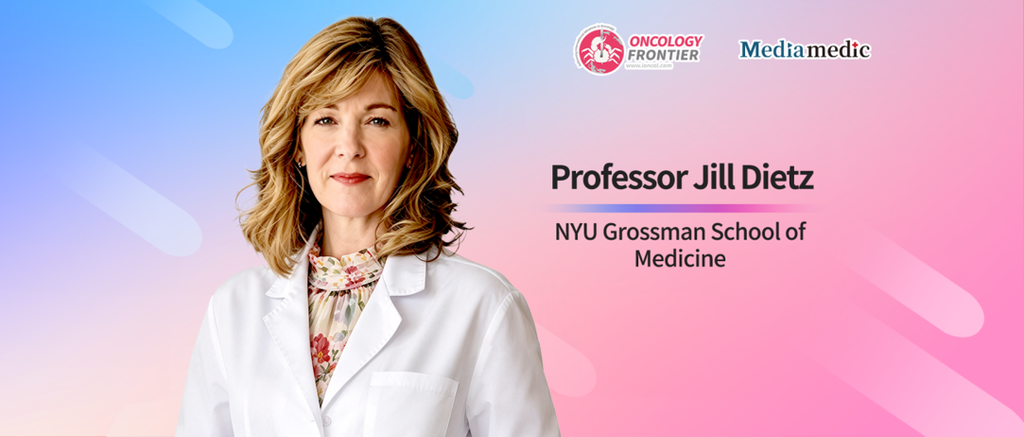
Editor's Note: The 18th Shanghai Breast Reconstruction Conference was held in Shanghai on October 14–15, 2026. The meeting brought together renowned experts from the United States, France, Australia, Germany, the United Kingdom, and other countries and regions to share advanced experience and the latest research in breast reconstruction, specialist training, and interdisciplinary collaboration.Professor Jill Dietz of Case Western Reserve University School of Medicine, USA, delivered a presentation entitled “An Overview of Oncoplastic Breast Surgery Training and Practice in the United States.” Following the meeting, Oncology Frontier interviewed Professor Dietz about the core principles of oncoplastic breast surgery training and practice in the United States, her experience with multidisciplinary team (MDT) collaboration, and her advice for the professional development of young surgeons in China.
01
Oncology Frontier: Your presentation at this conference provided an overview of oncoplastic breast surgery training and practice in the United States. In your view, what are the most important and successful experiences in training breast surgeons to perform both oncologic resection and reconstructive procedures?
Professor Jill Dietz: In the United States, training in oncoplastic breast surgery is still at an early stage. Some surgeons learn these techniques outside the conventional training system. I also believe that learning is a lifelong process. Although I am no longer young, I continue to learn and refine these skills.
I believe that our country needs surgeons who have already received relevant training to take the initiative in mentoring and training the next generation. I have always maintained that breast surgeons should perform oncoplastic procedures because they understand the oncologic principles behind breast cancer surgery. Their primary goals are to remove the tumor completely and ensure oncologic safety, while also achieving good cosmetic outcomes.
02
Oncology Frontier: Oncoplastic breast surgery relies heavily on multidisciplinary team (MDT) collaboration. How does the U.S. training system prepare surgeons to work effectively with teams comprising breast surgeons, medical oncologists, radiation oncologists, pathologists, and other specialists? What lessons can this offer for international interdisciplinary collaboration?
Professor Jill Dietz: I believe that breast cancer care depends heavily on MDT collaboration. In the United States, we hold regular MDT meetings to discuss whether patients should receive systemic therapy before surgery or proceed directly to surgery, as well as how surgery may affect subsequent radiotherapy.
Oncoplastic breast surgery can influence several stages of treatment, including radiotherapy, and it may also create significant challenges for pathologists when interpreting surgical specimens. Therefore, it is essential to present these cases to a multidisciplinary tumor board for discussion. We carefully review the imaging findings, pathology, proposed surgical approach, and potential impact of the procedure on other aspects of treatment.
I believe we have established a relatively effective approach to this process in the United States. Going forward, incorporating oncoplastic surgery into routine MDT discussions should be an important next step.
03
Oncology Frontier: For young surgeons in China who are at an early stage of developing their expertise in oncoplastic breast surgery and are eager to improve their reconstructive skills, what specific advice would you offer? What are the biggest challenges they should prepare to overcome during their professional development?
Professor Jill Dietz: First, it is important to recognize that oncoplastic breast surgery is not a skill that can be mastered automatically. Surgeons must actively seek opportunities to learn and develop their abilities. Every breast surgeon wants to continually improve their skills for the benefit of their patients, so finding experienced mentors like Professor Wu is extremely valuable.
Young surgeons should also make time in their busy schedules to study and master these specialized techniques. This is exactly what I have done, and it is something I will continue to pursue. Once you have truly mastered these skills, you should share your knowledge and experience with your colleagues and collaborators.