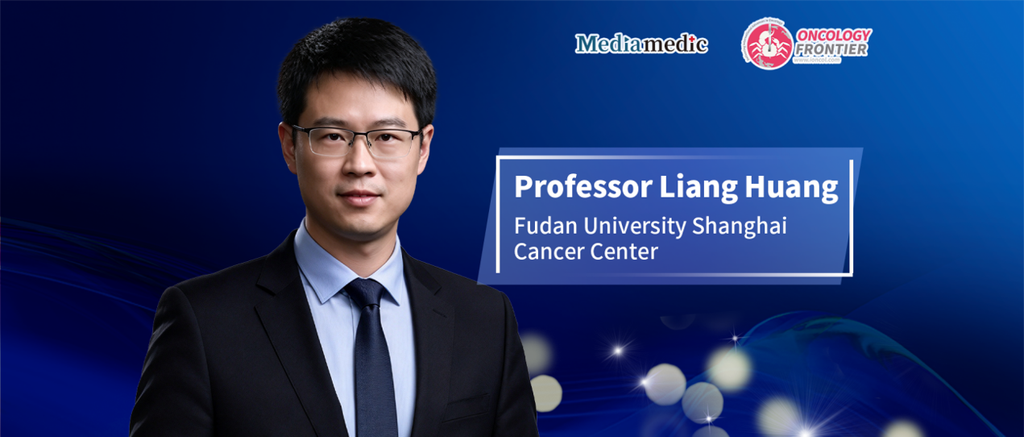
Editor's Note: As more patients with breast cancer seek both oncologic cure and preservation of breast appearance, breast-conserving surgery and breast reconstruction have become increasingly important components of comprehensive breast cancer care. The challenge is to improve aesthetic outcomes and quality of life while maintaining oncologic safety, ensuring effective local control, and minimizing long-term risks. This requires individualized, multidisciplinary surgical decision-making. At the 19th National Breast Cancer Conference and the 21st Shanghai International Breast Cancer Symposium (SIBCS), Professor Liang Huang of Fudan University Shanghai Cancer Center spoke with Oncology Frontier about balancing oncologic safety and aesthetic outcomes in breast-conserving surgery and reconstruction, selecting techniques for Chinese women with distinct breast anatomy, weighing implant-based against autologous tissue reconstruction, and the roles of multidisciplinary team (MDT) collaboration and patient communication.01
Oncology Frontier: You perform numerous breast-conserving and breast reconstruction procedures each year. How do you balance oncologic safety and aesthetic outcomes when selecting surgical techniques? Given the anatomical characteristics of Chinese women, who often have smaller breasts and denser glandular tissue, which oncoplastic techniques offer the greatest practical value and potential for wider adoption?
Professor Liang Huang: Based on years of experience with breast-conserving surgery and reconstruction, I believe that oncologic safety must always remain the bottom line for breast surgeons. Aesthetic outcomes are an added benefit built on that foundation; the two are not equally weighted considerations.
When selecting a surgical approach for patients undergoing breast conservation, we emphasize that negative surgical margins must be achieved, while ensuring that most patients can receive postoperative radiotherapy. Only when patient safety can be reliably maintained do we design an oncoplastic breast-conserving procedure based on tumor size and location, breast characteristics, and the extent of glandular tissue loss. We should never compromise the principles of oncologic surgery merely to improve appearance.
Indeed, many Chinese patients we treat have relatively small breasts and dense glandular tissue, making their anatomical characteristics somewhat different from those of Western populations. We have also observed that breast-conservation rates in Western countries are higher than those in China. In patients with larger breasts, whether in Western countries or in China, volume replacement using autologous tissue can be considered after partial removal of the glandular and tumor tissue to fill the resulting defect. However, this approach may not be suitable for patients with smaller breasts, for whom techniques such as skin flap transfer or volume replacement may be necessary.
In recent years, we have also explored approaches such as limited-volume fat grafting, breast support structures, and the use of biomaterials. These techniques are relatively easy to learn and may have good potential for wider adoption. Ultimately, every patient’s treatment must be individualized. A single standardized approach cannot be applied to everyone; patients need stratified assessment and tailored surgical plans.
02
Oncology Frontier: Breast reconstruction generally falls into two major categories: implant-based reconstruction and autologous tissue reconstruction. How can clinicians balance “minimizing surgical trauma” with “long-term safety” when making clinical decisions? How can surgeons, radiation oncologists, and plastic surgeons collaborate through an MDT to achieve the optimal outcome?
Professor Liang Huang: After performing numerous implant-based and autologous breast reconstruction procedures, I have come to appreciate that choosing a reconstruction method is an individualized decision. It requires us to consider the current clinical situation, the anticipated effects of treatment, and, above all, patient safety and minimizing surgical trauma.
Implant-based reconstruction generally involves less surgical trauma and does not have a direct relationship with the patient’s abdominal or back anatomy, nor does it cause tissue loss in other parts of the body. However, if postoperative radiotherapy is required, patients may face an increased risk of capsular contracture, implant exposure, or changes in breast appearance. In such circumstances, autologous tissue reconstruction may offer greater long-term stability.
In clinical practice, not every patient undergoes reconstruction using a single technique; some may benefit from a combination of autologous tissue and implants. For older patients, those with multiple underlying conditions, or those unable to tolerate extensive surgery, we also assess whether implant-based reconstruction alone is appropriate, or whether neoadjuvant treatment could shrink the tumor sufficiently to permit breast-conserving surgery and preserve breast appearance.
Choosing the reconstruction method requires multidisciplinary discussion. For example, the breast surgeon is responsible for achieving oncologic control. Before surgery, the surgeon should discuss the postoperative treatment plan with radiation oncologists and medical oncologists, including whether radiotherapy, chemotherapy, or both will be needed and the likely radiation field. The team should also communicate with plastic surgeons to determine the most appropriate reconstruction approach.
Through collaborative multidisciplinary discussion, we can develop a treatment plan tailored to each patient. The core objective is to determine the appropriate reconstruction timing and surgical technique, ultimately providing an individualized surgical plan that balances safety, minimal trauma, and aesthetic outcomes.
03
Oncology Frontier: The ultimate beneficiaries of oncoplastic breast-conserving surgery and aesthetic closure are the patients themselves. However, physicians and patients may have different understandings and expectations regarding “beauty.” How do you help patients understand the value of oncoplastic breast-conserving surgery and aesthetic closure in clinical practice?
Professor Liang Huang: Indeed, oncoplastic breast-conserving surgery and aesthetic closure are techniques we frequently use in clinical practice. For example, during routine breast-conserving surgery or surgery for benign breast lesions, I may use aesthetic closure techniques to meet patients’ cosmetic needs, minimize scarring, and avoid visible deformities as much as possible.
We therefore pay close attention to incision design. By selecting appropriate incisions and using meticulous closure techniques, we can reduce scar visibility. We also use aesthetic suturing techniques to improve the appearance of postoperative scars.
Before surgery, I sometimes use photographs or comparable clinical cases to show patients what their postoperative appearance may be like, allowing us to discuss expectations more concretely. It is important to emphasize that the primary goal of oncoplastic breast-conserving surgery and aesthetic closure is not to achieve a completely scar-free result. Rather, the goal is to minimize breast tissue loss, contour deformity, asymmetry, and visible scarring without compromising oncologic safety, while reducing the psychological burden associated with surgery and helping patients return to normal life.
At the same time, I explain clearly to patients that the fundamental principles of oncoplastic surgery and aesthetic closure are to prioritize treatment of the disease and improve appearance. Breast surgeons are not the same as cosmetic surgeons. When a patient’s aesthetic expectations exceed what the surgical technique can safely achieve, we cannot simply agree to an unsuitable procedure for the sake of appearance. We must first explain patiently that oncologic safety is non-negotiable. We should also objectively discuss the realistic benefits and limitations of surgery, including the possibility of postoperative asymmetry, scarring, and changes in breast shape following adjuvant treatment, and offer appropriate alternatives.
This requires a shared understanding between physicians and patients, particularly before surgery. The goal is to ensure that patients understand the proposed surgical plan and have realistic expectations. The objective is to cure the cancer while improving appearance and minimizing scarring as much as possible—not to pursue perfection at all costs. Establishing reasonable expectations is essential to avoiding postoperative disappointment.