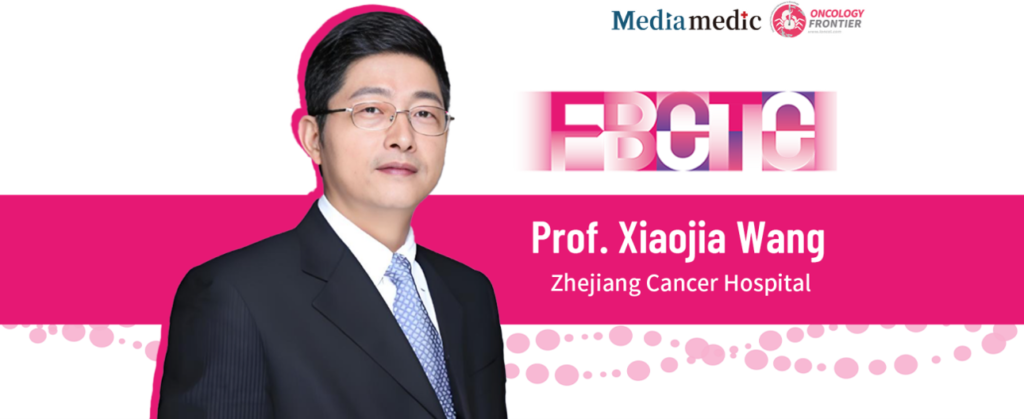
Editor's Note: The 2026 Xianghu Breast Cancer Treatment Frontiers Conference (hereinafter referred to as the “Xianghu Forum”) is currently underway. Building on previous editions, this year's meeting has been comprehensively upgraded, focusing on international advances such as antibody–drug conjugates (ADCs) and novel targeted therapies, incorporating real-world data from China and Zhejiang Province, and strengthening interdisciplinary exchange, multidisciplinary collaboration, and the development of young and mid-career physicians. These efforts aim to bring high-quality breast cancer care closer to the clinical frontline. During the meeting, Oncology Frontier interviewed Professor Xiaojia Wang of Zhejiang Cancer Hospital, Chair of the Conference, to discuss the meeting's highlights and distinctive features, the significance of the Hangzhou session of the CSCO BC Guidelines Tour in advancing standardized and consistent breast cancer care, and the emerging landscape of precision diagnosis and treatment for HR-positive advanced breast cancer. He also shared valuable insights into original research, data sharing, multidisciplinary collaboration, and the professional development of young and mid-career physicians.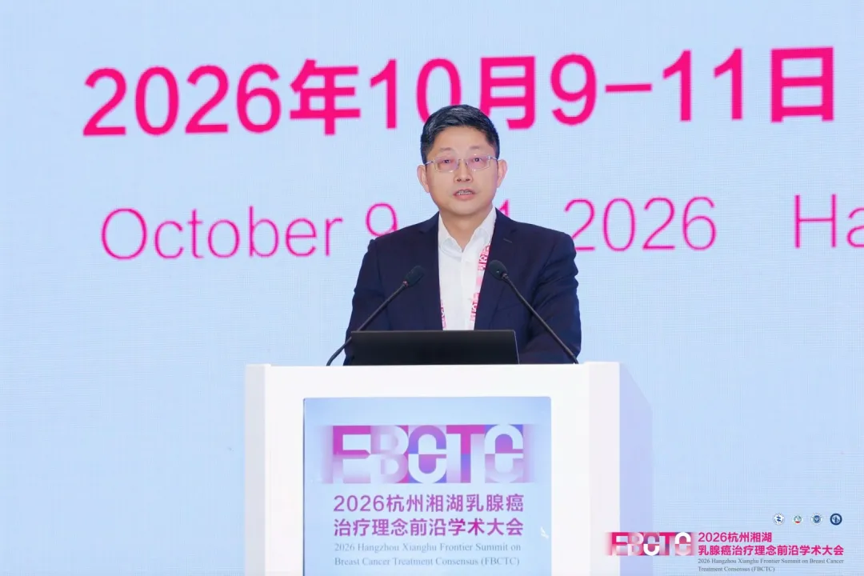
01
Oncology Frontier: As Chair of the Conference, could you introduce the highlights and distinctive features of this year’s meeting compared with previous editions?
Professor Xiaojia Wang: The 2026 Xianghu Forum has been comprehensively upgraded compared with previous editions, with several distinctive features.
First, the Guidelines Tour has been deeply integrated with the academic forum. This year’s meeting incorporated the Hangzhou session of the 2026 CSCO BC Guidelines Tour into the main program, bringing cutting-edge academic exchange together with the implementation of standardized clinical practice. This creates a framework in which academic research advances the field while clinical practice ensures that these advances translate into real-world benefits.
Second, the program balances cutting-edge developments with local clinical practice. It focuses on international advances in areas such as ADCs and novel targeted therapies while incorporating substantial real-world research data from China and Zhejiang Province, making the discussions more relevant to the realities of domestic clinical practice.
Third, the meeting strengthens interdisciplinary exchange and multidisciplinary collaboration. In addition to medical and surgical oncologists specializing in breast cancer, it brings together experts in pathology, imaging, pharmacy, and other fields for practical discussions of challenging cases. Fourth, it places greater emphasis on the development of young and mid-career physicians, with dedicated sessions for young clinicians and case-based critical discussions that provide emerging scholars with opportunities to present their work and exchange ideas.
In addition, the meeting is based in Hangzhou and extends its reach across Zhejiang Province, serving physicians from major provincial hospitals as well as prefecture-level and county-level institutions. By bringing high-quality breast cancer care concepts to grassroots healthcare settings, we hope to further improve the overall standard of breast cancer diagnosis and treatment throughout the region.
02
Oncology Frontier: You delivered the opening remarks and closing summary for the Hangzhou session of the 2026 CSCO BC Guidelines Tour. Could you introduce the main content of this session and explain how this nationwide expert-led outreach initiative can help promote standardized and consistent breast cancer care?
Professor Xiaojia Wang: The Hangzhou session of the 2026 CSCO BC Guidelines Tour focused on the key updates in the revised CSCO BC Guidelines. The program covered adjuvant and neoadjuvant treatment for early breast cancer, as well as comprehensive treatment strategies across the disease course for different subtypes of advanced breast cancer. Particular attention was given to updated treatment recommendations for HER2-positive breast cancer, HR-positive/HER2-negative breast cancer, and triple-negative breast cancer. The discussions included changes in recommendation levels for novel targeted agents and ADCs, as well as stratified treatment strategies following resistance. Numerous real-world clinical cases were also presented to demonstrate how the guidelines can be translated into everyday clinical decisions and to address practical challenges faced by physicians in grassroots healthcare settings.
As a leading national organization in the field of breast cancer in China, CSCO plays an important role in this nationwide outreach initiative. Differences in healthcare resources across regions are an objective reality in China, and treatment approaches can vary among hospitals. Bringing consistent, evidence-based standards to different regions helps narrow disparities in diagnosis and treatment and serves as an important means of achieving standardized and consistent care.
The Guidelines Tour is not simply about reading out recommendations. Through expert interpretation and interactive discussions, it helps clinicians understand the evidence underpinning the guidelines rather than follow them mechanically. For prefecture-level and county-level hospitals in Zhejiang, these sessions provide an effective way to keep pace with the latest domestic treatment concepts, reduce unwarranted variation in clinical practice, and ultimately ensure that breast cancer patients in different regions can receive care aligned with the highest evidence-based standards in China.
03
Oncology Frontier: At the main session, you presented a report entitled “A New Landscape for Precision Diagnosis and Treatment of HR-Positive Advanced Breast Cancer.” The treatment landscape for HR-positive/HER2-negative advanced breast cancer is rapidly evolving, with CDK4/6 inhibitors, PI3K–AKT–mTOR (PAM) pathway inhibitors, ADCs, and other therapies continuing to emerge. What do you consider the most fundamental change in this new landscape of precision treatment, and what principles should guide treatment sequencing in clinical practice?
Professor Xiaojia Wang: The most fundamental change in precision treatment for HR-positive/HER2-negative advanced breast cancer is the shift from relying primarily on empirical endocrine therapy to stratified, individualized treatment guided by molecular biomarkers. Previously, treatment selection was based largely on patients’ hormone receptor status and the presence or absence of visceral metastases. Today, the status of genes such as ESR1 and PIK3CA, alterations involving the AKT pathway, and levels of HER2 expression have become important factors in clinical decision-making. Endocrine resistance is no longer treated as a single, broadly defined phenomenon; instead, different resistance mechanisms are distinguished and addressed with corresponding targeted therapies or ADCs.
CDK4/6 inhibitors have established the standard of care in the first-line setting, while PAM pathway inhibitors provide treatment options for patients with relevant pathway alterations. ADCs have opened up new treatment avenues after resistance to CDK4/6 inhibitors. However, as the range of available therapies continues to expand, the requirements for precise molecular testing are also increasing.
In my view, the following principles should guide treatment sequencing:
First, prioritize evidence-based data and the recommendations in the CSCO BC Guidelines.
Second, fully consider the patient’s previous treatment history when selecting therapies, including treatments received in the adjuvant setting and the sequence of therapies used for advanced disease, while distinguishing primary resistance from acquired resistance.
Third, emphasize molecular biomarker testing and select treatments according to genetic alterations and HER2 expression levels.
Fourth, take into account tumor burden, visceral crisis, age, comorbidities, and treatment safety.
Fifth, consider drug availability and the realities of medical insurance coverage, balancing survival benefits with quality of life.
Throughout treatment, adverse events should be carefully managed, treatment efficacy dynamically reassessed, and subsequent treatment strategies adjusted in a timely manner to maximize benefits over the entire course of care.
04
Oncology Frontier: From your dual perspectives as Conference Chair and a practicing clinician, what are your expectations for this meeting’s role in advancing original research, data sharing, and multidisciplinary collaboration in breast cancer across Zhejiang Province and throughout China? What advice would you offer young and mid-career physicians seeking to participate in clinical research and implement the CSCO BC Guidelines in clinical practice?
Professor Xiaojia Wang: As both Conference Chair and a frontline clinician, I have several expectations.
1. Original research: I hope to leverage Zhejiang’s multicenter research platforms to encourage more real-world and translational studies grounded in the characteristics of Chinese patient populations. Our goal should be to generate more evidence from China rather than simply follow data produced overseas.
2. Data sharing: I hope that medical institutions across Zhejiang will strengthen collaboration and establish a cooperative network for breast cancer clinical data. Breaking down institutional data barriers will provide high-quality data to support clinical research.
3. Multidisciplinary collaboration: I hope to promote the routine implementation of multidisciplinary team (MDT) care. MDT discussions should not be confined to large tertiary hospitals; they should gradually be extended to prefecture-level hospitals so that patients with challenging breast cancer cases can genuinely benefit from multidisciplinary decision-making.
As for advice to young and mid-career physicians, first, I encourage them to remain grounded in clinical practice and identify research questions through the problems they encounter in their daily work. Rather than pursuing publications in isolation from clinical needs, they should actively participate in multicenter clinical studies and develop their research thinking through practical experience.
Second, they should develop a thorough understanding of the CSCO BC Guidelines, knowing not only what the recommendations are but also why they are made. They should apply the key recommendations to the management of every patient while adapting implementation to the resources and circumstances of their own institutions. I also encourage young physicians to participate more actively in academic exchanges and case discussions to strengthen their awareness of standardized diagnosis and treatment.
Finally, I hope that more young and mid-career physicians will grow into key contributors to both clinical practice and research, working together to advance the continued development of breast cancer diagnosis and treatment in China.
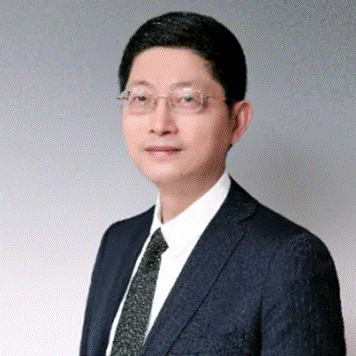
Professor Xiaojia Wang