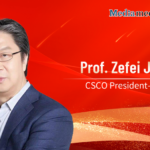

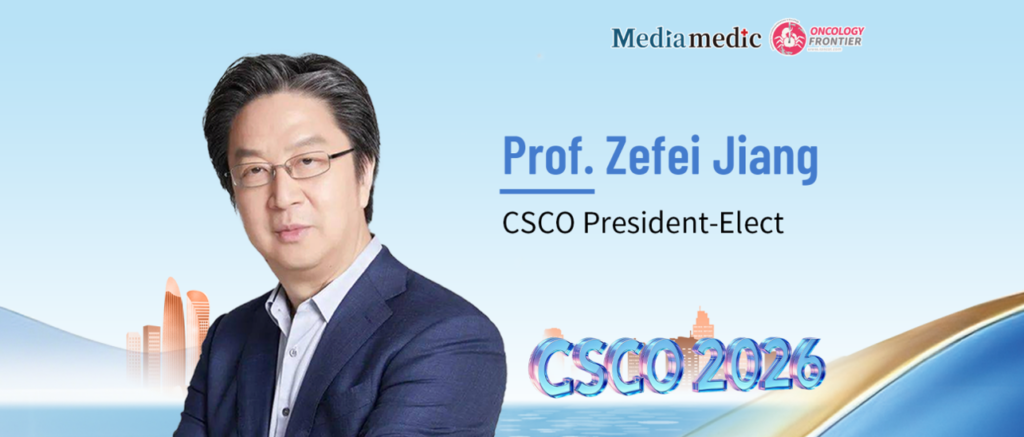
Editor's Note: The 2026 Annual Meeting of the Chinese Society of Clinical Oncology (CSCO) will be held under the theme “Upholding Standards and Embracing Digital Intelligence and Innovation,” showcasing research achievements and clinical advances across oncology. As an important platform connecting standardized diagnosis and treatment, innovative research, and international exchange, this year's meeting features several new highlights in its scale of participation, presentation of original research, and academic session offerings.To help healthcare professionals anticipate the key developments at the meeting, Oncology Frontier is launching a special interview series entitled “CSCO 2026 Preview.” In this installment, we feature Professor Zefei Jiang, President-Elect of CSCO, who discusses highlights of the meeting, including the joint ASCO–ESMO–CSCO session, the session on the development and evaluation of innovative anticancer drugs, and the session on innovation in clinical drug research. He also shares his outlook on CSCO’s internationalization and the future development of Chinese oncology research.
Oncology Frontier: Professor Jiang, thank you for joining us. In recent years, CSCO has made vigorous progress in international collaboration, and this year’s meeting will feature a dedicated joint ASCO–ESMO–CSCO session, creating a platform for international exchange. Could you first introduce the international dimensions of this year’s meeting and explain how they will help position CSCO within the global oncology community?
Professor Zefei Jiang: Thank you very much to Oncology Frontier for your interest in this year’s CSCO Annual Meeting and for your continued support of CSCO. The organizing committee sincerely welcomes media organizations to participate in this year’s meeting.
Successive generations of CSCO leadership have consistently worked to promote international academic exchange. Recently, CSCO leaders and experts have conducted academic exchanges in the United States, Europe, and Asia. A joint CSCO–ESMO session will also be held at the upcoming ESMO Congress.
At this year’s CSCO Annual Meeting, we have invited experts from ESMO and ASCO to jointly organize an ASCO–ESMO–CSCO session. International scholars will join the CSCO platform to exchange ideas with their Chinese counterparts. We also hope that more Chinese scholars will have opportunities to participate in international academic forums in the future and make China’s voice heard around the world.
Oncology Frontier: The growing international influence of Chinese oncology research is underpinned by the rise of innovative medicines and original research from China, closely aligned with this year’s theme of “Digital Intelligence and Innovation.” In your view, how will this meeting support the development of innovative medicines in China, and how will CSCO continue to guide this progress?
Professor Zefei Jiang: The meeting has specially organized a session on the development and evaluation of innovative anticancer drugs, featuring presentations by experts from the Center for Drug Evaluation (CDE) of the National Medical Products Administration (NMPA). Key CSCO experts will serve as session chairs and participate in the discussions.
The purpose of this session is to communicate important policy and industry developments. For example, it will explore how domestically developed innovative medicines can better address clinical needs throughout the process—from product design and research and development to regulatory approval and market access—and ultimately reach the patients who need them.
China is also making rapid progress in the development of bispecific antibodies and dual-immunotherapy agents. Experts from the CDE are keen to hear perspectives from clinical specialists and scientists in the pharmaceutical industry and academia, and to discuss how innovation can be encouraged in a rational, evidence-based manner while ensuring appropriate standards of conduct across the industry.
At the same time, we have once again organized our session on innovation in clinical drug research. In reviewing the proposed speakers and topics, we have seen both numerous innovative products from international developers and a growing number of domestically developed products. Encouragingly, original research led by teams of leading experts, including Academician Jinming Yu, Academician Jia Fan, Professor Yilong Wu, and Professor Shukui Qin, will be presented at this year’s CSCO innovation session. We invite everyone to look forward to these findings.
Oncology Frontier: As digital intelligence and innovation continue to advance, what content related to artificial intelligence (AI) and digital technologies will be featured at the meeting? What do you hope to see in the presentations on how AI can support anticancer treatment?
Professor Zefei Jiang: These topics will be addressed across different specialties and sessions throughout the meeting.
One recent example is the launch of the Breast Cancer Intelligent Data Governance and Precision Diagnosis and Treatment Research Center initiative, involving the breast disease treatment centers at Peking University People’s Hospital and the Second Affiliated Hospital of Dalian Medical University. The project receives academic support from the CSCO Breast Cancer Expert Committee and is jointly supported by the Beijing Kechuang Medical Development Foundation and Zhejiang Haixin Zhihui Technology Co., Ltd.
The initiative aims to harness AI to improve precision classification and treatment of breast cancer, strengthen individualized patient management, and facilitate the generation of high-quality research findings.
Oncology Frontier: As China’s voice is increasingly heard around the world and AI becomes more deeply involved in clinical decision-making, what advice would you give young physicians about their professional development? More specifically, what guidance would you offer young doctors attending this year’s meeting?
Professor Zefei Jiang: As always, CSCO is committed to providing a platform for young scholars. The organizing committee encourages young researchers to attend the meeting and offers them opportunities to deliver academic presentations and engage in in-depth exchanges with experts in their respective fields.
We hope that this academic platform will create more opportunities for the next generation of oncology professionals, allowing them to learn, grow, and gain valuable experience. Ultimately, we hope they will use CSCO as a starting point for further development and go on to participate more actively in the international academic arena.