Editor's Note: Since its establishment in 2016, the Yunling Breast Cancer Conference has been successfully held for ten consecutive editions. It has evolved from a learning and exchange platform initially serving breast cancer professionals in Yunnan Province into a major academic meeting with influence across Southwest China and nationally. The 10th Yunling Breast Cancer Conference was held in Kunming from August 21–23, 2026. During the conference, Professor Jianyun Nie, Vice President of Yunnan Cancer Hospital, reviewed the ten-year development of the conference and shared his perspectives on standardized breast cancer diagnosis and treatment in the region, capacity building in primary healthcare institutions, and the precision-driven evolution of breast surgery.Looking at the development of the field as a whole, standardized diagnosis and treatment have always been the cornerstone of improving the overall level of breast cancer care in Southwest China. At the same time, continued advances in precision diagnosis, systemic therapy, and reconstructive techniques are driving breast surgery toward minimally invasive procedures, functional preservation, and individualized treatment.
01
Oncology Frontier: From its beginnings as a regional academic platform to becoming an influential branded conference today, the Yunling Breast Cancer Conference has now successfully reached its 10th edition. As someone who has experienced and witnessed this journey, what role do you think the conference has played in improving the level of breast cancer diagnosis and treatment in Southwest China and nationwide?
Professor Nie Jianyun: Since the first Yunling Breast Cancer Conference was held in 2016, it has now completed ten years of development. The conference was initially positioned as a breast cancer training program for professionals in Yunnan Province. As its scale, expert participation, and academic content have continued to expand, it has gradually developed into a professional academic exchange platform with national influence.
This year’s conference brought together clinical and basic research experts from China and abroad in the field of breast cancer. By sharing cutting-edge diagnostic and treatment concepts, clinical experience, and scientific research achievements, it has provided breast cancer professionals from different regions with ongoing opportunities for communication and learning.
For Yunnan and Southwest China, the core value of the conference lies first and foremost in the dissemination and implementation of standardized diagnosis and treatment concepts. Due to differences in economic development and the distribution of medical resources, some regions have relatively limited access to the latest information on breast cancer diagnosis and treatment. High-level academic conferences enable local physicians to gain timely knowledge of advances in China and internationally, thereby promoting the deeper integration of standardized treatment principles into clinical practice.
At the same time, the conference has both clinical and research value. For experts attending from across the country, the clinical dimension provides opportunities to “pursue greater practicality and precision,” while the research dimension creates opportunities to “pursue innovation and originality.” For the development of breast oncology in Yunnan Province, the conference also provides opportunities to “pursue greater practicality and depth.”
02
Oncology Frontier: Considering the actual situation in Yunnan and Southwest China, what do you believe are the most urgent challenges currently facing breast cancer prevention and treatment? What special arrangements has this year’s conference made to improve the breast cancer diagnostic and treatment capabilities of primary-level medical institutions?
Professor Nie Jianyun: Breast specialty development in Yunnan began relatively early. A dedicated breast specialty was established at the end of 1996. After nearly three decades of development, the provincial breast cancer diagnosis and treatment system has established a solid foundation.
However, across the province as a whole, significant differences remain between regions. In particular, medical institutions at the prefecture and county levels, as well as healthcare facilities in some economically less-developed towns and rural areas, still have considerable room for improvement in terms of access to standardized treatment medications and access to medical knowledge.
This year’s conference placed considerable emphasis on the participation and professional development of primary-level healthcare workers. Physicians from prefecture- and county-level hospitals were invited to attend, allowing them to directly access cutting-edge concepts and the latest advances in breast cancer diagnosis and treatment.
In addition to academic exchanges during the conference, the Breast Center of Yunnan Cancer Hospital has also established expert workstations and organized activities such as guideline tours, surgical instruction, and clinical ward rounds and demonstrations. Through these initiatives, we are continuously promoting the transfer of high-quality medical resources to primary-level institutions and helping to steadily strengthen their diagnostic and treatment capabilities.
For regions with relatively limited medical resources, standardization is the prerequisite for all forms of precision medicine and innovative diagnosis and treatment. Only by first establishing a solid foundation of standardized care can we gradually move toward higher-level treatment models.
03
Oncology Frontier: In recent years, the concepts underlying breast surgery have continued to evolve, from expanding the indications for breast-conserving surgery to de-escalating axillary management, with the field as a whole moving toward greater precision. In this process, what are the key factors underlying precision surgical decision-making?
Professor Nie Jianyun: Breast surgery has a history of more than 100 years. In the past, treatment concepts focused primarily on extensive surgical resection, with increasingly larger surgical fields, resulting in considerable physical trauma for patients.
With the advent of the era of precision diagnosis and treatment, breast surgical procedures have gradually evolved toward minimally invasive approaches, with progressively smaller surgical fields.
First, precision diagnosis is the foundation for surgical de-escalation. With the continuous development of breast imaging, liquid biopsy, and other diagnostic technologies, clinicians can assess the extent of the primary lesion, surgical margins, and axillary lymph node status with increasing precision. This provides a reliable foundation for the implementation of precision surgical strategies such as breast-conserving surgery and sentinel lymph node biopsy.
Second, improvements in systemic treatment efficacy have expanded the scope for surgical de-escalation. The efficacy of endocrine therapy, chemotherapy, targeted therapy, and immunotherapy continues to improve, while treatment-related adverse effects are progressively decreasing. Overall tumor control has consequently improved, creating the conditions necessary for reducing the extent of surgery.
On this basis, many clinical experts are now exploring the boundaries of surgery’s role in breast cancer treatment. In the future, the clinical role of breast surgery may be further reduced and, in certain scenarios, surgery may no longer be a routine component of treatment.
In addition, advances in breast reconstruction and plastic surgery techniques have further improved patients’ postoperative quality of life. Breast cancer surgery has evolved from simply removing the tumor to incorporating a variety of approaches, including breast-conserving surgery, autologous tissue reconstruction, and implant-based reconstruction. At the same time, minimally invasive technologies such as endoscopic and robotic surgery are providing additional options for performing reconstruction with greater precision.
The continued development of precision medicine is driving advances in surgery, diagnosis, and treatment technologies. With the support of precision diagnosis and treatment, the overall effectiveness of breast surgery continues to improve, patients’ survival is steadily being prolonged, and their quality of life continues to improve.

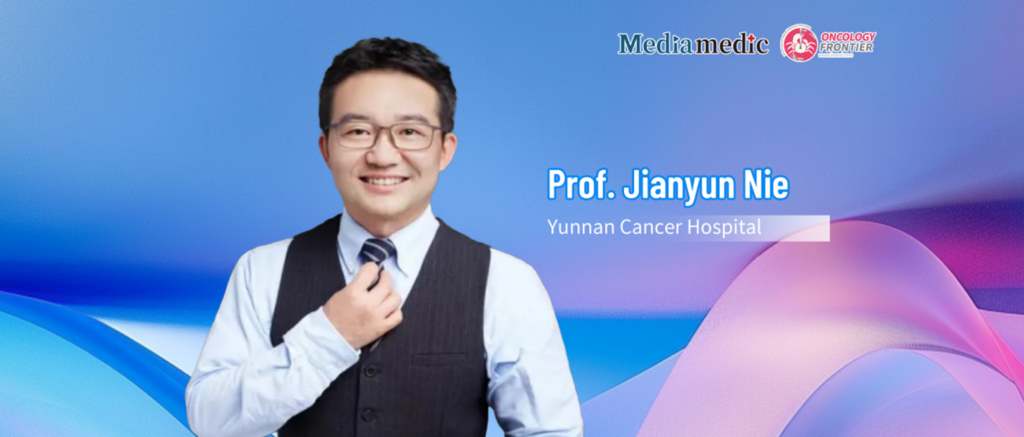
Professor Nie Jianyun