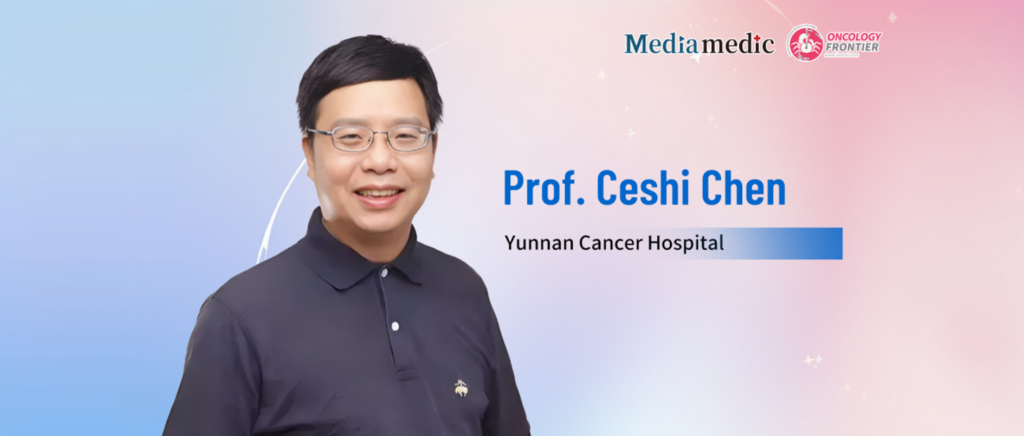
Editor's Note: Breast cancer is one of the most active fields in oncology research and translational medicine. From HER2-targeted therapy to individualized treatment guided by molecular subtyping, numerous basic research discoveries have profoundly transformed clinical practice. During the 10th Yunling Breast Cancer Conference, held in Kunming on August 21–22, 2026, Professor Cexi Chen of Yunnan Cancer Hospital spoke with Oncology Frontier about the directions most likely to drive breakthroughs in basic breast cancer research in China, the key barriers to translating basic discoveries into clinical applications, and the development pathways for young researchers. He highlighted the translational potential of antibody-drug conjugates (ADCs), proteolysis-targeting chimeras (PROTACs), and organoids, emphasizing that breast cancer basic research should always be grounded in unmet clinical needs and should use original technologies with practical value to drive innovation in diagnostic and treatment paradigms.01
Oncology Frontier: In recent years, China has made remarkable progress in basic and translational breast cancer research. As a leading scholar in this field, could you share your thoughts on the areas most likely to achieve major breakthroughs in breast cancer basic research in China over the next three to five years?
Professor Cexi Chen: Breast cancer has long been one of the most active areas in both basic cancer research and clinical translation. From the early clinical application of the HER2-targeted drug trastuzumab to the use of molecular subtyping to guide precision treatment, many important concepts and technologies in oncology have been translated into clinical practice relatively early in breast cancer. Looking ahead, I believe several areas deserve particular attention over the next three to five years.
First, ADCs will remain an important direction for breast cancer drug development and clinical translation.
In recent years, ADCs represented by trastuzumab deruxtecan (T-DXd, DS-8201) have demonstrated remarkable clinical efficacy, further validating the therapeutic value of the ADC technology platform. Multiple ADCs have now entered clinical practice globally, with breast cancer being one of the tumor types in which their benefits have been most clearly demonstrated. At the same time, numerous domestic companies, including RemeGen, are actively investing in ADC development. With continued advances in target selection, linker design, and payload technologies, I expect more ADCs to enter clinical development and practice over the coming years.
Second, targeted protein degradation technologies such as PROTACs may drive breakthroughs in the development of original innovative drugs.
In 2026, the world’s first original PROTAC targeting estrogen receptor degradation, vepdegestrant (ARV-471), was approved in the United States. In recent years, PROTAC drugs targeting key proteins such as the estrogen receptor have gradually entered the stage of clinical translation, and multiple teams in China are actively conducting related research. Our team has also published several papers in this area. China is now developing candidate drugs against a range of different targets, and I believe these efforts may lead to important breakthroughs in clinical research in the future.
Third, organoid technology has the potential to move beyond being a research tool and toward standardized clinical application.
In August 2026, China’s National Healthcare Security Administration issued the Guidelines for the Establishment of Pricing Items for Laboratory Medical Services (Trial). At the national level, the document established “tumor organoid culture” and “tumor organoid drug-sensitivity testing” as separate medical service pricing items for the first time. I believe these services may soon be rolled out nationwide and made available to patients.
Our team has also conducted extensive research involving breast cancer organoids. We have found that patient-derived organoids can retain some of the biological characteristics of the primary tumor relatively well, while their drug sensitivity can be consistent with responses observed in vivo. They may therefore serve as a means of testing drugs outside the patient, reducing unnecessary exposure, patient suffering, and costs while helping guide precision treatment and improve the quality and duration of survival.
02
Oncology Frontier: Translating basic research discoveries into clinical applications is often a long and challenging process. What has been the biggest bottleneck you have encountered when trying to move basic research findings into clinical practice? How can we better bridge the gap between the laboratory and the clinic?
Professor Cexi Chen: I have been engaged in scientific research for more than 30 years. Although we have conducted numerous basic research projects and obtained many patents, I have to admit that I still do not have a translational achievement that I consider truly outstanding. Based on my long-term experience in research, I believe there are several key barriers between basic research and clinical practice.
First, there is often a disconnect between basic research and actual clinical needs.
Some basic research is driven primarily by researchers’ own interests or by the technologies they already have access to, without adequately considering the problems that clinicians urgently need to solve. As a result, some research findings struggle to progress toward clinical translation.
Second, the clinical translation of new technologies and drugs involves substantial financial and time barriers.
Drug development is a good example. Although our laboratory has developed many promising lead compounds, moving a candidate drug from the laboratory into clinical practice requires preclinical efficacy studies, safety assessments, and clinical trials across different stages. The development process is lengthy, requires enormous financial investment, and carries a high risk of failure.
A single research team generally cannot complete the entire translational process independently. It requires collaboration among hospitals, research institutions, pharmaceutical companies, investors, and other stakeholders.
Third, policies and clinical access systems directly affect the efficiency of innovation and translation.
In the past, certain emerging technologies, including cell therapy and organoids, lacked clearly defined pathways for clinical application, pricing, and access. This restricted the translation of some research achievements to a certain extent.
In recent years, however, relevant policies have continued to improve, including the Regulations on the Management of Clinical Research and Clinical Translational Application of New Biomedical Technologies and the Guidelines for the Establishment of Pricing Items for Laboratory Medical Services (Trial). These developments have created more pathways for investigator-initiated clinical research and the clinical application of new technologies, creating new opportunities for basic research findings to enter clinical practice.
Ultimately, however, the key to truly bridging the gap between the laboratory and the clinic lies in whether the technology itself has the potential and value to solve real clinical problems.
For example, our ongoing liquid biopsy research is not simply aimed at publishing research findings. We hope to use blood-based testing to assist in distinguishing malignant from benign tumors and to monitor drug resistance and recurrence. We are continuously working toward these goals.
03
Oncology Frontier: From the perspective of a basic researcher, what advice would you offer young scientists who are considering pursuing breast cancer basic research?
Professor Cexi Chen: Although breast cancer treatment has advanced substantially in recent years and the range of therapeutic options continues to expand, long-term survival among patients with advanced disease remains challenging. Drug resistance, recurrence, and metastasis have not yet been completely overcome, and a cure remains out of reach for many patients.
Therefore, there are still numerous important scientific questions in breast cancer that deserve in-depth investigation. This makes breast cancer a worthwhile field for young researchers to pursue. I would suggest that young scientists focus on the following areas:
First, pay attention to the forefront of the field and actively master new technologies.
Technologies in modern cancer research are evolving extremely rapidly. Young researchers should not remain confined to established research models for too long. They should actively incorporate emerging technologies such as single-cell sequencing, spatial omics, molecular imaging probes, and organoids into breast cancer research.
Second, develop your own research strengths and accumulate expertise in one direction over the long term.
One of the biggest pitfalls in scientific research is frequently changing research directions. Superficial engagement with multiple topics makes it difficult to develop a deep understanding of a field, establish a distinctive research profile, or build a systematic body of work. It also makes it difficult to generate findings with genuine translational potential.
Once young researchers have identified a direction, they should remain focused, be willing to work patiently over the long term, and persevere.
Third, research questions must be closely connected to clinical problems.
In breast cancer research, new drugs are constantly entering clinical practice, while new scientific questions continue to emerge. For example, novel treatment approaches such as ADCs and AKT-pathway targeted therapies can improve treatment efficacy, but they can also generate new mechanisms of drug resistance.
Basic researchers can build on these clinical observations, use emerging technologies such as organoids to investigate the mechanisms underlying resistance, and explore new strategies for overcoming it.
In short, young researchers should stay abreast of the scientific frontier, identify the right research direction based on clinical needs, and develop their own distinctive strengths. There is tremendous potential for the future!

Professor Cexi Chen