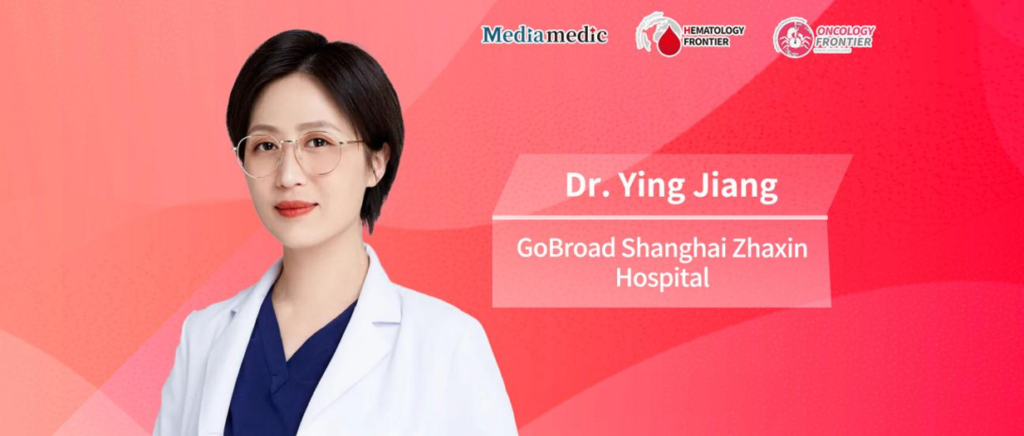
Editor's Note: From August 29–30, 2026, the “Gaobo Medical Forum — 6th Clinical Application Symposium and Training Course on Autologous Hematopoietic Stem Cell Transplantation,” organized by the National Clinical Research Center for Blood Diseases of the Institute of Hematology & Blood Diseases Hospital, Chinese Academy of Medical Sciences, and hosted by Shanghai Zha Xin Hospital/Shanghai Liquan Hospital of Gaobo Medical Group, was held in Shanghai. During the meeting, Oncology Frontier – Hematology Frontier invited Director Ying Jiang of Gaobo Shanghai Zha Xin Hospital to share insights into her team’s innovative combination treatment strategies for relapsed/refractory hematologic malignancies, as well as their latest explorations and clinical experience in the comprehensive safety management of CAR-T cell therapy.01
Oncology Frontier – Hematology Frontier: Your team has achieved significant results with “autologous hematopoietic stem cell transplantation (ASCT) combined with CAR-T” for relapsed/refractory diffuse large B-cell lymphoma (R/R DLBCL). How does this combination achieve a synergistic “1+1>2” effect? Does using ASCT first to reduce tumor burden effectively overcome the challenges of CAR-T cells penetrating bulky tumor masses and the immunosuppressive tumor microenvironment?
Director Ying Jiang: In the initial design of the treatment strategy for R/R DLBCL, we sought to overcome several clinical challenges. Patients with R/R DLBCL often present with bulky masses and extensive tumor infiltration. The tumor-clearing or debulking effect of CAR-T therapy alone may be limited, as CAR-T cells cannot effectively penetrate encapsulated tumor masses, making it difficult to achieve the desired cytotoxic effect. Meanwhile, ASCT requires patients to achieve at least a partial response (PR), and preferably a complete response (CR), before transplantation to obtain favorable outcomes. However, some patients fail to achieve PR/CR despite prior chemotherapy, making ASCT alone insufficient for achieving effective disease remission and consolidation.
Based on these challenges, we organically combined the two therapies. ASCT is essentially a high-dose chemotherapy approach that can maximally reduce tumor volume, creating favorable conditions for subsequent CAR-T cells to enter the lesions and effectively eradicate residual disease. The sequential integration of the two therapies may therefore produce a synergistic “1+1>2” effect.
02
Oncology Frontier – Hematology Frontier: Your team has also published an international study on “prophylactic infusion of donor-derived CD7 CAR-T cells from the same donor after allogeneic transplantation (allo-HSCT).” What is the core rationale behind this novel strategy of administering preventive intervention directly after transplantation? What clinical value has this approach demonstrated in reducing the risk of relapse in high-risk patients with T-lymphoblastic lymphoma?
Director Ying Jiang: Clinically, the traditional treatment pathway for T-lymphoblastic lymphoma/leukemia (T-LBL/T-ALL) primarily relies on intensive chemotherapy. After achieving clinical complete remission (CR), patients undergo allogeneic hematopoietic stem cell transplantation (allo-HSCT) in an effort to achieve long-term disease control and survival. However, many patients respond poorly to chemotherapy and fail to achieve CR, resulting in an extremely poor prognosis and significantly shortened survival.
To address this challenge, our team developed an innovative strategy based on our previous research. Because these patients often remain refractory and undergo repeated courses of chemotherapy, their bone marrow hematopoiesis can be severely suppressed, frequently resulting in pancytopenia. Consequently, they may be unable to tolerate conventional autologous CD7 CAR-T cell collection and treatment. We therefore adopted an innovative “reverse treatment” strategy: first performing allogeneic hematopoietic stem cell transplantation to maximally reduce the tumor burden and reconstruct donor-derived hematopoietic and immune function. Subsequently, CD7 CAR-T cells are manufactured from donor-derived lymphocytes.
Although allo-HSCT provides patients with a potential route to long-term survival, patients who have not achieved CR before transplantation remain at very high risk of relapse. Therefore, following transplantation, we further administered donor-derived CD7 CAR-T cells as consolidation therapy, aiming to leverage the synergistic effects of graft-versus-leukemia (GVL) activity and CAR-T therapy. This approach may achieve more effective control of the underlying disease and substantially improve long-term outcomes.
03
Oncology Frontier – Hematology Frontier: Neutropenia and cytokine release syndrome (CRS) are major challenges associated with CAR-T therapy. Your team has explored timely administration of GM-CSF during the period of CAR-T cell decline. How does this intervention promote CAR-T cell reactivation and immune recovery while effectively avoiding severe CRS? What implications does this have for comprehensive clinical safety management?
Director Ying Jiang: A key challenge following CAR-T cell therapy is the gradual decline of CAR-T cells in the body, which can directly compromise the durability of disease control. To prolong remission, maintenance therapies such as lenalidomide and PD-1 inhibitors are commonly used. However, these conventional maintenance strategies can cause bone marrow suppression. For patients who already have cytopenias following CAR-T therapy, such drugs may be poorly tolerated and may further suppress immunity, potentially accelerating the loss of residual CAR-T cells and limiting long-term disease control in lymphoma, multiple myeloma, and other hematologic malignancies.
To address this clinical challenge, our team explored the use of granulocyte-macrophage colony-stimulating factor (GM-CSF) as a novel maintenance strategy. Based on our previous research in the field of allogeneic hematopoietic stem cell transplantation, we found that compared with granulocyte colony-stimulating factor (G-CSF), GM-CSF can not only more effectively promote hematopoietic recovery and infection control, but may also enhance immune responses.
Allogeneic transplantation and CAR-T therapy share certain mechanisms of immune reconstitution. We therefore applied this concept innovatively to the maintenance phase following CAR-T therapy. When the proliferative capacity of CAR-T cells begins to decline, and after the patient has passed the high-risk period for CRS and entered a clinically stable state, we administer GM-CSF to stimulate and promote the immune expansion of residual CAR-T cells. Clinical experience suggests that this strategy can promote hematologic recovery while providing a potentially safe and effective maintenance approach after CAR-T therapy, thereby supporting more durable control of the underlying disease.
Expert Profile
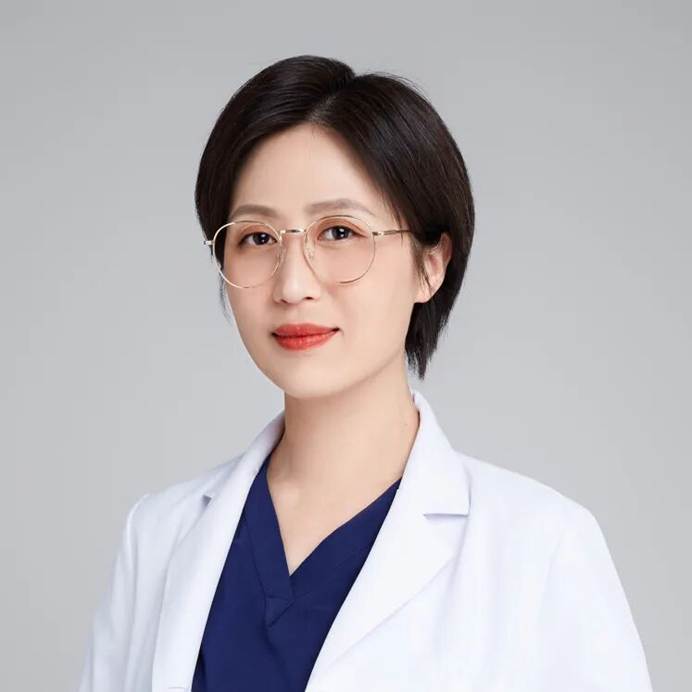
Ying Jiang
Gaobo Shanghai Zha Xin Hospital
Deputy Chief Physician, MD
Medical Team Leader, Gaobo Shanghai Zha Xin Hospital
Former Attending Physician, Department of Hematology, Shanghai General Hospital. Graduated from Shanghai Jiao Tong University School of Medicine with a doctoral degree.
In 2014, she served as a visiting scholar in the Immunology Laboratory at Mayo Clinic, USA. She has participated in multiple research projects supported by municipal science and technology commissions and national research programs. She is a member of the Professional Committee on Digital Diagnosis and Treatment of Hematologic Diseases. She has received the Second Prize of the National Science and Technology Progress Award of the Chinese Medical Association in 2017, the Shanghai Medical Science and Technology Award in 2016, and the Third Prize of the Shanghai Medical Science Progress Award in 2008.
Areas of expertise: Diagnosis and treatment of various hematologic diseases, with a primary focus on autologous and allogeneic hematopoietic stem cell transplantation for hematologic malignancies, CAR-T and other cellular immunotherapies, and immunotherapy for lymphoma.