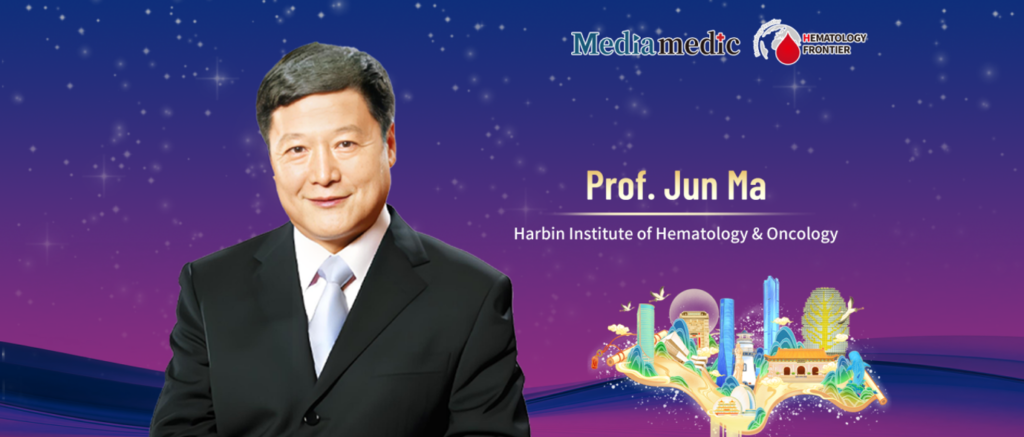
Editor's Note: In the golden autumn season, experts and scholars gathered in Zhuhai. The 2026 Cross-Strait Hematology Academic Conference was held in Zhuhai, Guangdong, from August 21–22. Hematology experts from both sides of the Taiwan Strait, as well as Hong Kong and Macao, came together to discuss cutting-edge developments, clinical practice, and innovations in nursing. During the conference, Oncology Frontier – Hematology Frontier interviewed Professor Ma Jun of the Harbin Institute of Hematology and Oncology, who shared his perspectives on the rapidly developing field of cell and gene therapy (CGT). He reviewed the global and domestic landscape of approved cell therapy products, real-world clinical data, and China's strengths in innovation, while also discussing challenges related to original research and development, standardization, treatment accessibility, and the future of CGT.Professor Ma Jun: Cell therapy has emerged as one of the most prominent areas of research in the field of cell and gene therapy (CGT) in recent years and is broadly classified as an advanced therapy medicinal product. Globally, 14 cell therapy products have now been approved for marketing, with the United States and China together accounting for nine approvals. In China, approved indications cover multiple lymphoma subtypes, including large B-cell lymphoma, mantle cell lymphoma, and indolent lymphoma, as well as relapsed/refractory adult and pediatric B-cell acute lymphoblastic leukemia and relapsed/refractory multiple myeloma, with three BCMA-directed CAR-T products already approved. China has therefore become the country with the second-largest number of approved cell therapy indications worldwide, after the United States.
In terms of clinical research, investigator-initiated trials (IITs) in China have accumulated more than 60,000 CAR-T treatment cases, covering a broad range of diseases. Commercial CAR-T therapy has also been administered to nearly 7,000 patients, with encouraging efficacy. Among patients treated in the later-line setting, the 5-year overall survival rate can reach approximately 40%. If treatment is moved earlier, to the second-line or even 1.5-line setting, the 5-year survival rate may improve further, with some patients potentially achieving functional cure. Therefore, cell therapy is progressively moving into earlier lines of treatment, with second-line therapy becoming an important area of development. As the number of patients benefiting from these therapies continues to increase, treatment standardization is also improving. In addition to guiding principles, relevant expert consensus statements and clinical guidelines are continuously being developed and refined.
China’s cell therapy field has transitioned from following to parallel development and now to global leadership. When I attended the American Society of Gene & Cell Therapy (ASGCT) conference in Boston this May, I was deeply impressed by the level of global attention China is receiving in this field. In particular, China has taken a leading position in ex vivo cell therapy, in vivo cell therapy, and allogeneic off-the-shelf cell therapy. Research from China accounts for approximately 60% of global studies in these areas, exceeding that of the United States. Nevertheless, we must remain clear-eyed about the challenges ahead. Original innovation remains critical. We need more first-in-class, truly innovative cell therapy products, which will be a central priority for future development.
In addition, although China has accumulated clinical data from tens of thousands of IIT-treated patients, far exceeding the more than 10,000 cases in the United States, the situation is very different when it comes to commercialization. The United States has administered cell therapies to more than 60,000 patients commercially, compared with only around 7,000 in China. For a country of 1.4 billion people, one of the major factors limiting the broader commercialization of CAR-T therapy is that CAR-T has not yet been incorporated into the national medical insurance reimbursement system. We are therefore actively calling on the relevant authorities to include CAR-T therapy in medical insurance coverage so that more patients can benefit from these innovations.
Everything we do is for innovation, and everything we do is for patients. This is the fundamental goal of us as physicians.