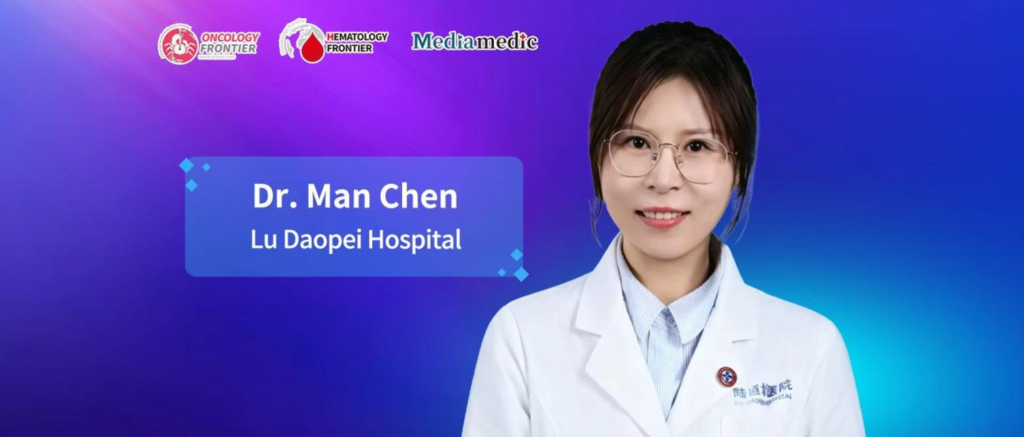
Editor's Note: Bringing together outstanding experts from across the Yanzhao region and remaining committed to its founding mission for fourteen years. On August 21, 2026,the 14th Lu Daopei Hematology Forum officially opened at Hebei Yanda Ludaopei Hospital. Building on fourteen years of academic development, this year's conference focused on cutting-edge topics including hematopoietic stem cell transplantation, cellular immunotherapy, and precision diagnosis and treatment of hematologic diseases. It brought together leading experts and scholars in hematology from across China to explore advances in the field, serving as an important academic platform for promoting progress in the diagnosis and treatment of hematologic diseases in China. During the conference, Oncology Frontier – Hematology Frontier invited Dr. Chen Man of Ludaopei Hospital for an exclusive interview. She shared her professional insights on the clinical value of lymphocyte subset monitoring, its application in differentiating complications following hematopoietic stem cell transplantation (HSCT), and future directions in immune monitoring.Oncology Frontier – Hematology Frontier: You presented on the “Application of Lymphocyte Subset Monitoring in the Differential Diagnosis of Complications Following Hematopoietic Stem Cell Transplantation” at this conference. Could you tell us about the clinical value of lymphocyte subset monitoring after HSCT? What are the main parameters monitored?
Dr. Chen Man: Since 2019, our team has been investigating the characteristics of immune reconstitution in patients following hematopoietic stem cell transplantation. We found significant interindividual differences in immune reconstitution, which led us to conduct a series of related studies. Through close communication with clinical teams, repeated discussions of clinical cases, and the accumulation and analysis of clinical experience, we gradually confirmed that lymphocyte subset monitoring has clinical value in the differential diagnosis of post-transplant complications and in guiding the use of immunosuppressive agents. These research findings have resulted in publications and patents, which have further informed clinical practice. For example, clinicians can use dynamic monitoring of lymphocyte subsets and cytokine levels to differentiate between complications with similar clinical manifestations, such as GVHD and infectious diarrhea.
Our current monitoring system mainly encompasses two dimensions. The first is lymphocyte subset parameters, including the absolute counts and percentages of CD3⁺, CD4⁺, and CD8⁺ T cells, NK cells, and B cells. We also perform more detailed analysis of CD4⁺/CD8⁺ T-cell subsets, including immunosuppressive Treg cells, activated effector T cells, and naive T cells. In addition, we incorporate CD38-positive activated T cells, which are closely associated with infection.
The second dimension includes cytokines and tissue injury markers, including inflammation-related cytokines such as IL-6, IL-8, and IL-10, as well as tissue injury-related markers such as REG3α, elafin, and ST2.
Oncology Frontier – Hematology Frontier: What is the relationship between changes in lymphocyte subsets and common post-transplant complications, such as graft-versus-host disease (GVHD), infection, and relapse? How can these parameters be used for early warning and differential diagnosis of complications?
Dr. Chen Man: Among the common complications following transplantation, infections caused by viral reactivation, including CMV, EBV, and BKV, essentially reflect pathogen activation in the setting of immune deficiency, whereas GVHD results from immune activation triggered by the graft attacking the host. Both conditions can present with signs of immune activation. There are no major differences in the proportions of effector, memory, and naive T cells between the two, so differentiation requires a comprehensive assessment using multiple parameters.
Infection-related immune activation is often accompanied by a progressive increase in the proportion of CD38-positive T cells, together with expansion of NK cells and CD8⁺ T cells. Elevated IL-6 levels also tend to favor an infectious etiology. GVHD, by contrast, is characterized more prominently by elevated tissue injury markers, with significantly increased levels of REG3α, elafin, ST2, and other markers. It is important to note that both conditions can be associated with elevated soluble CD25, an immune activation marker. Therefore, multiple indicators must be considered together to make a comprehensive assessment.
For patients who experience relapse following transplantation, there is currently no single highly specific biomarker. However, clinical experience suggests that when CD4⁺ and CD8⁺ T-cell counts decline while αβ-positive CD4/CD8 double-negative T cells emerge, this may be associated with an off-target effect related to relapse.
Oncology Frontier – Hematology Frontier: What challenges currently remain in the clinical application of lymphocyte subset monitoring, such as standardization and reference ranges? What developments in immune monitoring do you believe are particularly promising for the future?
Dr. Chen Man: The core challenge in current clinical application is the tremendous interindividual variability in immune reconstitution. A patient’s immune reconstitution status is influenced by multiple factors, including the conditioning regimen, use of anti-CMV medications, intensity of immunosuppressive therapy, and donor and recipient age. Consequently, patients can exhibit substantial differences in both the trajectory of immune reconstitution and cellular levels.
Therefore, individualized monitoring is a core principle. The patient’s immune status needs to be evaluated through dynamic testing at multiple time points. In addition, immune reconstitution is a process involving multiple cell populations. Beyond T-cell immunity, our studies have also found that myeloid-derived immune cells can influence T-cell function and proliferative status.
Looking ahead, the first priority is to continue accumulating large-scale clinical data and experience, characterize the immune profiles associated with different complications, and improve the accuracy of differential diagnosis. Second, we need to further strengthen communication between laboratory and clinical teams and interpret changes in immune parameters in the context of patients’ medication use—for example, the use of CD25 monoclonal antibodies, tacrolimus, cyclosporine, and other immunosuppressive agents—to provide more precise feedback to clinicians.
Overall, there is still a long road ahead in the exploration of immune monitoring. We will continue to build on basic research, gradually accumulate clinical evidence, deepen our understanding of post-transplant immune reconstitution, and ultimately better support clinical diagnosis and treatment.
Expert Profile
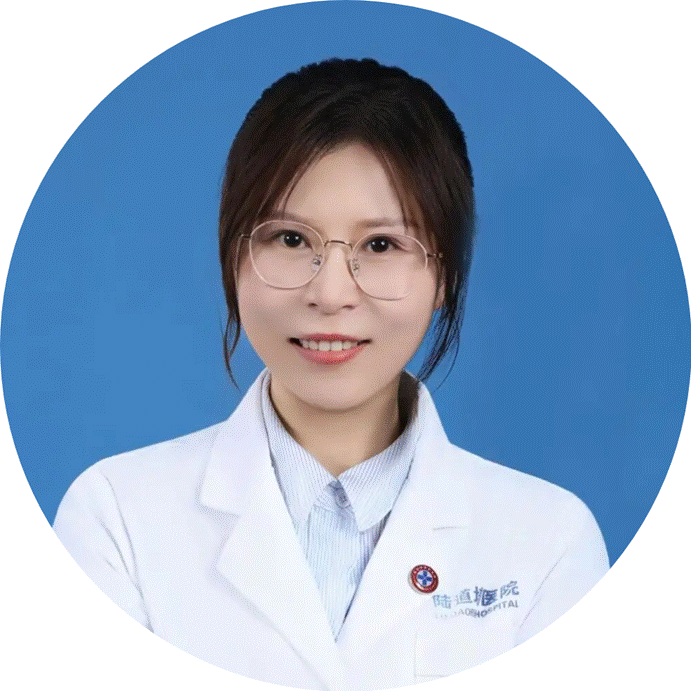
Dr. Chen Man
Ludaopei Hospital
Position / Title
Director, Flow Cytometry Laboratory
Associate Chief Technician / Physician
Academic Appointments
- Member, Clinical Flow Cytometry Testing Group, Laboratory Medicine Branch of the Chinese Medical Doctor Association
- Young Member, Laboratory Medicine Society, Chinese Association of Integrated Traditional and Western Medicine
- Standing Committee Member and Secretary, Expert Committee on Flow Cytometry Analysis and Diagnosis, Laboratory Medicine Society, Chinese Association of Integrated Traditional and Western Medicine
- Standing Committee Member, Flow Cytometry Group, Medical Laboratory Quality Management Professional Committee, China Association for Quality Assurance in Pharmaceuticals (CQAP)
- Standing Committee Member, Cytokines and Disease Testing Group, Laboratory Medicine Branch, Bethune Spirit Research Association
- Committee Member, Expert Committee of the Beijing Yizhuang Economic and Technological Development Area Laboratory Quality Control and Improvement Center
- Committee Member, 4th Laboratory Medicine Professional Committee, Beijing Association of Integrated Traditional and Western Medicine
Major Achievements
Dr. Chen has worked in flow cytometry testing and diagnostics for 14 years and is responsible for the College of American Pathologists (CAP) accreditation of the flow cytometry laboratory.
She has been recognized as an Outstanding Talent of Beijing Yicheng and has received two Second Prizes of the Hebei Medical Science and Technology Award. She has published 26 SCI-indexed and core-journal papers as first or corresponding author.
She is the first inventor of one Chinese national invention patent and the second inventor of six Chinese national invention patents and three U.S. invention patents.
She has contributed to nine Chinese expert consensus statements on flow cytometry, serving as the principal drafter for two of them, and has participated in the development of two Chinese group standards for flow cytometry.