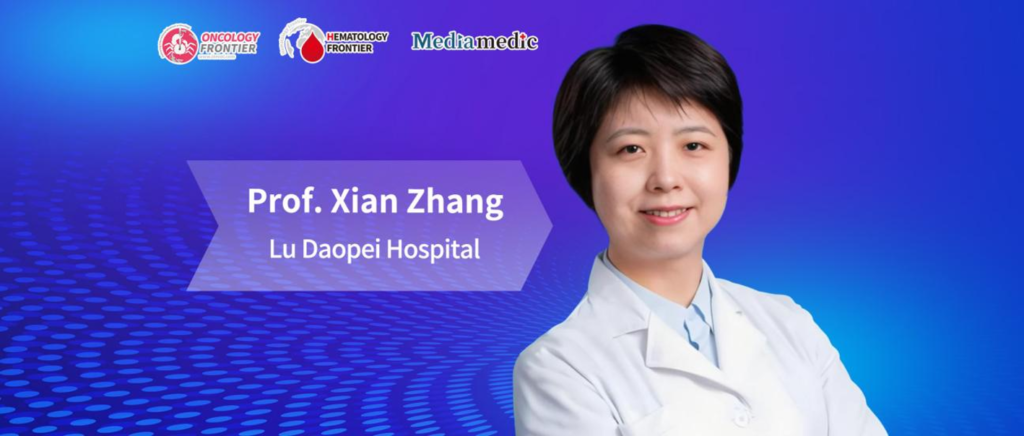
Editor's Note: On August 21, 2026, the 14th Lu Daopei Hematology Forum officially opened at Hebei Yanda Lu Daopei Hospital. Over the past 14 years, the conference has built a strong academic foundation. This year's meeting focused on cutting-edge topics including hematopoietic stem cell transplantation, cellular immunotherapy, and precision diagnosis and treatment of hematologic diseases, bringing together experts and scholars from across China to discuss advances in the field. During the conference, Oncology Frontier – Hematology Frontier invited Professor Xian Zhang of Hebei Yanda Lu Daopei Hospital for an interview. He shared his insights into the evolving treatment landscape of Philadelphia chromosome-positive acute lymphoblastic leukemia (Ph+ ALL), the timing and clinical value of immunotherapy, and strategies for managing treatment-resistant and relapsed disease.Oncology Frontier – Hematology Frontier: Your presentation at this conference focused on “Immunotherapy for Ph+ ALL.” How has the treatment landscape for Ph+ ALL changed in recent years? What is the relationship between conventional TKI-targeted therapy and emerging immunotherapies?
Professor Xian Zhang: With the continuous development of novel drugs and treatment approaches, hematologic malignancies have become a group of cancers with relatively favorable overall treatment outcomes. The treatment landscape for Ph+ ALL, in particular, has undergone a transformative change.
Historically, Ph+ ALL was considered a high-risk form of B-cell acute lymphoblastic leukemia, and allogeneic hematopoietic stem cell transplantation (allo-HSCT) was widely regarded as the definitive curative approach. However, with the successive introduction of first-, second-, and third-generation tyrosine kinase inhibitors (TKIs), together with the increasing use of immunotherapeutic approaches such as blinatumomab, inotuzumab ozogamicin, and CAR-T cell therapy, the number of patients requiring transplantation has decreased substantially.
At the same time, treatment strategies have increasingly shifted toward less intensive chemotherapy and even chemotherapy-free approaches, resulting in significant improvements in both overall survival and quality of life. Ph+ ALL is therefore a representative example of how advances in precision medicine can directly benefit patients with hematologic malignancies.
Oncology Frontier – Hematology Frontier: How should the timing of immunotherapy, including CAR-T therapy and bispecific antibodies, be determined? How do different treatment strategies affect the achievement of deep molecular remission and long-term survival?
Professor Xian Zhang: TKIs remain the foundation of treatment for Ph+ ALL and can be initiated as soon as the diagnosis is established. Their use has significantly improved survival outcomes in this patient population. On this basis, different immunotherapeutic approaches have their own optimal timing and clinical roles.
The first is blinatumomab. As a bispecific antibody, its use has progressively moved into earlier lines of therapy as evidence has accumulated. Initially, it was primarily used for relapsed/refractory Ph-negative and Ph-positive ALL. Its indications subsequently expanded to patients with measurable residual disease (MRD) positivity and to post-remission maintenance therapy. It was then extended to the induction phase for patients unable to tolerate intensive chemotherapy. More recently, emerging evidence has supported incorporating blinatumomab into induction regimens for patients with newly diagnosed disease.
Overall, blinatumomab can now be incorporated throughout the treatment continuum, including induction, maintenance, post-remission therapy, and the pre- and post-transplant settings. Substantial evidence has accumulated in both adult and pediatric populations, demonstrating clear efficacy and a favorable safety profile.
The second is inotuzumab ozogamicin. Its clinical use is primarily concentrated in relapsed/refractory Ph+ ALL and in the maintenance setting for patients who are unable to tolerate chemotherapy, where it has likewise demonstrated favorable efficacy.
The third is CAR-T cell therapy. Currently approved indications remain focused on relapsed/refractory B-cell leukemia, including both Ph-positive and Ph-negative disease. One of its most prominent advantages is its ability to simultaneously eliminate tumor lesions in both the bone marrow and extramedullary sites, with encouraging clinical outcomes.
Oncology Frontier – Hematology Frontier: Resistance and relapse following immunotherapy remain major clinical challenges. What are the key challenges at present, and what promising directions do you foresee for future research?
Professor Xian Zhang: Although the combination of TKIs and immunotherapy has substantially improved survival in patients with Ph+ ALL, a small proportion of patients still develop refractory or relapsed disease. At the mechanistic level, some resistance has been associated with IKZF1 mutations, while many other mechanisms of resistance remain incompletely understood.
For patients with relapsed/refractory disease, current clinical strategies can be broadly divided into several approaches. For patients with CD19-positive disease, CAR-T cell therapy is generally preferred, followed by bridging to allo-HSCT after achieving remission. For patients who are not eligible for or unable to receive CAR-T therapy, blinatumomab or inotuzumab ozogamicin may be considered. Even after achieving complete remission, bridging to allo-HSCT remains recommended.
Depending on the individual patient’s circumstances, first- or second-generation TKIs may also be switched to a third-generation TKI, or a TKI may be combined with immunotherapy. For patients who have not previously received adequate chemotherapy, reintroduction of chemotherapy may also be considered.
Overall, for patients with relapsed/refractory Ph+ ALL, clinicians should continue to pursue allo-HSCT while the disease is in remission whenever possible, with the aim of consolidating long-term disease control.
Expert Profile
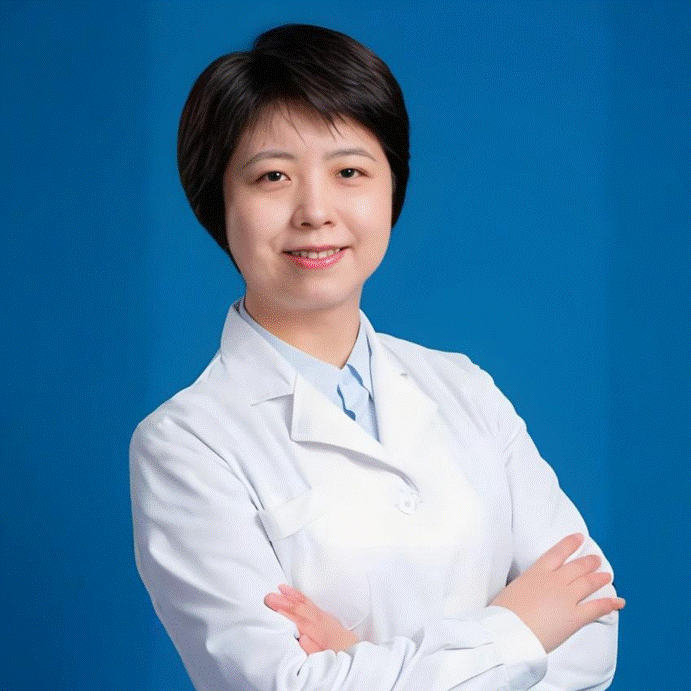
Professor Xian Zhang
Hebei Yanda Lu Daopei Hospital
Director, Department of General Hematology and Immunotherapy I
Chief Physician
PhD in Hematology
Professor Zhang serves as a committee member of the Hematology Physicians Branch of the Chinese Medical Doctor Association; a member of the Hematopoietic Stem Cell Transplantation and Cellular Therapy Group of the 5th Hematologic Oncology Professional Committee of the Chinese Anti-Cancer Association; a committee member of the Cellular Research and Therapy Professional Committee of the Chinese Research Hospital Association; and an expert member of the Human Leukocyte Antigen Professional Committee of the Chinese Society of Blood Transfusion.
He is also a member of the Leukemia Immunocellular Therapy Collaboration Group of the China Hematology Specialty Alliance, a registered physician for the China Charity Federation CCPAP Program, a committee member of the Hematologic and Lymphoid Tumors Professional Committee of the Beijing Anti-Cancer Association, a committee member of the Red Blood Cell Diseases Professional Committee of the Beijing Cancer Prevention and Control Society, a committee member of the Lymphoma Multidisciplinary Diagnosis and Treatment Professional Committee of the Beijing Society of Integrative Medicine, and a committee member of the Lymphoma Professional Committee of the Hebei Society of Hematology.