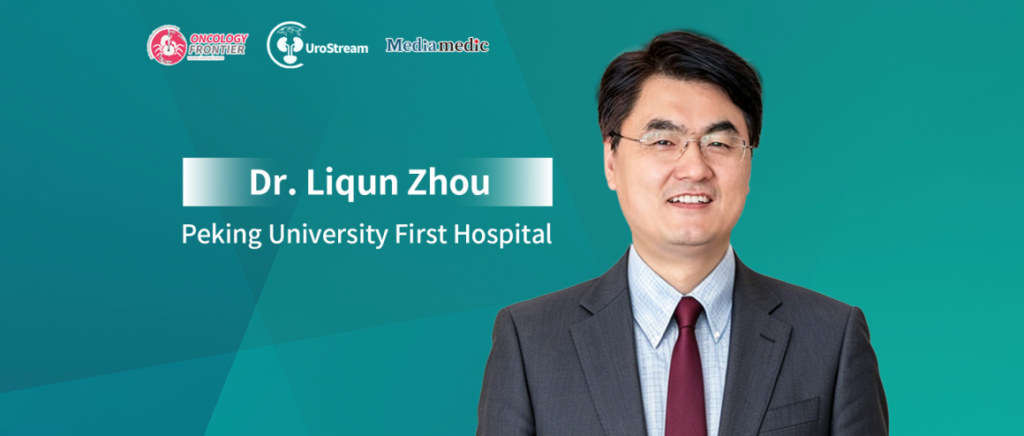
Editor's Note: The Third Yellow River Urology Congress and the 31st Academic Conference of the Shandong Medical Association on Urology were recently held successfully. The conference brought together numerous experts and scholars in urology from across China to discuss cutting-edge advances, innovations in clinical practice, talent development, and regional collaboration. Oncology Frontier · UroStream invited Professor Liqun Zhou of Peking University First Hospital to provide an in-depth analysis of how to advance high-quality clinical research in urology and support the professional development of young physicians.Oncology Frontier · UroStream: Clinical research is an important foundation for advancing the specialty. In your view, what aspects should urologists focus on when conducting high-quality clinical research today? How can we further improve research quality and innovative capacity?
Professor Liqun Zhou: Today, colleagues in China are paying increasing attention to clinical research. Historically, however, scientific research was sometimes equated too narrowly with basic research, while the value and status of clinical research were relatively marginalized. Some funding programs and evaluation systems, including the National Natural Science Foundation of China, have traditionally placed greater emphasis on basic research. Although dedicated funding pathways for clinical research have emerged in recent years, their overall scale still needs to be expanded.
However, from the perspective of the fundamental trajectory of medical development, clinical research is a major driving force behind the evolution of clinical guidelines and innovation in diagnostic and treatment models. Looking at the four internationally recognized leading medical journals, the major clinical studies they publish have the potential to reshape clinical pathways and optimize follow-up strategies, while also serving as high-level evidence for the development of global clinical guidelines.
As urologists, we need to clearly define our research direction. Although basic research is a cornerstone of medical progress, it should not be regarded as the only research pathway available to clinicians. Compared with laboratory research, clinicians have inherent advantages in the design and implementation of clinical studies—from developing scientifically rigorous protocols to collecting high-quality clinical data and conducting long-term follow-up. These are core professional competencies of clinical physicians.
Therefore, while continuing to value basic research, urologists should place greater emphasis on clinical research, using real clinical problems as the starting point and generating high-level evidence through rigorous and standardized research. Such evidence can support guideline updates and ultimately drive changes in clinical practice.
Specifically, clinical research should advance along two complementary tracks.
On the one hand, we should actively participate in international multicenter clinical trials. This not only enhances the international academic influence of Chinese urologic oncology centers but also allows us to become more deeply integrated into the global cutting edge of clinical practice.
On the other hand, we should remain grounded in domestic clinical needs and conduct investigator-initiated clinical research led by Chinese experts, including both single-center exploratory studies and multicenter collaborative studies. With high-quality study design and execution, such research can generate original findings suitable for publication in leading international journals and help bring China’s experience in urologic oncology to the global stage.
In this way, we can optimize clinical practice standards in China and potentially even contribute to reshaping international treatment guidelines, ultimately providing better treatment strategies for patients worldwide.
Oncology Frontier · UroStream: For young urologists, how can they strike a balance among clinical practice, scientific innovation, and technical development? What experience and advice would you like to share?
Professor Liqun Zhou: As a urologist, I have personally experienced this journey. Every physician develops step by step from the stage of being a young doctor, and I am no exception.
Looking back on my years serving as Director of the Department of Urology at Peking University First Hospital and Director of the Peking University Institute of Urology, I have consistently emphasized to our young and mid-career physicians the concept of developing “two wings” as a guiding principle for their professional growth.
Certainly, achieving coordinated progress in clinical practice, education, and research is an ideal goal for every clinician. However, individual strengths and talents differ, making it difficult for everyone to achieve perfectly balanced development in every area.
As surgeons, solid clinical foundations, excellent surgical skills, and the ability to diagnose and treat difficult and complex cases are the foundation of our profession. If we cannot perform our core clinical responsibilities to a high standard, we lose the foundation upon which our careers are built.
Therefore, our first priority should be to strengthen our clinical foundation, continuously refine our clinical skills, ensure that surgical procedures are precise and standardized, and improve our ability to manage challenging diseases. This is the “clinical wing” that supports our professional development.
Research, meanwhile, is essential for helping us overcome career bottlenecks, expand our potential, and establish a strong academic foundation. It can be regarded as the “research wing” of professional advancement. Through sustained research projects, academic publications, and breakthroughs in research awards, we can build our academic credentials and establish our position within the field.
Clinical practice and research complement each other; neither can be neglected.
If someone becomes highly skilled technically but lacks research thinking and academic output, they may ultimately become little more than a “surgeon who only operates,” without sufficient academic depth to sustain further career development.
Conversely, if we continue to develop our clinical expertise while conducting meaningful and rigorous research, we can achieve much greater professional growth. Research does not need to be limited to molecular biology experiments. Clinical research is equally important and can even directly contribute to updates in clinical guidelines.
When the two areas work together and progress in parallel, we can fly higher and go farther in our professional careers in urology.
I would emphasize that this does not mean diminishing the importance of medical education. Once the two core capabilities—clinical practice and research—have been firmly established, teaching becomes much more natural and manageable, whether it involves undergraduate instruction, clinical supervision, or the training of master’s students, doctoral students, and postdoctoral researchers.
Therefore, I hope that young and mid-career physicians, particularly those who are just beginning their clinical careers, will remain firmly focused on clinical excellence, continuously improve their diagnostic and treatment capabilities, and build a strong professional foundation through excellent surgical skills.
At the same time, they should devote themselves to scientific research. Whether pursuing basic or clinical research, they should develop solid research capabilities and ultimately achieve mutual reinforcement between clinical practice and scientific research.
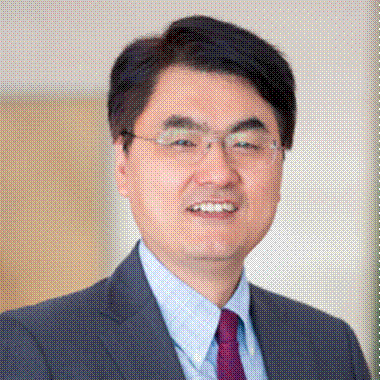
Professor Liqun Zhou