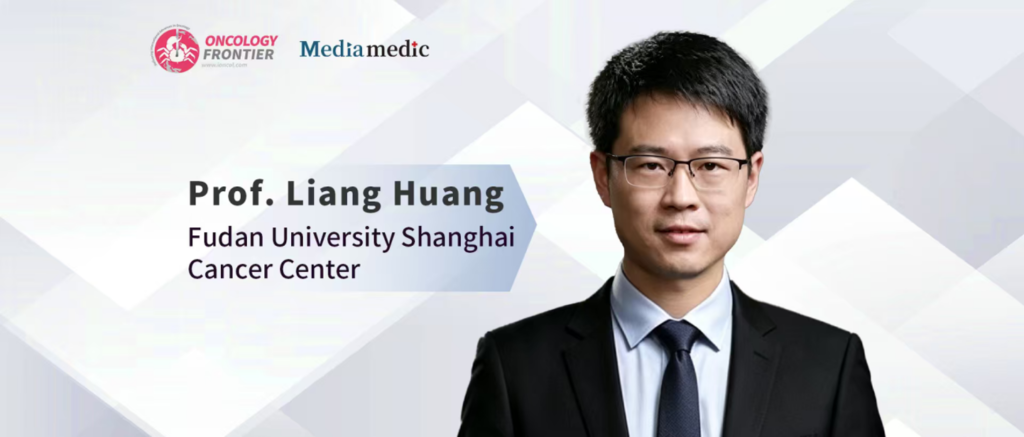
Editor's Note: Breast cancer surgery is undergoing a profound transformation, shifting from “maximum tolerable surgery” toward “minimum effective treatment.” How to precisely “do less” while maintaining oncologic efficacy, and how to redefine the role of surgery throughout the disease course, have become major topics of clinical discussion. Recently, at the 2026 Lingnan Breast Cancer Academic Forum, Oncology Frontier interviewed Prof. Liang Huang of Fudan University Shanghai Cancer Center. Drawing on his extensive clinical experience, Prof. Huang shared his insights into individualized surgical decision-making, the evidence supporting axillary de-escalation strategies, and the transformation of surgeons into “whole-course disease managers,” offering practical perspectives on balancing established principles with innovation in breast cancer surgery in the era of precision medicine.Oncology Frontier: You trained under Prof. Zhimin Shao and perform hundreds of breast cancer surgeries each year. In such a high-volume clinical practice, how do you ensure that “individualized surgical treatment” is not merely a slogan, but a genuine effort to find the optimal balance among each patient’s anatomical characteristics, tumor biology, and functional needs?
Prof. Liang Huang: As a clinical surgeon, under the guidance and mentorship of Prof. Zhimin Shao, I have learned to place greater emphasis on care and attention for every individual patient. Although I perform hundreds of breast cancer surgeries each year, I make sure to fully understand each patient’s specific disease characteristics and clinical needs before surgery.
For example, some patients wish to undergo breast-conserving surgery but do not initially meet the relevant criteria. In such cases, I may recommend neoadjuvant therapy in accordance with established guidelines. Conversely, some patients may not initially be considered ideal candidates for breast conservation and may prefer mastectomy. However, I will communicate with them and help them understand that mastectomy is not necessarily the only treatment option.
As the long-term survival of patients with breast cancer continues to improve, aesthetic considerations are becoming increasingly important. During the decision-making process, patients may also experience a sudden shift in their understanding of treatment and its consequences. At such times, surgeons should devote more time to in-depth communication with patients and help them select the most appropriate surgical approach. For example, immediate breast reconstruction may be considered following mastectomy.
At the same time, some patients prioritize prolonging survival above all else. Therefore, we cannot simply focus on removing the tumor. Instead, we need to provide whole-course management and develop a more comprehensive multidisciplinary treatment plan tailored to each patient.
Oncology Frontier: Management of the axilla is an important component of individualized breast cancer surgery. Studies such as INSEMA have suggested that, in selected patients with early-stage breast cancer and clinically node-negative disease, omission of surgical axillary staging can achieve non-inferior outcomes. How do you view the impact of this “de-escalation” evidence on clinical practice? When implementing axillary de-escalation strategies, how can we ensure that long-term patient safety is not compromised?
Prof. Liang Huang: De-escalation of breast cancer treatment is certainly an important area for further exploration. Compared with “adding” treatment, when we “do less,” our foremost consideration must be patient safety. The fundamental premise of surgical de-escalation is to maintain an appropriate balance between oncologic efficacy and safety.
In addition to the INSEMA study, the SOUND study and the BOOG 2013-08 study have also explored the possibility of omitting sentinel lymph node biopsy. However, omission of sentinel lymph node biopsy is certainly not appropriate for all patients, and careful patient selection is essential. Several domestic and international guidelines published this year have indicated that omission may be cautiously considered in selected older patients with small tumors, lower histologic grade, and HR-positive/HER2-negative disease.
I also look forward to the results of longer-term follow-up from these studies. As mentioned earlier, these studies are fundamentally focused on oncologic safety. If all of these studies—which have so far reached broadly consistent conclusions—continue to demonstrate that patients remain safe during long-term follow-up, I would be willing to discuss these findings thoroughly with patients in clinical practice and work together with them to make appropriate individualized decisions.
Oncology Frontier: With the continued advancement of systemic therapies, including ADCs and CDK4/6 inhibitors, the role of surgery in multidisciplinary breast cancer treatment is being redefined. In your view, what will be the future direction of individualized surgical treatment for breast cancer? How should surgeons proactively adapt to the era of precision medicine and evolve from “surgeons” into “whole-course disease managers”?
Prof. Liang Huang: I believe breast cancer surgery has evolved from a purely surgical intervention toward whole-course disease management, and the clinical role of surgeons has evolved accordingly.
In the treatment of patients with early-stage breast cancer, surgeons remain central to the treatment process. However, we need to work closely with medical oncologists, radiation oncologists, pathologists, radiologists, rehabilitation specialists, and social workers to provide comprehensive care throughout the entire disease course.
For example, we need to participate in multidisciplinary decision-making regarding whether a patient requires neoadjuvant therapy, which surgical approach should be selected, whether oncoplastic surgery or reconstruction is appropriate, and whether postoperative chemotherapy, radiotherapy, or targeted therapy is indicated. We should also remain involved in rehabilitation and in addressing the psychological and social challenges that may arise during long-term survivorship.
Therefore, surgeons must first continue to deepen their professional knowledge and maintain excellent surgical skills. This is the foundation of our profession. Providing patients with high-quality surgical care must remain at the core of our clinical practice.
At the same time, however, we must understand developments in nonsurgical treatments throughout the entire breast cancer treatment continuum and maintain close communication and collaboration with multidisciplinary teams. Our goal should be to provide every patient with the most appropriate treatment strategy supported by sound clinical evidence.
Ultimately, providing patients with high-quality, safe, evidence-based treatment that can withstand the test of time is the shared responsibility and ultimate goal of every surgeon and every healthcare professional working in the field of breast cancer.
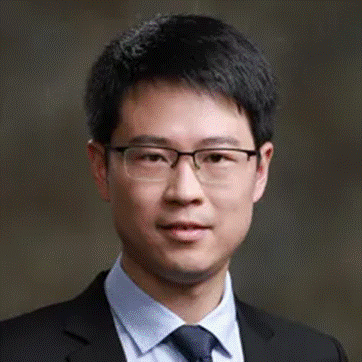
Prof. Liang Huang