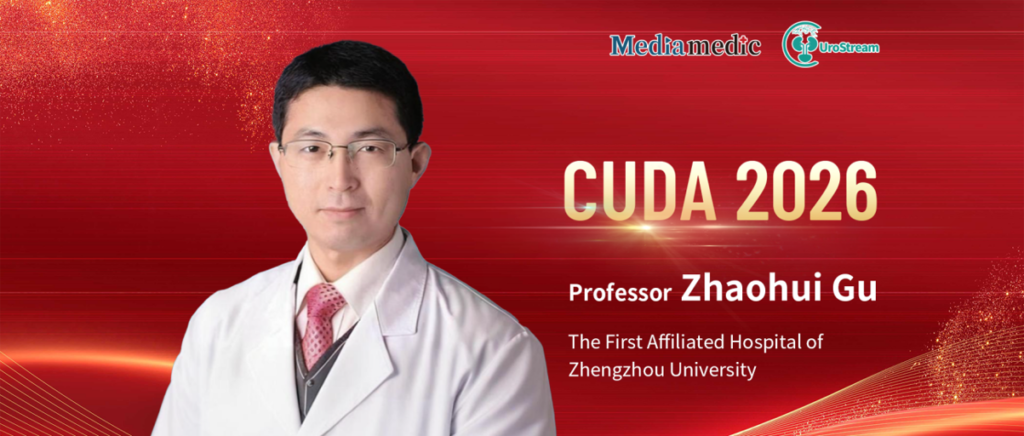
The 2026 Annual Meeting of the Chinese Urological Doctor Association (CUDA 2026) was held in Zhengzhou from June 11 to 14. As one of China’s most influential national academic meetings in urology, this year’s congress highlighted cutting-edge developments in robotic surgery, AI-assisted diagnosis and treatment, precision medicine, and minimally invasive technologies, promoting clinical translation and innovation in urologic care.During the congress, Oncology Frontier – UroStream interviewed Prof. Zhaohui Gu of the First Affiliated Hospital of Zhengzhou University. Prof. Gu shared his perspectives on how artificial intelligence and robotic technologies are reshaping clinical practice, the implementation of precision stratification and individualized treatment, and optimization of therapeutic strategies for older patients with multiple comorbidities.
Oncology Frontier – UroStream: How do you view the impact of emerging technologies such as AI, robotic surgery, targeted therapy, and immunotherapy on everyday urologic practice?
Prof. Zhaohui Gu:
We have, in fact, already entered the AI era. In clinical practice, we frequently encounter patients who first consult AI tools such as Doubao about possible treatment options and then come to the hospital for further evaluation. This itself represents one form of AI-assisted healthcare.
When physicians encounter such patients, we often need to quickly assess the accuracy of the information they have received and then reinterpret it in the context of clinical evidence. I believe physicians should also proactively use AI as an assistive tool to improve the efficiency and accuracy of diagnosis and treatment.
For example, during partial nephrectomy, we use 3D navigation technology to visualize the anatomical relationships between the tumor, arteries, veins, and ureter, allowing us to perform more precise tumor resection.
In terms of targeted therapy, urology actually entered the targeted treatment era around 2005. Today, targeted drugs are available for kidney cancer, prostate cancer, and bladder cancer, and these treatments have delivered substantial benefits to patients.
We are also witnessing an increasing convergence between AI and surgical technologies. Internationally, robotic surgery competitions incorporating AI concepts have already emerged, while China has established academic groups dedicated to intelligent surgery. Domestic surgical robotic platforms are likewise increasingly integrating AI capabilities.
In the future, if technologies such as the autonomous suturing robotic systems developed by Academician Xu Zhang’s team can be translated into routine clinical practice, they could significantly shorten the learning curve for younger surgeons and help improve the overall standard of surgery. A growing number of AI-enabled robotic technologies are already undergoing clinical or preclinical investigation, and the direction of development is becoming increasingly clear.
Oncology Frontier – UroStream: How can precision stratification and individualized treatment be implemented in prostate, bladder, and kidney cancers, and how do these approaches translate into tangible clinical benefits?
Prof. Zhaohui Gu:
Precision stratification for these three major urologic malignancies has actually been practiced for many years.
The first principle is individualization—every patient is different. We then need to perform fundamental risk stratification according to established guidelines, integrating factors such as disease stage, grade, and quality of life.
For example, prostate cancer can be classified into very-low-, low-, intermediate-, high-, and very-high-risk categories.
However, this alone is not sufficiently “precise.” True precision medicine needs to reach the molecular level, incorporating analyses such as next-generation sequencing, methylation profiling, genetic mutation assessment, and chromosomal abnormalities.
Examples include BRCA1/2 mutations in prostate cancer, HER2 expression in urothelial carcinoma, and genetic alterations involving the VEGFR pathway in kidney cancer. These molecular characteristics may influence therapeutic selection.
Once we understand a patient’s genomic characteristics, treatment decisions can become considerably more precise. Some patients without identifiable mutations may still respond to particular treatments, but those harboring relevant molecular alterations often derive greater benefit.
Therefore, precision medicine-based stratification represents an important direction for more responsible and individualized clinical care in the future.
Oncology Frontier – UroStream: For older patients with urologic cancers and multiple underlying conditions, what advantages can emerging technologies offer over traditional treatment in terms of safety and quality of life?
Prof. Zhaohui Gu:
This is a particularly important issue because the urologic patient population tends to be older overall. Conditions such as benign prostatic hyperplasia and prostate cancer, for example, predominantly affect older adults.
As a result, our therapeutic philosophy increasingly emphasizes a progression from non-invasive to minimally invasive and ultra-minimally invasive treatment.
For benign prostatic hyperplasia, for instance, water vapor thermal therapy can now be performed under local anesthesia. The procedure takes only a few minutes, using the thermal energy of water vapor to treat prostate tissue. Following a short period of postoperative catheterization, patients can subsequently recover their ability to urinate.
Robotic technologies are also evolving rapidly in prostate cancer surgery, progressing from multi-port to single-port robotic platforms. Related surgical demonstrations were presented during the CUDA meeting.
For older patients, our objective is to minimize surgical trauma while accelerating recovery and preserving quality of life. With single-incision approaches, for example, surgery and specimen extraction can be accomplished through a single incision, potentially improving the overall patient experience and satisfaction.
When patients achieve better outcomes, physicians also gain a stronger sense of professional fulfillment. Ultimately, our goal remains very straightforward: to provide patients with better treatment options and enable them to leave the hospital safely and satisfied with their care.
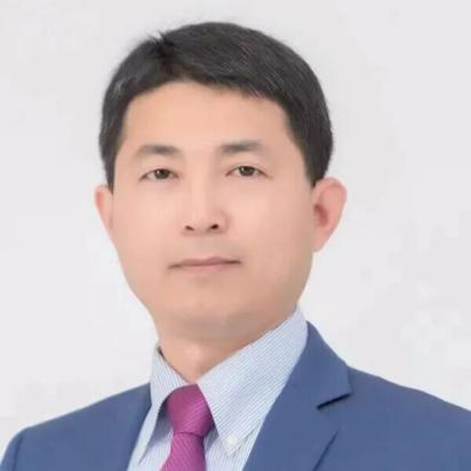
Prof. Zhaohui Gu
The First Affiliated Hospital of Zhengzhou University