The 2026 Pujiang Prostate Cancer Conference was held in Shanghai on June 26–27, 2026, under the theme "Standardization, Precision, Chinese Innovation, and Global Collaboration." The conference featured in-depth discussions on key topics including early prostate cancer screening and precision diagnosis, optimization of local treatment strategies, innovation in advanced disease management, and the development of comprehensive care throughout the disease course.As prostate cancer management continues to evolve toward precision stratification and individualized treatment, the Advanced Prostate Cancer Consensus Conference (APCCC) has become an important bridge between evidence-based medicine and real-world clinical decision-making through its systematic evaluation of controversial clinical questions and expert voting process.
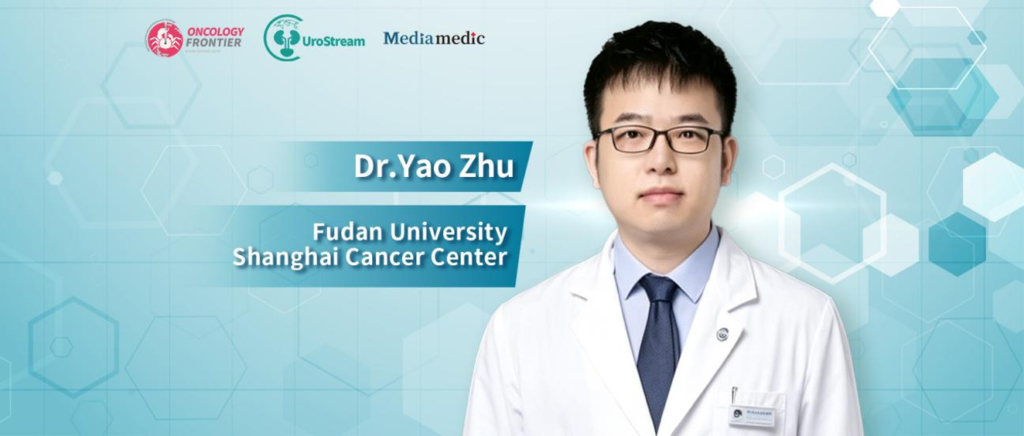
During the meeting, Prof. Yao Zhu from Fudan University Shanghai Cancer Center delivered a presentation entitled “Interpretation of the APCCC Consensus by Chinese Experts.”
UroStream invited Prof. Zhu to discuss the major updates in the latest APCCC consensus, its distinctions from clinical guidelines such as those issued by the NCCN and EAU, and its practical value in Chinese clinical practice.
UroStream:
What is the central significance of the APCCC consensus within the prostate cancer management framework?
Prof. Yao Zhu:
The APCCC occupies a very important position because it serves as a bridge between clinical guidelines and real-world clinical practice.
Why do I say that? Clinical guidelines are typically built upon robust evidence-based medicine, particularly large prospective randomized controlled trials. These studies provide clear conclusions and therefore establish standardized treatment pathways.
However, in everyday clinical practice, nearly half of the questions we encounter still lack definitive evidence. Examples include certain neoadjuvant approaches and perioperative treatment strategies for prostate cancer, where evidence remains either limited or inconsistent.
The value of the APCCC lies in addressing these clinical questions that are not yet fully covered by existing guidelines. Through structured expert discussion and voting, it provides practical guidance that helps clinicians make more informed decisions in areas of uncertainty.
One of the most important developments over the past year has been perioperative therapy for prostate cancer.
For patients with localized prostate cancer who have high-risk features, nearly 60% may still experience recurrence, disease progression, or metastasis following surgery. Consequently, reducing the risk of metastatic progression and moving closer to true curative treatment has become a major clinical priority.
Current APCCC recommendations, together with emerging clinical evidence, suggest that intensified perioperative hormonal therapy—for example, approximately six months of intensified treatment administered either before or after surgery—may reduce the long-term risk of distant metastasis, improve long-term outcomes, and decrease the subsequent need for radiotherapy or chemotherapy.
At the same time, this strategy must be individualized. Some patients may derive sufficient benefit after only three months of therapy, whereas others may require further treatment intensification. The consensus therefore provides an important framework for future refinement of personalized treatment strategies.
Overall, the APCCC not only fills the gap between clinical guidelines and everyday practice but also provides a valuable framework for individualized decision-making in real-world clinical care.
UroStream:
The APCCC is one of the leading international expert consensus conferences in advanced prostate cancer. How does it differ from clinical guidelines such as those from the NCCN and EAU?
Prof. Yao Zhu:
This question goes to the fundamental distinction between clinical guidelines and expert consensus.
Generally speaking, once a recommendation has been incorporated into a clinical guideline and established as a standard treatment pathway, it usually means that it is supported by robust evidence, most often derived from Phase III randomized controlled trials.
Expert consensus, on the other hand, operates one step ahead of clinical guidelines. Its strength lies in being more closely aligned with real-world clinical practice, offering greater practical guidance while emphasizing actual decision-making scenarios.
A defining feature of the APCCC is its case-based approach. Rather than discussing abstract recommendations, it presents detailed clinical cases—including patient characteristics, diagnostic findings, and complex treatment scenarios—and asks experts to vote on the most appropriate management strategy within those real-world contexts.
For example, when more than 80% of experts select the same approach, the recommendation is considered a strong consensus. Agreement between 50% and 80% constitutes a weak consensus, while lower levels of agreement indicate no consensus.
These weak-consensus and no-consensus topics are, in fact, the areas of greatest controversy in current clinical practice. Thus, the APCCC does more than summarize existing evidence—it systematically organizes and highlights areas of clinical uncertainty.
Compared with guidelines from the NCCN, EAU, or AUA, the unique value of the APCCC is that it not only tells us what should be done, but also identifies which questions still lack definitive answers.
For recommendations supported by strong consensus, clinicians can confidently follow the proposed treatment pathway. For areas with moderate or weak consensus, however, treatment decisions should be individualized, taking into account each patient’s specific clinical circumstances while engaging in shared decision-making after carefully discussing the potential benefits and risks.
This is precisely what makes the APCCC so valuable in clinical practice.
Looking ahead, we hope that ongoing research will continue to strengthen the evidence base, allowing more topics to achieve strong consensus while progressively reducing areas of uncertainty, ultimately promoting greater standardization and consistency in prostate cancer management.

Prof. Yao Zhu