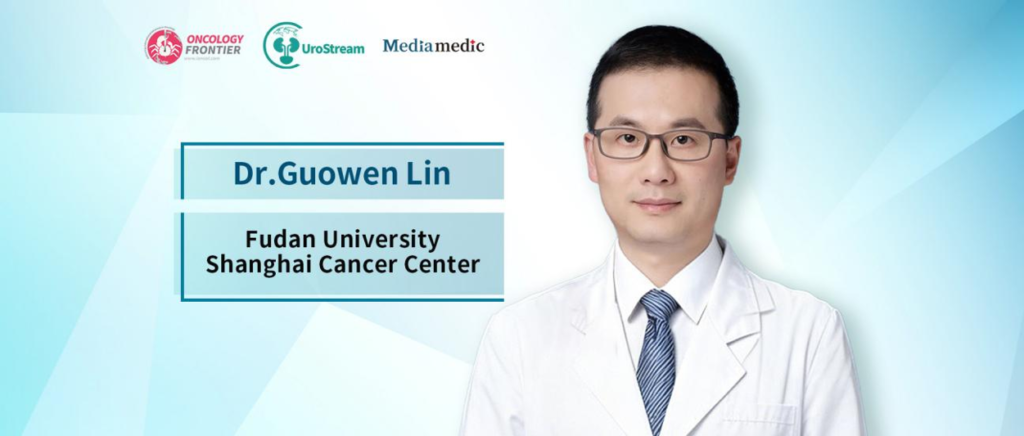
The Pujiang Prostate Cancer Conference was held in Shanghai on June 26–27, 2026. Organized by the Shanghai Anti-Cancer Association and its Genitourinary Oncology Committee, and hosted by Fudan University Shanghai Cancer Center, the meeting focused on major clinical issues including salvage surgery following prostate cancer recurrence and the integration of multiple local treatment modalities.Prof. Guowen Lin of Fudan University Shanghai Cancer Center has more than 20 years of experience in prostate cancer surgery and has accumulated extensive single-center experience in managing patients who experience recurrence after multimodal local therapy. His expertise includes radical prostatectomy, a variety of focal ablative techniques, and comprehensive individualized management of advanced prostate cancer. During the conference, Prof. Lin presented a lecture entitled “Perspectives on Salvage Radical Prostatectomy for Prostate Cancer.”
At the meeting, UroStream invited Prof. Lin to discuss three key clinical topics: the optimal timing of salvage radical prostatectomy following radiotherapy or focal ablation, the integration of multimodal therapies throughout the continuum of care, and evolving surgical strategies for patients who experience recurrence after focal ablative therapy.
UroStream:
For patients with recurrent prostate cancer following definitive local therapies such as radiotherapy or focal ablation, how should clinicians determine the optimal timing for salvage radical prostatectomy?
Prof. Guowen Lin:
Unlike surgery, local treatments such as radiotherapy and focal ablation do not completely remove the primary prostate lesion. During long-term follow-up, some patients inevitably develop local recurrence. These patients often have a strong desire to both prolong survival and preserve quality of life, making the timing of salvage radical prostatectomy critically important.
Having worked in prostate cancer surgery at Fudan University Shanghai Cancer Center for more than two decades and managed a large number of such cases, I believe that patient selection should be based on three key assessment dimensions.
First is the patient’s age and physical condition. For patients older than 82 years, conservative management is generally preferred. Younger patients with good performance status should be actively evaluated for surgical eligibility.
Second is comprehensive systemic staging. Complete imaging studies must confirm that the recurrence is confined to the prostate, with no distant bone metastases or regional lymph node involvement. Only under these circumstances does salvage surgery have the potential to achieve another curative resection.
Third is preoperative assessment of local adhesions. Following radiotherapy or focal ablation, the prostate frequently becomes adherent to the rectum and pelvic floor musculature. Magnetic resonance imaging and PET scans may not always clearly delineate these tissue planes. Therefore, digital rectal examination (DRE) remains an essential complementary assessment. By carefully palpating the posterior aspect of the prostate, rectum, and surrounding pelvic tissues, surgeons can anticipate the degree of adhesion, estimate surgical complexity, improve operative safety, and maximize the likelihood of complete tumor removal.
Only by comprehensively evaluating patient age and performance status, systemic disease staging, and the extent of local adhesions can we identify patients who are most likely to benefit from salvage radical prostatectomy.
UroStream:
Your clinical practice encompasses radical prostatectomy, extended local surgery, various focal ablation techniques, and systemic management of advanced disease. In line with the theme of this conference, how should surgery, focal ablation, radiotherapy, and systemic therapies be integrated to develop individualized treatment strategies for patients with recurrent or locally advanced prostate cancer? How should surgeons determine the appropriate timing for each treatment modality and help transition prostate cancer care from isolated surgical intervention to comprehensive longitudinal management?
Prof. Guowen Lin:
What you describe as comprehensive management, I often refer to as the art of individualized care.
Every patient with recurrent or advanced prostate cancer has followed a different treatment journey. Some have previously undergone focal ablation, others radiotherapy, while some have received hormonal therapy alone. Their treatment goals also differ after disease progression. Therefore, when evaluating a patient, I first carefully review the entire treatment history before selecting the most appropriate therapeutic options available today.
As one of China’s leading referral centers for prostate cancer, Fudan University Shanghai Cancer Center manages a large number of complex, heavily pretreated patients. We have developed a comprehensive, multidisciplinary treatment platform capable of supporting individualized management throughout the disease course.
From the perspective of local therapy, we offer multiple focal ablation technologies, proton and heavy ion radiotherapy, as well as stereotactic body radiotherapy (SBRT), enabling highly precise treatment of both primary and metastatic lesions.
In terms of surgery, our department performs one of the highest volumes of prostate procedures in China and has established standardized protocols for patient selection, perioperative management, and surgical timing.
In addition, we maintain one of the country’s largest clinical trial platforms dedicated to prostate cancer, providing access to innovative therapies for patients with difficult-to-treat disease.
As surgeons, we should not focus solely on whether an operation can be performed. Instead, we need to integrate surgery with local therapies, systemic treatments, and clinical trial opportunities while considering each patient’s treatment history, disease characteristics, physical condition, and personal goals.
Only by transforming isolated surgical treatment into individualized multidisciplinary care throughout the entire disease course can we maximize both survival and quality of life.
UroStream:
Emerging focal therapies such as cryoablation, high-intensity focused ultrasound (HIFU), and irreversible electroporation (IRE) are becoming increasingly common. Have patients who experience recurrence after these minimally invasive treatments become a new population for salvage radical prostatectomy? How do you view this trend, and what future developments do you foresee for salvage surgery?
Prof. Guowen Lin:
This question reflects one of the most important changes currently occurring in clinical practice in China.
Historically, salvage radical prostatectomy was performed primarily for patients who experienced recurrence after radiotherapy, a treatment paradigm that largely originated from Western clinical practice.
In recent years, however, focal minimally invasive therapies—including cryoablation, high-intensity focused ultrasound (HIFU), and irreversible electroporation (IRE)—have become increasingly popular in China, leading to a steadily growing number of patients choosing focal treatment.
Although these minimally invasive approaches have less impact on short-term quality of life, they cannot always eradicate every cancer focus. Consequently, local recurrence becomes inevitable in a proportion of patients during long-term follow-up.
This group of patients remains relatively uncommon in Western countries but is rapidly expanding in China, presenting new challenges for salvage surgery.
At present, there is no internationally established management pathway for recurrence following focal ablation. At Fudan University Shanghai Cancer Center, however, we have developed a comprehensive evaluation system that considers the patient’s age, physical condition, systemic staging, degree of local adhesion, and individual treatment goals in order to determine whether salvage surgery or alternative systemic or local therapies represent the most appropriate treatment strategy.
Looking ahead, as minimally invasive focal therapies continue to gain wider acceptance, the number of patients experiencing recurrence after ablation will continue to increase.
Accordingly, precise preoperative risk stratification, refined surgical techniques for managing complex adhesions, and individualized surgical strategies tailored to patients with recurrence following different local therapies such as ablation or radiotherapy will become major areas of future development.
These are also among the principal clinical research priorities at our center.

Prof. Guowen Lin