In recent years, the treatment landscape for urothelial carcinoma (UC) has entered the era of precision medicine, with emerging therapeutic strategies offering new hope for patients. At the recent China Clinical Oncology Annual Advances Symposium (BOC) and Best of CSCO 2026 China, experts highlighted China's most significant original oncology achievements of the year and reviewed major advances in precision oncology across multiple tumor types, including genitourinary cancers, further advancing standardized cancer care in China.Among the featured studies, the RC48-C016 trial evaluating a disitamab vedotin-based combination regimen was published in The New England Journal of Medicine (NEJM). Based on this high-level clinical evidence, the regimen has been incorporated into the latest CSCO Guidelines for Urothelial Carcinoma as a Category I recommendation for first-line treatment, establishing a new first-line standard of care for Chinese patients with urothelial carcinoma.
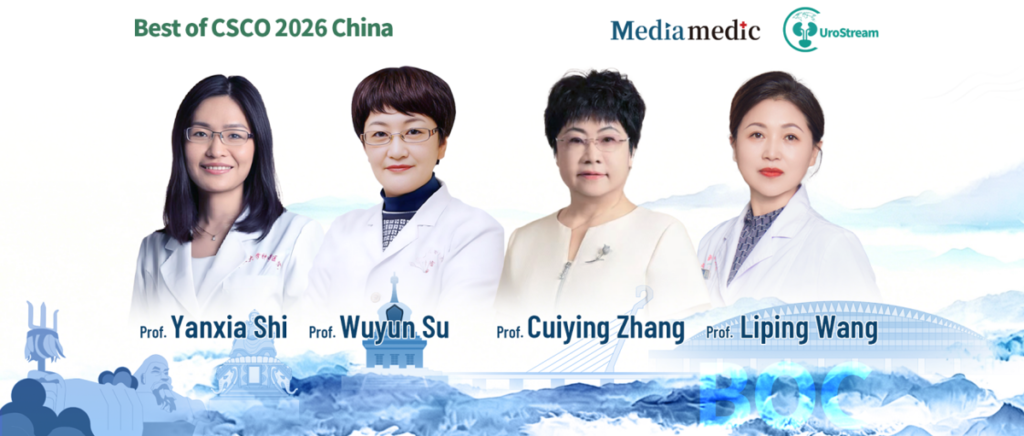
During the meeting, UroStream invited Prof. Yanxia Shi from Sun Yat-sen University Cancer Center, Prof. Cuiying Zhang from Inner Mongolia People’s Hospital, Prof. Wuyun Su from The Affiliated Hospital of Inner Mongolia Medical University, and Prof. Liping Wang from Baotou Cancer Hospital to discuss the latest advances and practical clinical experience in the management of urothelial carcinoma.
Precision Testing as the Foundation
BOC Experts Discuss HER2 Testing Strategies and the Clinical Evidence Supporting Disitamab Vedotin
UroStream:
Current clinical practice in China recommends HER2 immunohistochemistry (IHC) testing, rather than routine HER2 fluorescence in situ hybridization (FISH), for urothelial carcinoma. What evidence supports this pathological testing strategy, and how does it improve clinical practice and patient outcomes?
Prof. Yanxia Shi:
To answer this question, I’d like to discuss HER2 biology in urothelial carcinoma from the perspectives of molecular mechanisms, pathology, and clinical treatment.
Biologically, urothelial carcinoma differs substantially from other tumor types. Approximately 81.4% of urothelial carcinomas express HER2, providing a broad population that may benefit from HER2-directed precision therapy.
Importantly, the pattern of HER2 protein expression in urothelial carcinoma differs from that seen in breast and gastric cancers. Studies have demonstrated that HER2 gene amplification does not reliably predict HER2 protein expression in urothelial carcinoma, meaning the two cannot be used interchangeably.
Moreover, HER2-targeted antibody-drug conjugates (ADCs) exert their antitumor activity by binding directly to HER2 protein expressed on the tumor cell surface. Therefore, the critical determinant of ADC efficacy is cell-surface HER2 protein expression, rather than HER2 gene amplification.
For this reason, the HER2 testing paradigm used in breast and gastric cancers—which relies on FISH to confirm gene amplification—is not appropriate for urothelial carcinoma.
The RC48-C016 study provides compelling clinical evidence supporting this approach. Patients with HER2-expressing tumors treated with the disitamab vedotin combination regimen achieved a median progression-free survival (PFS) of 13.1 months and a median overall survival (OS) of 31.5 months.
Importantly, the study enrolled not only patients with high HER2 expression but also those with HER2-low disease (IHC 1+), demonstrating consistent and clinically meaningful benefit across different HER2 expression levels.
Additional studies have further shown that patients with HER2 protein overexpression but FISH-negative disease also derive substantial benefit from anti-HER2 ADC therapy, achieving objective response rates comparable to those observed in patients with HER2 IHC 2+/FISH-positive tumors. These findings indicate that IHC is a more appropriate companion diagnostic for HER2-targeted ADC therapy.
Accordingly, current clinical guidelines and expert consensus recommend HER2 IHC testing without routine FISH testing for patients with urothelial carcinoma.
This optimized testing strategy reduces patients’ financial burden while enabling more individuals to access innovative therapies. It also provides clinicians with clearer guidance for precision treatment decisions, ultimately improving patient outcomes.
Advancing HER2-Targeted Therapy Across the Entire Disease Course
BOC Experts Discuss the Expanding Role of Disitamab Vedotin from First-Line Metastatic Disease to the Perioperative Setting
UroStream:
The latest CSCO Guidelines now recommend disitamab vedotin plus toripalimab as a Category I (Level 1A evidence) first-line treatment for HER2-expressing metastatic urothelial carcinoma. From the perspective of a medical oncologist, how significant is this recommendation for advancing precision medicine in China?
Prof. Cuiying Zhang:
I would like to address this from three perspectives.
First, one of the defining characteristics of the CSCO guidelines is their strong emphasis on high-level evidence and clinical outcomes in Chinese patients. The RC48-C016 study, published in The New England Journal of Medicine, demonstrated the remarkable efficacy of the disitamab vedotin combination regimen. Importantly, all enrolled patients were Chinese, providing robust local evidence supporting its broad clinical application. Based on this high-quality evidence, the updated CSCO Guidelines have granted the regimen a Category I recommendation (Level 1A evidence).
Second, both the CSCO Guidelines and the Chinese consensus on HER2 testing recommend HER2 IHC testing, providing a solid diagnostic foundation for precision medicine in urothelial carcinoma.
Traditionally, HER2 testing focused only on patients with high HER2 expression. However, the development of ADCs has fundamentally changed this concept. As long as there is measurable HER2 protein expression, it can serve as a target for drug delivery. The RC48-C016 study enrolled patients with IHC 1+, 2+, and 3+ tumors and demonstrated meaningful benefit across all HER2-expressing populations, providing a new precision treatment option for patients with advanced urothelial carcinoma.
Finally, from a medical oncology perspective, although platinum-based chemotherapy has historically been effective for metastatic urothelial carcinoma, many patients are ineligible for cisplatin because of poor tolerance.
The disitamab vedotin combination demonstrated broad applicability in RC48-C016. Regardless of cisplatin eligibility, patients experienced significant survival benefits, and the regimen can be used across all HER2-expressing populations, substantially expanding treatment options.
UroStream:
Upper tract urothelial carcinoma (UTUC) has unique characteristics in China, while previous chemotherapy and immunotherapy approaches have achieved only limited success. How do you evaluate the efficacy and future potential of the disitamab vedotin combination in this population?
Prof. Wuyun Su:
Chinese patients with UTUC have several unique characteristics.
First, UTUC is considerably more common in China than in Western countries, and exposure to aristolochic acid-containing herbal medicines represents a unique etiological factor. Many of these patients present with impaired renal function at diagnosis, limiting the use of platinum-based chemotherapy and highlighting the need for effective cisplatin-free treatment strategies.
Second, although three major adjuvant immunotherapy trials have demonstrated important advances in urothelial carcinoma overall, none significantly improved disease-free survival (DFS) in the UTUC subgroup. This underscores the need for more effective treatment approaches specifically for these patients.
The RC48-C016 study has opened an entirely new avenue by combining HER2-targeted therapy with immunotherapy. Nearly 50% of enrolled patients had UTUC, and both PFS and OS benefits were consistent with those observed in the overall study population.
More importantly, regardless of the IHC score, patients with HER2 protein expression derived clear clinical benefit from the disitamab vedotin combination.
This landmark study not only established a precision treatment strategy specifically suited to Chinese patients but also brought an innovative Chinese-developed regimen onto the global stage, earning widespread recognition at leading international meetings such as ESMO and ASCO.
UroStream:
Disitamab vedotin-based regimens now span the entire treatment continuum for advanced urothelial carcinoma and are being actively investigated in the neoadjuvant and adjuvant settings. How will this influence treatment sequencing in clinical practice?
Prof. Liping Wang:
Historically, the management of urothelial carcinoma has been fragmented. Neoadjuvant therapy, adjuvant therapy, first-line treatment, second-line therapy, and later-line treatments were often approached independently, without an integrated treatment strategy.
After years of clinical investigation, disitamab vedotin-based regimens now cover virtually the entire treatment continuum, fundamentally changing this paradigm.
Disitamab vedotin monotherapy was the first HER2-targeted treatment to establish a role in second- and later-line advanced urothelial carcinoma. It is worth remembering that previous international efforts targeting HER2 in urothelial carcinoma had largely failed, leading many to regard HER2 as an “untargetable” pathway in this disease.
Through persistent research, Chinese investigators overturned this perception. Beginning with early Phase I studies, followed by Phase II and III trials, and culminating in the RC48-C016 study, China’s homegrown ADC has fundamentally changed the field.
The approval of disitamab vedotin plus toripalimab as first-line therapy for advanced urothelial carcinoma in 2025 represented a true milestone. The regimen not only challenged chemotherapy-based recommendations in international guidelines but also established itself as a new first-line standard of care.
Its survival outcomes are highly impressive, demonstrating efficacy comparable to the international enfortumab vedotin plus pembrolizumab regimen while approximately doubling survival compared with historical data, with a median OS exceeding 30 months.
Today, investigations have expanded into the neoadjuvant and adjuvant settings. Based on its promising complete response (CR) rates, the regimen has considerable potential in perioperative treatment and may offer curative opportunities for more patients.
At the same time, the widespread adoption of disitamab vedotin has transformed HER2 testing. Expert consensus now recognizes HER2 protein expression measured by IHC as a key determinant of treatment selection. Consequently, HER2 testing has evolved from an optional assessment to an essential prerequisite for precision HER2-targeted therapy in advanced urothelial carcinoma, placing greater emphasis on standardized pathological testing.
Chinese Innovation Benefits Patients Worldwide
BOC Experts Discuss Clinical Experience, Safety, and Future Accessibility of Disitamab Vedotin
UroStream:
China has recently produced several important innovations in urothelial carcinoma, particularly the disitamab vedotin combination, which has gained international recognition and reshaped advanced UC treatment. How do you view China’s contribution to global oncology?
Prof. Yanxia Shi:
The presentation of the RC48-C016 study during the ESMO Presidential Symposium and its subsequent publication in The New England Journal of Medicine represent a landmark achievement, marking China’s transition from a follower to a global leader in selected areas of oncology innovation.
The disitamab vedotin combination has significantly improved survival outcomes for Chinese patients with HER2-expressing urothelial carcinoma. Notably, the study enrolled a large proportion of patients with UTUC, providing high-level evidence supporting HER2-targeted treatment for this underserved population worldwide.
This research, driven by Chinese innovation, not only addresses important clinical challenges in China but also contributes new evidence-based treatment strategies for patients with HER2-expressing urothelial carcinoma globally.
That is the true value of Chinese innovation—developing therapeutic solutions that benefit patients around the world.
UroStream:
Prof. Wang, your center treats a large number of patients with upper tract urothelial carcinoma. Compared with conventional chemotherapy, how has first-line treatment with disitamab vedotin plus immunotherapy affected the overall cost of care? What has been your clinical experience?
Prof. Liping Wang:
In my opinion, the value of the disitamab vedotin combination can be summarized in three aspects.
First, the regimen demonstrates outstanding efficacy with durable responses. Although the upfront treatment cost may appear higher than conventional chemotherapy, its sustained clinical benefit reduces repeated hospitalizations and the need to switch therapies frequently. From a broader perspective, it lowers the overall treatment burden while enabling many patients to return to work and resume normal social activities, resulting in improvements in both quality of life and societal productivity.
Second, the regimen has a favorable safety profile, substantially reducing the need for supportive care and the costs associated with managing treatment-related adverse events. Consequently, the overall cost throughout the entire treatment course does not increase substantially and may even decrease for patients who would otherwise experience significant chemotherapy-related toxicity.
Third, the regimen simultaneously improves both survival and quality of life, overcoming the traditional trade-off between these two treatment goals. This dual benefit makes its overall value extend well beyond cost considerations, offering patients a more effective and patient-centered treatment experience.
UroStream:
Prof. Su, if the disitamab vedotin combination is included in China’s National Reimbursement Drug List next year, do you believe it will become more widely adopted? What additional measures will be needed?
Prof. Wuyun Su:
If the regimen is included in the national reimbursement program, financial barriers will be substantially reduced, improving both treatment accessibility and patient adherence.
At the same time, physician education in community hospitals and patient awareness programs will be equally important.
More physicians and patients need to recognize that HER2 testing is the prerequisite for precision therapy. Strengthening HER2 testing capabilities across hospitals at all levels will therefore be essential for ensuring the successful implementation and widespread adoption of HER2-targeted treatment.
UroStream:
Prof. Zhang, what has been your experience regarding the safety of first-line disitamab vedotin plus immunotherapy? Compared with conventional chemotherapy, what advantages does its safety profile offer?
Prof. Cuiying Zhang:
In the RC48-C016 study, the disitamab vedotin combination demonstrated excellent safety and tolerability.
The incidence of Grade ≥3 treatment-related adverse events and serious adverse events was significantly lower than in the chemotherapy arm. Furthermore, treatment discontinuation due to adverse events occurred at a rate comparable to chemotherapy, confirming the regimen’s favorable safety profile.
More importantly, key efficacy endpoints—including PFS and OS—were approximately doubled compared with chemotherapy, achieving the ideal balance of superior efficacy with manageable toxicity.
Because adverse events are generally well controlled, patients require fewer hospital visits, less supportive care, and fewer interventions for toxicity, reducing overall healthcare utilization while improving treatment adherence. Ultimately, this helps patients achieve the goal of living longer and living better.
In addition, adverse event management is relatively straightforward. In routine oncology practice, hematologic toxicities, peripheral neuropathy, and gastrointestinal adverse events can all be effectively managed through standardized education and supportive care. Even in primary healthcare settings and remote regions, a comprehensive management system combined with appropriate physician and patient education can ensure the safe and standardized use of this regimen, allowing more patients to benefit from this innovative therapy.
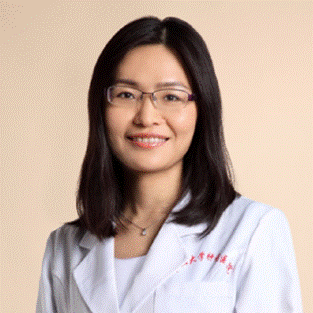
Prof. Yanxia Shi

Prof. Cuiying Zhang

Prof. Wuyun Su
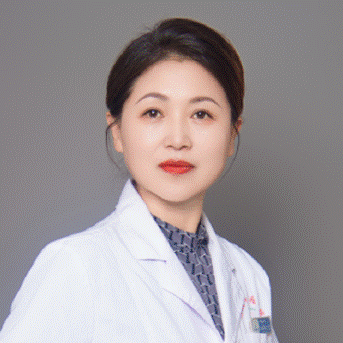
Prof. Liping Wang