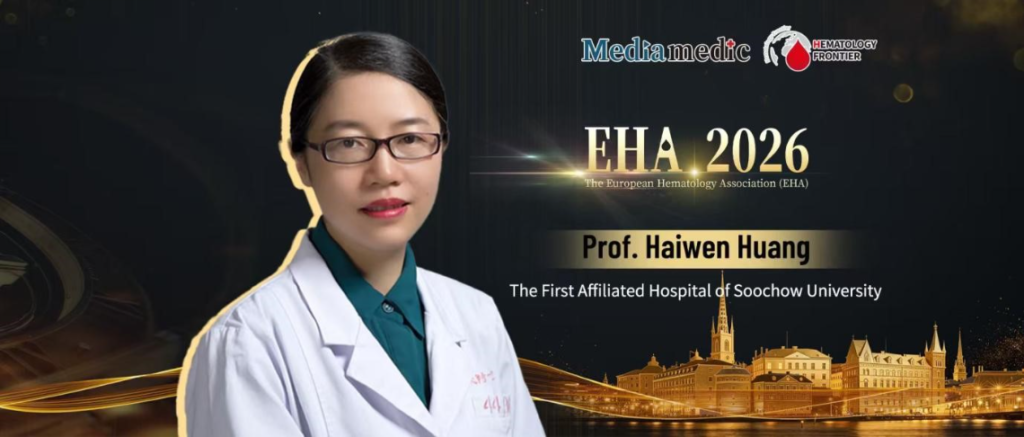
At the 2026 European Hematology Association (EHA) Congress, Chinese investigators once again showcased their contributions to lymphoma research. Professor Haiwen Huang and colleagues from The First Affiliated Hospital of Soochow University presented two studies in the poster session. One employed Mendelian randomization to systematically investigate the causal relationship between genetically predicted viral infections and the risk of lymphoma across multiple subtypes. The other reported results from a Phase III multicenter trial evaluating a liposomal mitoxantrone hydrochloride-based CMOP±R regimen as first-line therapy for non-Hodgkin lymphoma (NHL). While the first study challenges the traditional assumption that viral infection alone directly causes lymphoma, the second introduces a treatment strategy that delivers high efficacy with improved cardiac safety. During the meeting, Hematology Frontier invited Professor Haiwen Huang to discuss the scientific rationale and clinical significance behind these findings.
Mendelian Randomization Study
Redefining the Causal Relationship Between Viral Infections and Lymphoma
Hematology Frontier: Your team used Mendelian randomization to systematically evaluate the causal relationships between multiple viral infections and different lymphoma subtypes, identifying significant associations involving EBV, HIV, HSV, and selected lymphomas. How do these findings reshape our understanding of lymphoma pathogenesis? What biological insights do the subtype-specific associations provide?
Professor Haiwen Huang:
The major strength of this study lies in the use of Mendelian randomization, which effectively minimizes confounding bias commonly encountered in conventional observational studies. More importantly, it provides the first comprehensive genetic-level map of the interactions between viral infections and lymphoma development, yielding three key insights.
First, our findings challenge the simplistic concept that viral infection directly equates to carcinogenesis. We observed that the same virus may produce entirely different clinical outcomes depending on the host’s immune status. For example, Epstein-Barr virus (EBV) IgG seropositivity—reflecting prior infection with effective immune control—was associated with a lower risk of follicular lymphoma and Waldenström macroglobulinemia. In contrast, elevated antibodies against the EBV early antigen (EA), indicative of active viral replication, significantly increased the risk of Waldenström macroglobulinemia. These findings suggest that host antiviral immunity, rather than the virus itself, is the critical determinant of oncogenic risk.
Second, the study demonstrates the marked subtype specificity of viral carcinogenesis. Different viruses—and even different antiviral antibodies—show distinct associations with specific lymphoma subtypes. For instance, antibodies against cytomegalovirus (CMV) pp52 may exert protective effects by enhancing immune surveillance through immune memory expansion. Conversely, non-neutralizing antibodies against herpes simplex virus type 2 (HSV-2) may fail to eliminate the virus while promoting chronic antigenic stimulation that contributes to malignant B-cell transformation. This heterogeneity reflects the precise interplay among viral tropism, the host immune microenvironment, and the cellular origin of lymphoma.
Third, the study expands the current understanding of HIV-associated lymphoma. At the genetic level, we demonstrated for the first time that HIV infection increases the risk of mantle cell lymphoma. As antiretroviral therapy continues to improve survival among people living with HIV, lymphoma surveillance strategies should evolve accordingly, extending beyond traditional HIV-associated lymphoma subtypes.
From Basic Science to Clinical Translation
Three Key Challenges on the Path Toward Precision Lymphoma Prevention
Hematology Frontier: Your findings suggest that certain viral infections may become future targets for lymphoma prevention and risk management. How close are these discoveries to clinical implementation in screening, risk prediction, and prevention? What future research is needed to accelerate clinical translation?
Professor Haiwen Huang:
Our work is currently transitioning from basic discovery toward clinical application, but three major challenges remain.
First, the current evidence is primarily derived from European, North American, and East Asian populations, highlighting the need for broader validation across diverse ethnic groups.
Second, clinically actionable biomarker thresholds have yet to be established.
Third, targeted preventive interventions remain unavailable.
To address these challenges, we plan to focus on three priorities.
The first is conducting large-scale multinational validation studies, integrating global biobanks while refining key indicators such as viral load dynamics and longitudinal antibody profiles to strengthen the evidence base.
The second is advancing mechanistic studies. Using organoid systems and animal models, we aim to clarify how factors such as EBV early antigen expression and HSV-2 non-neutralizing antibodies drive malignant transformation at the molecular level.
Finally, we will develop risk prediction models and intervention studies by integrating viral biomarkers, genetic susceptibility, and clinical characteristics to stratify high-risk populations. We also intend to investigate whether antiviral interventions can interrupt precancerous disease progression, ultimately shifting lymphoma management from reactive treatment toward precision prevention.
The CMOP Regimen
A Cardio-Friendly Strategy for First-Line NHL Treatment
Hematology Frontier: Your Phase III study demonstrated that the liposomal mitoxantrone hydrochloride-based CMOP±R regimen achieved high response rates in newly diagnosed NHL while maintaining favorable cardiac safety. Given the persistent concern regarding anthracycline-associated cardiotoxicity, what do you consider the greatest clinical value of this regimen? Which patients are most likely to benefit?
Professor Haiwen Huang:
At this year’s EHA Congress, we presented updated results from our Phase III clinical trial evaluating the CMOP regimen, with or without rituximab, in patients with newly diagnosed NHL.
The study demonstrated excellent efficacy. Among patients completing six treatment cycles, complete response (CR) rates improved further. Using matching-adjusted indirect comparison (MAIC) analysis, we found that CMOP achieved superior efficacy compared with conventional R-CHOP in diffuse large B-cell lymphoma (DLBCL) while demonstrating non-inferiority to pola-R-CHP. In peripheral T-cell lymphoma (PTCL), CMOP also produced significantly higher objective response rates and complete response rates than standard CHOP therapy.
A particularly important finding was the regimen’s favorable cardiac safety profile. Conventional anthracyclines, such as doxorubicin, produce cumulative cardiotoxicity that may lead to reduced left ventricular ejection fraction (LVEF) and heart failure despite cardioprotective measures. In our study, however, no atrial fibrillation or clinically significant arrhythmias were observed.
This improvement is attributable to the unique characteristics of liposomal mitoxantrone hydrochloride, whose liposomal formulation alters tissue distribution, reduces myocardial drug exposure, and thereby lowers the risk of cardiotoxicity at its source.
The patients most likely to benefit include:
- Individuals with borderline cardiac function or cardiovascular risk factors, including elderly patients with hypertension, diabetes, or coronary artery disease.
- Patients expected to achieve long-term survival, where preserving long-term cardiac health is especially important.
- High-risk patients requiring prolonged or intensive anthracycline exposure. Approximately one-third of patients in our Phase III study had an International Prognostic Index (IPI) score of ≥3, making reduced cardiotoxicity particularly valuable during extended treatment and potential consolidation strategies such as transplantation or maintenance therapy.
- Patients with PTCL, where CMOP offers both improved efficacy and enhanced cardiac safety compared with conventional CHOP.
Despite these advantages, several issues warrant continued attention.
Grade 3–4 neutropenia occurred in approximately one-third of patients, emphasizing the importance of granulocyte colony-stimulating factor (G-CSF) support and dose adjustments when prolonged neutropenia develops.
Longer follow-up is also needed to confirm the durability of the cardiac safety benefit.
In addition, direct head-to-head randomized comparisons with R-CHOP would further strengthen the evidence base.
Finally, data remain limited for patients with LVEF below 50% or established heart failure, and additional research is required in these populations.
Overall, the greatest clinical value of CMOP lies in its ability to maintain—or even improve—therapeutic efficacy while substantially reducing the intrinsic cardiotoxicity associated with anthracycline therapy. By combining uncompromised efficacy with enhanced cardiac safety, CMOP has the potential to reshape first-line treatment for NHL, particularly for patients with cardiovascular risk factors, those expected to achieve long-term survival, and individuals with PTCL. As additional clinical experience and long-term follow-up become available, the role of CMOP in lymphoma management will become even more clearly defined.
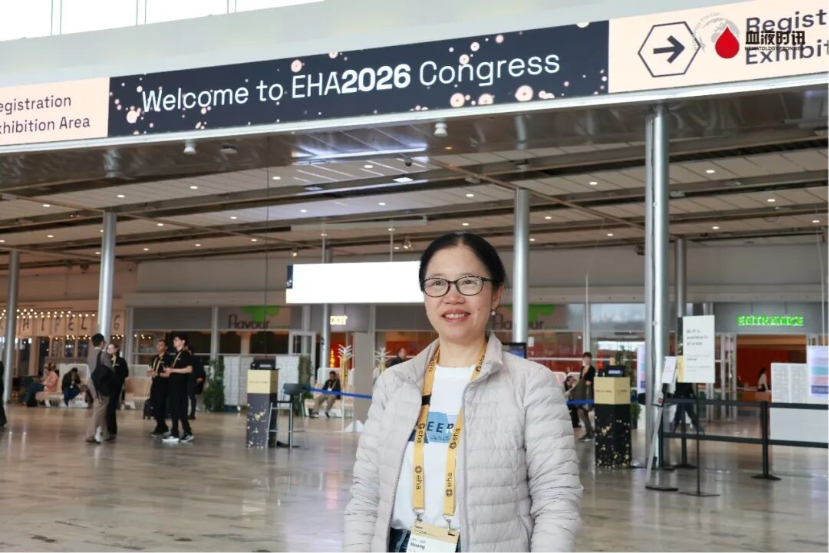
Expert Profile

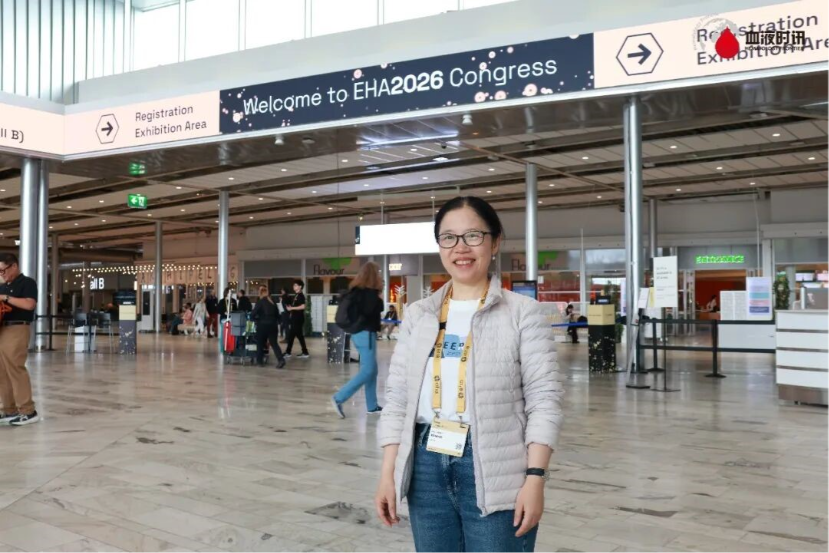
Professor Haiwen Huang
The First Affiliated Hospital of Soochow University
Head, Lymphoma Subspecialty
- MD, Chief Physician, Professor, Doctoral Supervisor
- Committee Member, Lymphocyte Diseases Group, Chinese Society of Hematology, Chinese Medical Association (CMA)
- Committee Member, Lymphoma and Hematologic Oncology Group, Chinese Society of Oncology, CMA
- Standing Committee Member, Lymphoma Committee, Chinese Society of Clinical Oncology (CSCO)
- Committee Member, National Cancer Center Lymphoma Quality Control Expert Committee
- Reviewer for Doctoral and Master’s Theses, Ministry of Education
- Vice Chair, Lymphoma Committee, China Medical Education Association
- Standing Committee Member, Integrated Traditional Chinese and Western Medicine Lymphoma Committee, Chinese Anti-Cancer Association (CACA)
- Deputy Head, Lymphoma Group, Jiangsu Society of Hematology
- Standing Committee Member, Jiangsu Anti-Cancer Association Lymphoma Committee
- Research Assistant, Faculty of Medicine, The University of Hong Kong (2005–2006)
- Hematology Resident and Board-Certified Hematologist, Montpellier University Hospital, France (2006–2007)
- Senior Visiting Scholar, Montpellier University Hospital, France (2009–2010)
- Visiting Scholar, University of California, Los Angeles (UCLA) (2013)
- Recipient of the 2023 People’s Good Doctor Outstanding Contribution Award (Lymphoma) and the Jiangsu Six Talent Peaks Program
- Principal investigator and collaborator on multiple national and provincial research grants
- Author of more than 40 SCI-indexed publications
- Corresponding Editorial Board Member of the Chinese Journal of Hematology
- Reviewer for Annals of Hematology and Hematology/Oncology