On June 9, 2026, the 16th Annual Meeting of the Chinese Gastrointestinal Oncology Cooperative Group (CGOG) officially commenced. The conference runs from June 9 to June 13 and features a series of dedicated sessions highlighting the latest advances in gastrointestinal oncology.On the opening day, the ASCO Gastric Cancer Updates Session focused on the most significant gastric cancer research presented at the 2026 ASCO Annual Meeting. The session was livestreamed across multiple platforms and attracted more than 32,000 online participants, reflecting strong engagement from the oncology community.
The meeting opened with remarks from Ziyu Li of Peking University Cancer Hospital, who expressed his enthusiasm for the conference and extended his best wishes for a successful meeting. Conference Chair Lin Shen, also from Peking University Cancer Hospital, emphasized in her welcome address that gastric cancer research is evolving from an era of experience-based treatment toward one characterized by precision stratification and collaborative innovation. She underscored that multidisciplinary cooperation remains essential for achieving meaningful clinical breakthroughs.
Following the opening remarks, the ASCO Gastric Cancer Updates Session officially began under the moderation of Xiaotian Zhang from Peking University Cancer Hospital.
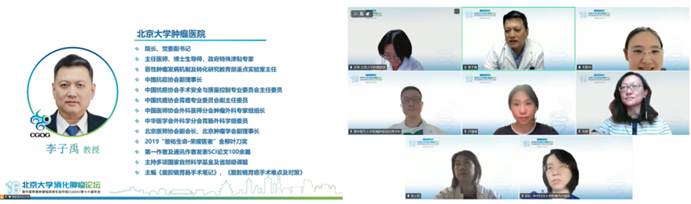
Figure: Opening remarks by Prof. Ziyu Li
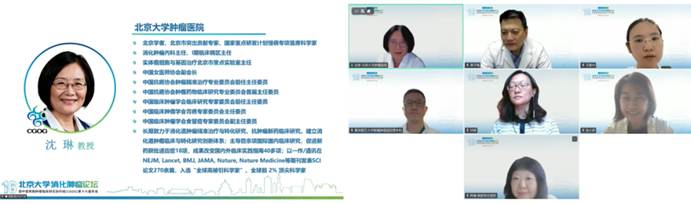
Figure: Welcome address by Conference Chair Prof. Lin Shen
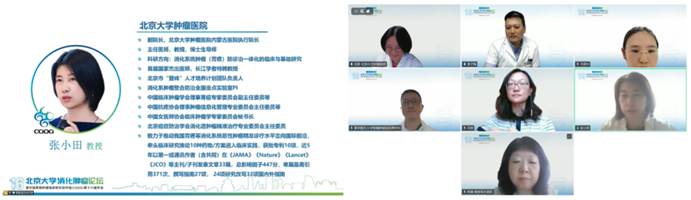
Figure: Session chaired by Prof. Xiaotian Zhang
First, Ting Deng from Tianjin Medical University Cancer Institute and Hospital presented an overview of the latest advances in perioperative treatment for gastric cancer reported at the 2026 ASCO Annual Meeting.
Prof. Deng noted that the major focus of perioperative gastric cancer research this year centered on immunotherapy and the identification of patient populations most likely to benefit from immune-based treatment strategies. The ASTRUM-006 study provided further evidence supporting the potential role of immunotherapy in the perioperative management of gastric cancer and introduced a novel treatment paradigm involving postoperative immunotherapy monotherapy without chemotherapy.
Efforts toward precision treatment are also expanding across distinct molecularly defined patient populations. In patients with moderate to high HER2 expression, neoadjuvant treatment with disitamab vedotin (RC48) combined with immunotherapy and chemotherapy demonstrated encouraging pathological response rates, highlighting the promise of biomarker-driven treatment approaches.
In addition, emerging biomarkers such as circulating tumor DNA (ctDNA) and minimal residual disease (MRD) are increasingly being incorporated into clinical research to facilitate more precise patient selection and treatment stratification, with the goal of optimizing therapeutic outcomes in the perioperative setting.
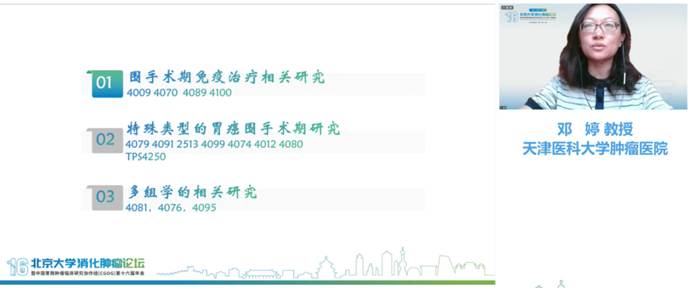
Figure: Prof. Ting Deng presenting advances in perioperative treatment for gastric cancer
Next, Yuanyuan Lu from Xijing Hospital, Air Force Medical University, provided an overview of key developments in targeted therapy and translational research presented at the 2026 ASCO Annual Meeting.
Prof. Lu highlighted Claudin18.2 as one of the most active and intensively investigated targets in gastric cancer this year. Several studies, including those evaluating QLS31905, AZD0901, and LM302, demonstrated encouraging clinical activity across different lines of treatment, further reinforcing the therapeutic potential of Claudin18.2-directed strategies.
In the HER2-positive setting, novel treatment approaches continue to move toward earlier lines of therapy. Prominent examples include zanidatamab and combinations of disitamab vedotin with immunotherapy, both of which have shown promising efficacy and are being actively explored in frontline treatment settings.
Prof. Lu also reviewed encouraging data in patients with MET-amplified gastric cancer, where later-line targeted therapies have demonstrated meaningful clinical benefit. These findings further underscore the growing importance of molecular profiling, patient stratification, and precision medicine in guiding treatment selection and improving outcomes for patients with gastric cancer.
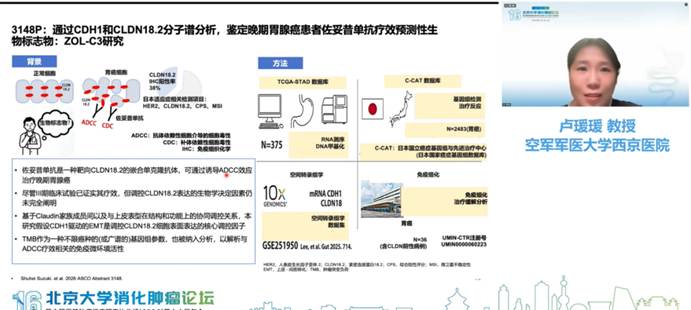
Figure: Prof. Yuanyuan Lu presenting advances in targeted therapy and translational research for gastric cancer
The final presentation of the session was delivered by Yakun Wang from Peking University Cancer Hospital, who reviewed the latest advances in immunotherapy for advanced gastric cancer.
Prof. Wang discussed the overall survival (OS) results of the ATTRACTION-6 trial, which were negative, indicating that the addition of CTLA-4 blockade did not produce a meaningful efficacy breakthrough in an unselected patient population. These findings highlight the ongoing need for more precise patient selection strategies in immunotherapy.
She also reviewed emerging therapeutic targets involved in tumor microenvironment remodeling, including EP4, CD155, and ATR inhibitors (ATRi), among others. Early studies involving these novel approaches suggest potential opportunities to enhance treatment efficacy and overcome resistance to existing immunotherapies.
In addition, Prof. Wang emphasized the growing importance of research into the tumor immune microenvironment and the identification of predictive biomarkers. Such efforts are expected to play a critical role in refining patient selection, improving understanding of treatment mechanisms, and advancing the development of more personalized immunotherapy strategies for gastric cancer in the future.
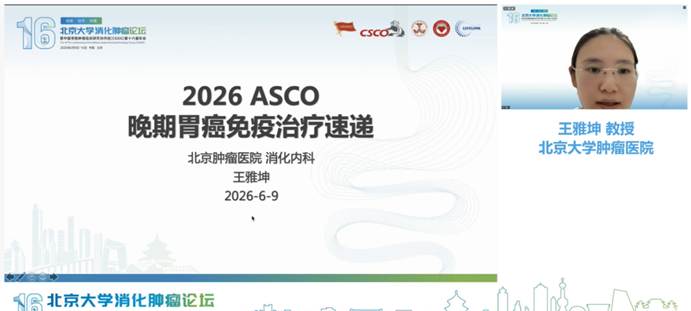
Figure: Prof. Yakun Wang presenting advances in immunotherapy for gastric cancer
During the discussion session, Hua Huang from Fudan University Shanghai Cancer Center, Jia Wei from Nanjing Drum Tower Hospital, Nanjing University Medical School, Zhaocai Zhou from Fudan University, Lu Han from the Chinese PLA General Hospital, and Hong Qiu from Tongji Hospital, Huazhong University of Science and Technology, engaged in a multidisciplinary exchange of perspectives.
Drawing on expertise from surgical oncology, medical oncology, radiation oncology, and basic research, the panel explored a range of key topics, including optimization of perioperative treatment strategies, development of targeted combination regimens, identification and validation of predictive biomarkers, and the translation of emerging scientific discoveries into clinical practice.
The discussion highlighted the increasingly important role of multidisciplinary collaboration in advancing gastric cancer treatment and emphasized the need to integrate translational research findings with clinical decision-making to further improve patient outcomes.
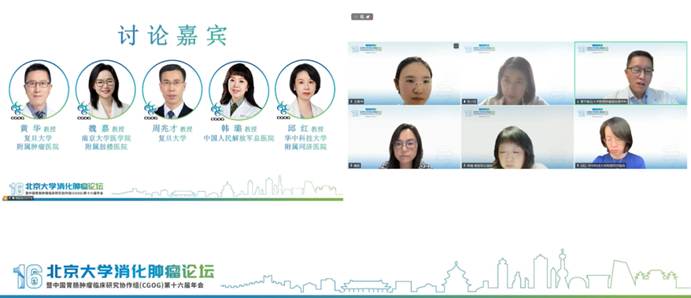
Figure: Panelists – Prof. Hua Huang, Prof. Jia Wei, Prof. Zhaocai Zhou, Prof. Lu Han, and Prof. Hong Qiu
At the conclusion of the session, Xiaotian Zhang delivered a thoughtful summary and outlook on the future direction of gastric cancer research.
Prof. Zhang noted that competition in the gastric cancer field has evolved beyond comparisons of individual treatment regimens and is increasingly centered on precision patient stratification and collaborative innovation. He emphasized that the next stage of progress will depend on the generation of high-quality clinical and translational evidence capable of addressing meaningful real-world clinical challenges.
Looking ahead, he stressed the importance of continuing to integrate advances in molecular profiling, biomarker discovery, targeted therapy, immunotherapy, and multidisciplinary care. Through rigorous research and closer collaboration across specialties, the field will be better positioned to deliver more personalized and effective treatment strategies for patients with gastric cancer.
Original article: Department of Gastrointestinal Oncology, Peking University Cancer Hospital
Author: Siyu Liu
Reviewer: Yakun Wang