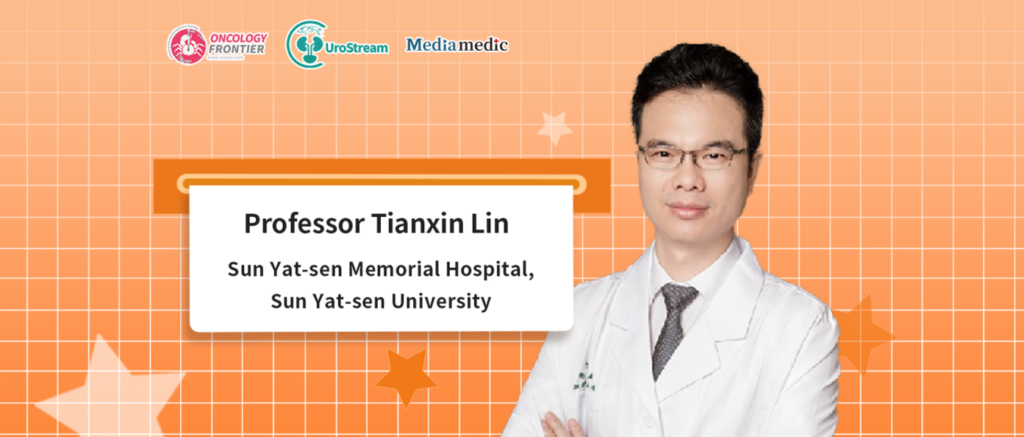
The 2026 CUDA Yanqi Lake Urology Academic Conference was successfully held, bringing together leading urologists, clinical experts, and researchers from across China. Centered on the theme “Innovation Empowering Clinical Care, Collaboration Driving Progress,” the meeting featured in-depth discussions on key topics including advances in urologic oncology, translational innovation at the intersection of medicine and engineering, and expanding access to high-quality healthcare resources.On this occasion, we had the privilege of interviewing Professor Tianxin Lin, Chair of Urology at Sun Yat-sen Memorial Hospital, Sun Yat-sen University, and President of the Fifth Affiliated Hospital of Sun Yat-sen University.
As one of China’s leading figures in urology, Professor Lin has devoted more than two decades to advancing bladder cancer diagnosis and treatment. His team has achieved a series of breakthroughs in early detection, precision minimally invasive surgery, intelligent treatment technologies, and comprehensive disease management. Their project, “Innovation and Clinical Implementation of Precision Minimally Invasive Intelligent Technologies for Bladder Cancer Diagnosis and Treatment,” received the Second Prize of the 2023 National Science and Technology Progress Award.
In this interview, Professor Lin shares his team’s experience in advancing urologic oncology care and discusses how domestic high-end medical technologies and intelligent healthcare solutions are shaping the future of urology in China.
Integrating Clinical Care, Research, and Translation to Build a Comprehensive Urologic Cancer Management System
Oncology Frontier
As one of China’s representative teams in urology, your group has accumulated extensive experience in integrating clinical practice, scientific research, and translational medicine. Could you share some key lessons learned in advancing the diagnosis and treatment of urologic cancers?
Professor Tianxin Lin
The core mission of National Cancer Prevention and Control Week is “Scientific Cancer Prevention and Whole-Course Management.” Conducting high-quality clinical and translational research while simultaneously promoting public education is essential to achieving the goals of the Healthy China 2030 initiative.
For many years, our team has focused on both clinical and basic research in urologic malignancies, particularly bladder cancer. Bladder cancer is the most common malignancy of the urinary system in China, with approximately 92,000 new cases and 43,000 deaths annually.
Over more than two decades, we have worked to address four major clinical challenges in bladder cancer:
- Difficult early diagnosis
- Frequent missed diagnoses
- Treatment-related morbidity
- Limited access to advanced technologies
To overcome these challenges, we have established a comprehensive management framework spanning the entire patient journey, built around four pillars:
- Early detection and diagnosis
- Precision minimally invasive treatment
- Intelligent healthcare technologies
- Comprehensive long-term management
1. Early Detection: Moving Diagnosis Upstream Through Non-Invasive Technologies
For patients with early-stage disease, our goal is not only cure but also maximal preservation of organ function and quality of life.
Traditionally, bladder cancer diagnosis has relied on urine cytology, which has a sensitivity of only 30%–50%. Fluorescence in situ hybridization (FISH) improves sensitivity to approximately 60%–70%, while cystoscopy—the diagnostic gold standard—is invasive and unsuitable for large-scale screening.
To address this unmet need, our team systematically screened biomarkers and developed a non-invasive bladder cancer detection technology based on dual-gene DNA methylation markers, ONECUT2 and VIM.
This work led to the development of UriFind™, China’s first urine DNA methylation assay for bladder cancer.
Compared with conventional diagnostic approaches, UriFind™ increased overall detection sensitivity from 58.0% to 90.0%.
For Ta-stage bladder cancer, the earliest stage of disease, detection rates improved from 32% to 64.5%.
The assay offers particular advantages for detecting:
- Early-stage tumors
- Small lesions
- Recurrent disease
UriFind™ has received:
- China’s Class III Medical Device Registration Certificate
- U.S. FDA Breakthrough Device Designation
- European CE certification
The technology has been incorporated into Chinese bladder cancer guidelines on three separate occasions and has been adopted by more than 200 hospitals nationwide.
In parallel, we developed an AI-powered urine cytology analysis platform known as PUCAS.
Based on deep-learning algorithms, PUCAS automatically analyzes urinary cytology images and achieves diagnostic accuracy approaching 90%.
In multiple head-to-head evaluations, its diagnostic performance exceeded that of associate chief physicians, significantly improving both efficiency and accuracy in pathology workflows.
2. Precision Treatment: Personalized Therapy Focused on Both Survival and Organ Preservation
For patients with intermediate-stage disease, precision treatment is essential.
Our philosophy is to develop individualized treatment strategies that maximize efficacy while preserving organ function.
For bladder and prostate cancer patients, treatment should not only save lives but also preserve sexual function and urinary continence, thereby improving quality of life.
Historically, bladder-preserving therapy relied on trimodal treatment (TMT), consisting of extensive transurethral resection followed by chemoradiotherapy.
Today, the emergence of immunotherapy and antibody-drug conjugates (ADCs) has dramatically expanded treatment options.
Our team has established a molecular subtype–guided treatment system for bladder cancer that incorporates ADCs and immunotherapy into personalized treatment plans.
Neoadjuvant Therapy
We conducted a multicenter phase II trial evaluating:
Gemcitabine + Cisplatin + Tislelizumab
in patients with muscle-invasive bladder cancer.
The results were highly encouraging:
- Pathologic complete response (pCR): 50.9%
- Pathologic downstaging rate: 75.4%
These outcomes represent improvements of more than 20% compared with conventional neoadjuvant chemotherapy.
We also identified three biologically distinct subtypes of muscle-invasive bladder cancer:
- Immune-desert subtype
- Immune-excluded subtype
- Immune-inflamed subtype
Among patients with the immune-inflamed phenotype, the pCR rate reached an impressive 80%, providing a scientific basis for selecting patients most likely to benefit from treatment.
High-Risk Non–Muscle-Invasive Bladder Cancer
Our team also conducted a phase I study evaluating intravesical disitamab vedotin (RC48) in HER2-positive patients.
The treatment demonstrated favorable safety and tolerability and may offer a new bladder-preserving option for patients who do not respond to BCG therapy.
In addition, we employ organoid models for drug-sensitivity testing, enabling more accurate treatment selection with predictive accuracy exceeding 90%.
3. Intelligent Medicine: Integrating Medicine and Engineering to Drive Innovation
Intelligent healthcare represents one of the most important directions in modern medicine.
This transformation encompasses:
- Surgical robotics
- 5G remote surgery
- Artificial intelligence–driven clinical decision support
- Intelligent disease-management systems
Robotic Surgery
As domestically developed surgical robots become increasingly available, minimally invasive procedures can now achieve outcomes comparable to open surgery while reducing postoperative morbidity and preserving function.
Our team has been actively involved in the development of Chinese surgical robotic systems and has helped overcome several key technological barriers, reducing reliance on imported platforms.
AI-Driven Bladder Cancer Management
We are currently developing an AI-powered bladder cancer management platform that will support patients throughout the entire care continuum.
For example, a patient presenting with gross hematuria could complete online consultations and upload prior test results. The system would then:
- Conduct automated risk assessment
- Perform preliminary tumor screening
- Estimate disease stage and grade
After imaging, pathology, and cystoscopy results become available, the AI system could assist with subtype classification and individualized treatment planning.
This approach represents a shift from experience-based medicine to truly precision-driven care.
Intelligent Urine-Testing Toilet
One of our most exciting ongoing projects is the development of a fully automated intelligent urine-testing toilet.
Patients with hematuria would simply use the toilet normally, and within 30 minutes the system could complete non-invasive bladder cancer screening without requiring manual specimen collection.
In the future, the platform may be expanded to support early screening for multiple cancers, including:
- Colorectal cancer
- Cervical cancer
- Lung cancer
and potentially many others.
4. Comprehensive Management: Transforming Advanced Cancer into a Chronic Disease
For patients with advanced disease, treatment goals have evolved.
Our objective is no longer solely to extend survival but to achieve:
Longer survival + Better quality of life
Ultimately, we aim to transform advanced cancer into a manageable chronic condition.
To accomplish this, we have established multidisciplinary treatment (MDT) programs integrating:
- Surgery
- Chemotherapy
- Radiotherapy
- Immunotherapy
- Targeted therapy
Through individualized treatment planning and long-term management, we strive to help patients achieve durable disease control and meaningful survival benefits.
Domestic Innovation and Expanding Access to High-Quality Care
Oncology Frontier
As domestic high-end medical devices and remote surgical technologies continue to advance, urology has become one of the fields most likely to showcase the benefits of interdisciplinary innovation. How do you view the significance of these developments for the future of Chinese urology?
Professor Tianxin Lin
This is an extremely important question.
The ultimate goal of medical innovation is to benefit more patients. The development of domestic high-end medical technologies and remote surgery has created unprecedented opportunities to promote equitable access to healthcare.
From Following to Leading
Historically, Chinese urology relied heavily on open surgery.
Large incisions and limited visualization made training difficult, and the transfer of surgical expertise depended largely on individual experience.
The widespread adoption of laparoscopy and robotic surgery has transformed education. Young surgeons can now clearly observe detailed anatomy and standardized surgical workflows, dramatically accelerating training.
Even more importantly, domestic medical technologies have reduced China’s dependence on imported equipment.
In the past, robotic systems were prohibitively expensive and available only at major tertiary hospitals.
Today, Chinese-developed robotic platforms have achieved internationally competitive performance while remaining significantly more affordable.
This has enabled broader dissemination and positioned China to contribute original innovations to the global field of urology.
Breaking Geographic Barriers Through Remote Surgery
The maturation of 5G-enabled telemedicine has fundamentally changed healthcare delivery.
Remote surgery allows patients in underserved regions to access world-class expertise without traveling long distances.
I personally performed six remote urologic procedures for patients in Kashgar, Xinjiang, from Guangzhou, including a robot-assisted laparoscopic pyeloplasty conducted across a distance of more than 5,000 kilometers.
The low latency and high bandwidth of 5G technology ensured seamless transmission of video, audio, and surgical control commands, resulting in outcomes equivalent to those achieved in person.
In the future, cross-regional telemedicine will become routine and fundamentally reshape healthcare delivery.
Transforming Individual Expertise into Standardized Systems
Achieving true healthcare equity requires converting the experience of elite surgeons into reproducible and scalable systems.
We are pursuing this goal through three major initiatives:
Standardized Specialist Training
Through national academic organizations, we conduct regular training programs and establish standardized curricula and evaluation systems.
For example, we established a Belt and Road Minimally Invasive Technology Training Center in Kashgar, significantly improving local urologic care.
Intelligent Surgical Systems
By integrating big data and AI algorithms, surgical workflows can be digitized and standardized.
Future intelligent systems may replicate the operative techniques of leading experts across multiple disease settings, making high-level surgical expertise more broadly accessible.
Quality Control Networks
We also support the development of national quality-control standards and real-time performance monitoring systems to ensure consistent implementation of evidence-based care.
Large-scale multicenter collaborations will continue generating clinical evidence tailored to Chinese patients and help refine future treatment guidelines.
Looking Ahead
Elon Musk has suggested that artificial intelligence could outperform even elite physicians within the next few years. While that timeline may be optimistic, there is little doubt that automation and intelligent technologies will play a central role in the future of medicine.
With continued advances in domestic medical technologies, robotics, artificial intelligence, and telemedicine, Chinese urology is entering an exciting new era.
We are confident that these innovations will help achieve the goals of Healthy China 2030 and further elevate China’s position on the global stage of urologic medicine.
Conclusion
From non-invasive urine-based cancer detection and AI-assisted diagnostics to domestically developed surgical robots and 5G remote surgery, Professor Tianxin Lin and his team have spent more than two decades building a uniquely Chinese approach to bladder cancer management.
Their work extends beyond scientific discovery and clinical innovation. It reflects a broader commitment to expanding access to high-quality care and ensuring that the benefits of medical progress reach patients across China.
Under the leadership of pioneers such as Professor Lin, Chinese urology is poised to make an even greater impact on the international stage and contribute meaningful innovations to the future of cancer care.
Featured Expert
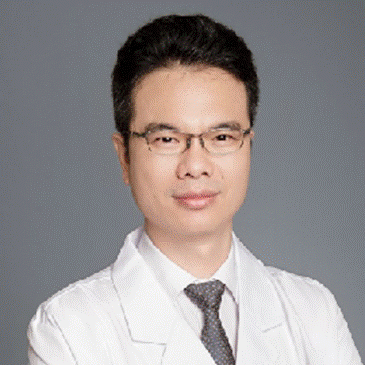
Professor Tianxin Lin