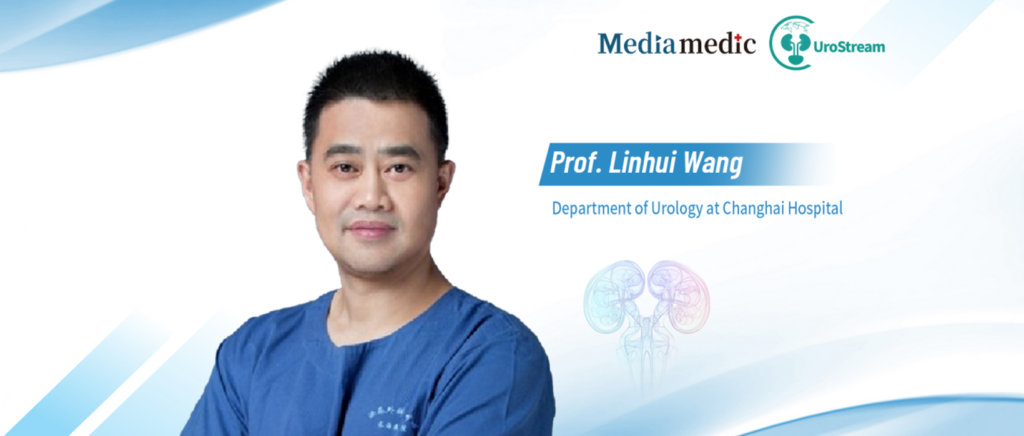
At this year’s CURC & ARUF Congress, Professor Linhui Wang from the First Affiliated Hospital of the Naval Medical University (Shanghai Changhai Hospital) served as Executive Chair of the meeting. During the Master Lecture session, he delivered a systematic analysis of the causes underlying postoperative abdominal wall bulging following retroperitoneal laparoscopic surgery. The congress also featured extensive live surgical demonstrations and dedicated sessions focused on the clinical application of domestically developed surgical robotic systems. In light of these key topics, Oncology Frontier invited Professor Wang for an in-depth interview.Q1. Professor Wang, in your Master Lecture at this congress, you systematically analyzed the causes of postoperative abdominal wall bulging following retroperitoneal laparoscopic surgery. Could you further elaborate on which patient populations and surgical procedures are at particularly high risk for this complication? For primary-care and community hospitals performing retroperitoneal laparoscopic surgery, what practical preventive measures can be rapidly implemented to help clinicians minimize this complication?
Professor Linhui Wang
“In today’s Master Forum, I discussed one of the most common complications associated with retroperitoneal surgery in urology—namely, lumbar or flank surgery performed through a retroperitoneal approach.
As urologists, our primary focus is naturally on whether the tumor has been completely removed, whether recurrence occurs, and whether long-term survival can be achieved. These remain the most important goals. However, in clinical practice, we have observed that this commonly used surgical approach can lead to a difficult and often unavoidable complication: several months or even years after surgery, patients may gradually develop progressive bulging of the waist or flank region.
This complication not only affects cosmetic appearance, but can also significantly impair quality of life and, in some cases, even affect intra-abdominal organs. Once it develops, treatment—whether conservative or surgical—is often challenging and rarely fully curative.
Therefore, prevention during the initial operation is critically important.
Through systematic anatomical analysis combined with technical evaluation of surgical procedures—such as trocar placement and specimen extraction incisions—we analyzed the mechanisms underlying nerve and muscle injury and summarized a series of key principles aimed at minimizing such damage.
If surgeons consistently follow these principles during surgery, the incidence of this complication can be dramatically reduced, potentially approaching zero.
This is extremely important for patients’ long-term quality of life, particularly among those who achieve prolonged survival after cancer treatment.
We believe sharing these findings is especially valuable for surgeons who frequently perform retroperitoneal laparoscopic surgery, particularly retroperitoneal robotic surgery.”
Q2. As Executive Chair of this robotic urology congress, you played a central role in the academic planning of the meeting, which featured extensive live demonstrations and dedicated sessions on domestic surgical robotic systems. In your view, what major technological and clinical breakthroughs have Chinese-developed robotic systems already achieved in radical surgery for prostate cancer, kidney cancer, and other urologic malignancies compared with imported platforms? Looking ahead, what key challenges remain for broader adoption in primary-care hospitals and for expansion of clinical indications?
Professor Linhui Wang
“Currently, robotic surgery is most widely adopted in the field of urology.
Both in China and internationally, urologic procedures account for approximately one-third of all robotic surgeries performed, making urology the leading specialty in robotic surgery utilization. Compared with gynecology, thoracic surgery, or general surgery, urology remains at the forefront.
Robotic surgery is now extensively applied in the treatment of prostate cancer, kidney cancer, bladder cancer, and even certain benign conditions. Its advantages—including reduced invasiveness, greater surgical precision, improved outcomes, and fewer complications—have made it highly favored among urologists.
In the early years, the Da Vinci system was essentially the only available platform. In recent years, however, domestically developed robotic systems in China have experienced rapid growth, creating a highly dynamic and competitive landscape.
At present, many domestic robotic systems already demonstrate excellent performance and quality that are sufficient to meet the demands of minimally invasive precision surgery.
Of course, there remains some gap between domestic systems and internationally leading platforms. Nevertheless, through continued clinical validation, iterative optimization, and close collaboration between clinicians and engineers, I believe robotic performance will continue to improve substantially—particularly in areas such as minimally invasive capability, surgical visualization, and operative precision.
In the future, domestic robotic systems will undoubtedly achieve much broader adoption across China.”
Q3. At this congress, you also performed a live demonstration of domestically developed single-port robotic-assisted radical prostatectomy. Based on your clinical experience, what do you consider the core advantages of single-port robotic surgery in urologic oncology? What technological and training barriers still need to be overcome for broader clinical adoption?
Professor Linhui Wang
“Single-port robotic surgery evolved from earlier single-port laparoscopic techniques.
Currently, many robotic and laparoscopic procedures still require multiple incisions on the body surface. These ports inevitably cause some degree of muscle and nerve injury, which can lead to complications and also affect cosmetic outcomes.
Therefore, clinicians are increasingly seeking surgical approaches that are even less invasive, cause less tissue trauma, and provide better cosmetic results.
Single-port robotic surgery represents an important future direction in minimally invasive surgery. By operating through a single incision, tissue damage can be minimized further, making surgery truly less invasive.
Naturally, single-port surgery places significantly higher technical demands on the surgeon. The learning curve is relatively steep, and the requirements for surgical instruments and robotic systems differ substantially from those of multi-port platforms.
Encouragingly, several Chinese companies have already developed highly capable domestic single-port robotic systems, which are now being successfully applied in clinical practice.
Looking ahead, single-port robotics will remain a major direction for minimally invasive surgery. Beyond that, I believe an even more promising direction lies in the development of disease-specific robotic systems tailored to the unique requirements of individual procedures.
For example, prostate cancer surgery has its own distinctive technical characteristics, while renal surgery involves very different demands. In the future, we may see robotic systems specifically designed for kidney surgery or dedicated platforms optimized for prostate cancer surgery—whether single-port or multi-port.
This represents one important future direction for robotic development.
In addition, the current integration of artificial intelligence into robotic surgery remains incomplete. As AI technology continues to advance, robotic systems will become more capable, surgical manipulation will become more intuitive, and the technical burden placed on surgeons may decrease.
That, in my view, represents the future of AI-assisted robotic surgery.”
Expert Profile

Professor Linhui Wang is a leading urologic surgeon at Shanghai Changhai Hospital, the First Affiliated Hospital of Naval Medical University. His clinical and academic work focuses on minimally invasive urologic oncology, robotic-assisted surgery, retroperitoneal laparoscopic surgery, and the development and clinical implementation of advanced surgical robotic technologies.