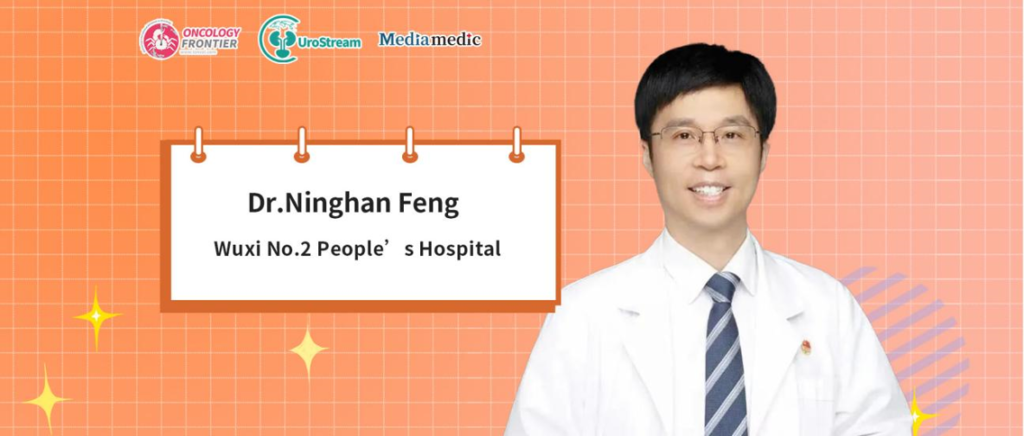
As oncology treatment paradigms continue to evolve, the multidisciplinary team (MDT) approach has become a cornerstone of modern cancer care, particularly for the management of complex malignancies. In the field of urologic oncology, MDT care integrates expertise from surgery, medical oncology, radiation oncology, imaging, pathology, and other specialties to provide individualized, full-spectrum treatment strategies that significantly improve patient outcomes.In this edition, Oncology Frontier · UroStream invited Professor Ninghan Feng, President of Wuxi Second People’s Hospital (Affiliated Central Hospital of Jiangnan University) and leader of the Department of Urology, to share insights drawn from his team’s extensive clinical experience. The discussion focuses on the clinical value of MDT care in complex urologic tumors, the practical challenges of implementation, future development directions, and the team’s experience in building an integrated fixed-structure MDT model.
From “Working Alone” to “Collaborative Combat”: How the MDT Model Is Reshaping the Management of Complex Urologic Tumors
Q1. Thank you very much, Professor Feng, for joining this interview with Oncology Frontier · UroStream. Today, your presentation focused on the application of the MDT model in complex urologic tumors. Could you share, through representative clinical examples such as complex renal cancer or high-risk prostate cancer, the most direct advantages MDT offers over the traditional single-specialty approach in optimizing treatment strategies and improving outcomes?
Professor Ninghan Feng
Ninghan Feng
“The MDT model plays an irreplaceable and central role in the treatment of urologic tumors. It not only significantly prolongs survival and improves quality of life, but also enhances the efficiency of healthcare resource utilization while promoting interdisciplinary integration and strengthening patient trust in medical care.
At present, two major concepts have become widely accepted in oncology.
First, cancer is a systemic disease. We can no longer regard a tumor arising in the prostate, bladder, or kidney as merely a localized organ problem. Tumor initiation and progression involve complex interactions among the immune system, inflammatory responses, metabolic abnormalities, and individual genetic differences. In essence, cancer is a systemic disease, and no single department or specialty can independently provide comprehensive standardized care throughout the entire treatment course. This highlights the limitations of the traditional single-discipline model.
Second, cancer has increasingly become a chronic disease. With advances in diagnostic technologies, surgical techniques, novel anti-cancer therapies, and medical devices, survival outcomes have improved dramatically. Today, many cancer patients can achieve long-term survival with disease control, much like patients living with chronic conditions such as hypertension or diabetes.
These paradigm shifts have made comprehensive, integrated treatment strategies essential, positioning MDT care as a core model in clinical oncology practice.
Take prostate cancer and bladder cancer—the two most common urologic malignancies—as examples.
Standard treatment for prostate cancer typically involves endocrine therapy or radical surgery. However, special subtypes such as small-cell neuroendocrine carcinoma and intraductal carcinoma, although relatively rare, are highly aggressive, rapidly progressive, and associated with high mortality. Because these subtypes are uncommon, even urologic specialists may have limited clinical experience managing them.
Through the MDT model, we can integrate expertise from pathology, medical oncology, urologic surgery, radiation oncology, and nuclear medicine to develop individualized treatment plans based on molecular classification, clinical staging, and patient condition.
For example, the 2025 CSCO Prostate Cancer Guidelines emphasize multimodal treatment strategies for intraductal carcinoma, prioritizing novel endocrine therapies in combination with other modalities. In contrast, platinum-based chemotherapy remains the backbone of treatment for small-cell neuroendocrine prostate cancer, often combined with local therapies and immunotherapy.
The unique strengths of MDT are closely linked to the increasingly refined subspecialization of modern medicine. Urology itself has evolved into multiple highly specialized branches, including prostate diseases, urologic oncology, minimally invasive surgery, adrenal diseases, andrology and urinary continence, and urinary stone disease.
Subspecialization enables physicians to deeply master cutting-edge techniques and research within their own fields, but naturally limits exposure to diseases outside their niche expertise. Yet disease biology does not conform to artificial subspecialty boundaries.
By bringing together physicians from different disciplines, MDT enables the creation of comprehensive, standardized treatment strategies aligned with the latest international advances. Moreover, because each subspecialist continuously tracks developments in their own field, multidisciplinary integration allows patients to access world-class, highly individualized care within a single institution.
Bladder cancer provides another strong example.
Most bladder cancer patients initially present with painless gross hematuria, and approximately 25% are already diagnosed at the muscle-invasive or metastatic stage, having missed the optimal surgical window. In the past, these advanced cases were often treated with palliative chemotherapy alone, yielding limited benefit and poor prognosis, with 5-year survival rates below 50%.
With the implementation of MDT care, a closed-loop multidisciplinary management model has emerged. Urologists evaluate surgical indications and timing while planning neoadjuvant and adjuvant surgical strategies. Medical oncologists determine preoperative systemic therapy and postoperative treatment plans. Radiation oncologists assess the value of concurrent chemoradiotherapy and adjuvant radiotherapy.
Today, with the rapid development of immune checkpoint inhibitors and targeted therapies, combined immunotherapy and targeted approaches have become key treatment modalities for urothelial carcinoma.
Several landmark studies have demonstrated the effectiveness of neoadjuvant therapy. The Phase III KEYNOTE-B15 (EV-304) trial showed that enfortumab vedotin combined with pembrolizumab achieved a pathological complete response (pCR) rate of 55.8%, nearly double that of traditional chemotherapy. Meanwhile, China’s RC48-C017 study demonstrated a pCR rate of 62.1% with disitamab vedotin plus toripalimab in HER2-expressing muscle-invasive bladder cancer.
Through standardized neoadjuvant targeted-immunotherapy approaches, approximately 30%–50% of patients previously considered unresectable can be converted into candidates for curative surgery. This creates a comprehensive treatment pathway integrating neoadjuvant therapy, radical surgery, and postoperative adjuvant treatment, ultimately prolonging survival and significantly improving quality of life.
In summary, the MDT model provides patients with complex urologic tumors with more comprehensive, advanced, and personalized treatment strategies while simultaneously improving outcomes and optimizing healthcare resource allocation.”
From “Concept Promotion” to “Practical Implementation”: How an Integrated Fixed MDT Team Solves Collaboration Challenges
Q2. As a department chair, what do you believe are the greatest challenges in establishing and advancing an MDT team for urologic oncology? For example, issues involving multidisciplinary coordination, resource allocation, or consensus building. How has your department addressed these challenges to ensure that MDT truly delivers clinical value?
Professor Ninghan Feng
“The MDT concept is now widely recognized throughout the medical community, and its value in managing difficult and complex cancer cases has been strongly supported by evidence-based medicine.
However, translating MDT from theory into a sustainable, standardized clinical practice still presents many real-world challenges.
The most fundamental issue is coordinating specialists from multiple departments to achieve timely, centralized, and efficient consultations. Traditional non-fixed MDT models often rely on temporary consultation requests and informal cross-department communication, resulting in cumbersome workflows and poor efficiency that may fail to meet the needs of urgent or highly complex cases.
To establish an effective MDT system, progress must be made simultaneously in organizational structure, operational mechanisms, and institutional culture.
In our department, we established a dedicated fixed-structure MDT team for urologic oncology, which has become one of our distinguishing strengths.
In addition to the standard surgical team, we created a dedicated urologic oncology subgroup led by a full-time medical oncologist integrated directly into the urology department. We also incorporated dedicated imaging specialists responsible for urologic tumor imaging interpretation and precision prostate biopsy localization.
This fixed-team structure fundamentally resolves the challenges of assembling specialists and coordinating personnel.
On this basis, we established a regularized MDT discussion mechanism with fixed schedules and locations. Every morning after handover rounds, multidisciplinary discussions can be convened immediately for difficult or changing cases, allowing prompt adjustment of treatment strategies. In addition, all complex cases are reviewed and summarized during weekly dedicated meetings.
By contrast, non-fixed MDT systems often require days or even weeks to coordinate specialists, severely compromising efficiency and patient experience.
Based on our clinical experience, three key elements are essential for successful MDT implementation.
First, building an integrated fixed MDT team is foundational. By incorporating specialists from medical oncology, imaging, pathology, and surgery into a unified structure, personnel, resources, and information can be deeply integrated, enabling continuous dynamic assessment and rapid intervention.
For example, nationwide prostate biopsy positivity rates are generally only 20%–30%. At our institution, however, dedicated imaging specialists participate throughout the biopsy process to ensure precise targeting and strict patient selection, resulting in significantly higher diagnostic yields.
Second, patient-centered care and medical professionalism must remain at the core of all clinical decision-making. Every treatment decision should prioritize maximizing patient benefit. We continuously reinforce professional ethics and service-oriented values to avoid specialty-centered thinking and promote active collaboration among disciplines.
Third, there must be a clearly designated final decision-maker. During MDT discussions, specialists from different fields may propose varying treatment approaches. Since complex cancer cases rarely fit into standardized templates, someone must ultimately synthesize the recommendations and determine the final strategy.
The guiding principle must always be maximizing patient benefit by selecting the safest, most appropriate, and most effective treatment plan while ensuring efficient implementation without delays caused by fragmented opinions.”
From “Traditional Collaboration” to “Intelligent Empowerment”: Emerging Technologies Driving the Next Generation of MDT
Q3. As diagnostic and therapeutic technologies continue to evolve in urologic oncology, what innovations do you foresee shaping the future of MDT care? For example, what are your views on technologies such as holographic imaging or AI-assisted diagnosis and treatment?
Professor Ninghan Feng
“Medical technology is advancing at an astonishing pace. Artificial intelligence, precision imaging, big data analytics, and genomic testing are increasingly being integrated into every stage of clinical care, with artificial intelligence arguably representing the most transformative development.
AI has already become an indispensable support tool for clinicians. At our hospital, we have fully implemented AI-assisted medical record generation, intelligent quality-control systems, and imaging support platforms, all of which have significantly improved clinical efficiency.
In the future, AI will become even more deeply integrated throughout the entire patient journey, from screening and early diagnosis to treatment planning, efficacy evaluation, and long-term follow-up.
These emerging technologies will play a critical role in upgrading and optimizing the MDT model.
AI possesses extraordinary capabilities in literature retrieval, data analysis, and integration of cutting-edge research, far exceeding human efficiency. By leveraging AI tools, clinicians can rapidly review global advances, updated guidelines, and pivotal clinical data, which is especially valuable in rare urologic tumors, unusual histologic subtypes, and genetically driven malignancies.
For example, a physician may encounter only a handful of cases of a rare tumor subtype during an entire career, whereas AI can integrate worldwide clinical experience and case data to provide far broader decision-making support.
That said, AI should be viewed as a powerful adjunct to MDT—not a replacement for multidisciplinary collaboration or clinical judgment.
Cancer treatment involves far more than biomedical decision-making. Psychological status, family dynamics, and financial considerations all play crucial roles and require direct physician-patient communication and compassionate human understanding.
The future direction of MDT lies in combining multidisciplinary expertise with advanced technologies such as AI, holographic imaging, big data, and genomic medicine to improve efficiency, diagnostic precision, and treatment personalization.
For instance, holographic imaging may provide highly intuitive three-dimensional anatomical visualization to help surgeons plan procedures more precisely. Big data analytics may identify predictive biomarkers for treatment response, enabling truly personalized medicine. Genomic testing can help identify the most suitable targeted therapies and immunotherapy strategies for individual patients.
Ultimately, we must fully embrace technological advances to continuously refine the MDT model and provide patients with complex urologic tumors with more precise, efficient, and high-quality care, improving long-term outcomes and helping more patients achieve durable survival with a high quality of life.”
Summary
1. The Core Value of MDT
Based on the recognition that cancer is both a systemic disease and a chronic disease, the MDT model integrates multidisciplinary expertise to provide comprehensive, standardized, and personalized treatment strategies for patients with complex urologic tumors, significantly improving survival and quality of life.
2. Concrete Clinical Benefits
For rare prostate cancer subtypes such as small-cell neuroendocrine carcinoma and intraductal carcinoma, MDT enables highly individualized precision treatment strategies. In advanced bladder cancer, the integrated pathway of neoadjuvant targeted-immunotherapy, radical surgery, and postoperative adjuvant therapy can convert 30%–50% of previously unresectable patients into candidates for curative surgery.
3. Keys to Successful MDT Implementation
Establishing a fixed integrated MDT team is essential for overcoming collaboration barriers. Integrating medical oncology and imaging specialists into unified management enables continuous case discussions and rapid decision-making. Maintaining a patient-centered philosophy and designating a final decision-maker are equally critical to ensuring effective implementation.
4. Future Directions
The future MDT framework will integrate artificial intelligence, holographic imaging, big data analytics, and genomic testing to enhance collaboration efficiency, diagnostic precision, and treatment personalization, ushering in a new era of intelligent precision oncology.