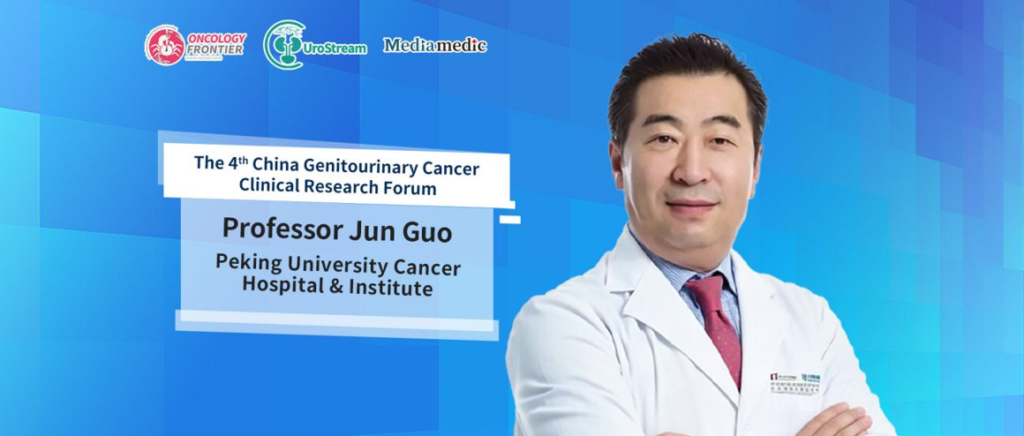
The 4th Urologic Oncology Clinical Research Conference brought together leading experts, investigators, and innovators to review the latest progress in genitourinary oncology research in China. Alongside academic forums and international expert discussions, the meeting also released the 2025 Annual Report on Chinese Genitourinary Oncology Clinical Research, offering a comprehensive overview of the field’s recent development.During the conference, Professor Jun Guo from Peking University Cancer Hospital shared his perspectives on the evolution of Chinese GU oncology research, the current challenges facing the field, the importance of international collaboration, and the future direction of innovation-driven clinical investigation.
China’s GU Oncology Research Has Entered a Rapid Growth Era
Oncology Frontier:
At this year’s conference, you presented the 2025 Annual Report on Chinese Genitourinary Oncology Clinical Research. How would you summarize the achievements of Chinese GU oncology research over the past year?
Professor Jun Guo:
Over the past three to four years, Chinese genitourinary oncology research has entered a phase of accelerated development.
At major international meetings such as ASCO GU, ASCO, and ESMO, the number of studies presented by Chinese investigators has continued to rise significantly. In both 2024 and 2025, more than 70 abstracts and posters from China were presented at these global conferences.
Equally important, an increasing number of Chinese young and mid-career investigators are now delivering oral presentations on the international stage. In 2025, Chinese research was even selected for presentation in the ESMO Presidential Symposium, reflecting the growing recognition of China’s contributions to the field.
This progress did not happen overnight. It was built upon years of effort from senior leaders in Chinese urologic oncology. Academicians and experts including Professor Xu Zhang, Professor Zhisong He, Professor Qiang Wei, Professor Dingwei Ye, and Professor Fangjian Zhou helped establish an open and internationally connected research environment.
At the same time, a new generation of investigators—including Professor Xinan Sheng, Professor Jiwei Huang, Professor Hao Zeng, Professor Yige Bao, and many others from centers across Beijing, Shanghai, Guangzhou, Tianjin, and Nanjing—have become major drivers of high-quality clinical research in China.
Together, these efforts have created the strong momentum we see today.
From “Following” to “Contributing”: Innovation Must Be the Core
Oncology Frontier:
The conference has now reached its fourth edition. Looking back, how do you think Chinese GU oncology research has evolved?
Professor Jun Guo:
People often talk about moving “from following to leading,” but we must remain objective.
Overall, Chinese GU oncology research is still largely in the “following” stage globally, although we have achieved important breakthroughs in several specific areas. There is still a long path ahead before China can truly become a comprehensive global leader in this field.
That is why innovation is so critical.
Clinical research cannot rely on repetitive small-scale studies with limited impact. Low-level repetition consumes valuable resources without producing results that truly change clinical practice.
The purpose of this conference is to encourage deeper collaboration among researchers, clinicians, and innovative pharmaceutical companies across China. We hope to accelerate the transformation of original Chinese research ideas, novel drugs, and innovative treatment strategies into globally meaningful clinical advances.
Only research that solves real clinical problems can ultimately influence international guidelines and benefit patients worldwide.
Building Internationally Influential Research
Oncology Frontier:
How can Chinese clinical research generate truly influential global results and better participate in international multicenter studies?
Professor Jun Guo:
There are two major directions we must continue to strengthen.
First, China needs deeper participation in global multicenter clinical trials. We have already contributed substantially to pivotal international studies such as EV-302 and EV-304. Participating in these trials helps bring cutting-edge therapies to Chinese patients earlier while also integrating Chinese investigators into global research networks.
Second, and even more importantly, China must strengthen original innovation.
We need more investigator-led studies and more original drugs developed in China. The goal is not only to serve Chinese patients but also to create therapies that can benefit patients worldwide.
This requires innovative thinking, strong collaboration between clinicians and pharmaceutical companies, and a focus on clinically meaningful unmet needs.
In the future, conferences like this should help reduce low-quality repetitive studies while supporting large, prospective, randomized trials that have the potential to change treatment guidelines.
That is the direction Chinese GU oncology research must move toward.
Why Global Dialogue and Collaboration Matter
Oncology Frontier:
This year’s meeting included several international dialogue sessions. Why are open collaboration and global exchange so important?
Professor Jun Guo:
International exchange is essential for scientific progress.
This conference invited globally recognized experts, including Professor Gupta from the Cleveland Clinic and Professor Tom Powles, to engage directly with Chinese investigators. The goal was not simply academic discussion, but helping Chinese researchers better understand global trends and research priorities.
For young investigators especially, having opportunities to interact directly with world-leading experts is incredibly valuable.
At the same time, innovation ecosystems must connect the entire chain—from clinical needs to laboratory research, drug development, clinical translation, and real-world application.
Only through this kind of integrated collaboration can we truly accelerate meaningful innovation.
Key Trends and Breakthroughs in 2025
Oncology Frontier:
What were the most important trends and breakthroughs highlighted in the 2025 annual report?
Professor Jun Guo:
The most obvious sign of progress is visibility on the international stage.
Years ago, Chinese representation at ASCO GU or ESMO was minimal. Today, Chinese GU oncology research contributes dozens of presentations annually, including major oral presentations and plenary-level discussions.
At the same time, we must acknowledge our weaknesses. Many domestic studies are still retrospective, single-center, and relatively small in scale. High-level prospective randomized trials remain insufficient.
However, several landmark breakthroughs have already emerged.
In urothelial carcinoma, the RC48-C016 study helped establish a new global standard for HER2-positive disease. China has also become highly competitive in ADC development targeting HER3, EGFR, and TROP2.
Although some studies are still early-stage, they reflect the future direction of GU oncology innovation.
Meanwhile, the field itself is changing rapidly. Novel ADCs, cell therapies, immune approaches, and artificial intelligence are all reshaping cancer research and drug development.
Whether China can truly keep pace—or even lead in some areas—will depend heavily on the next generation of researchers.
If this conference can help inspire and support that next generation, then it has already achieved something meaningful.
Conclusion
Chinese genitourinary oncology research has entered a new era of rapid development. From growing international visibility to increasingly influential original research, the field is steadily progressing toward higher-quality innovation.
Yet Professor Jun Guo emphasizes that true leadership requires more than publication numbers. It demands globally relevant innovation, stronger multicenter collaboration, and research that directly addresses unmet clinical needs.
With continued openness, collaboration, and scientific ambition, China’s GU oncology community is positioning itself to contribute not only to domestic cancer care, but also to the future of global oncology.
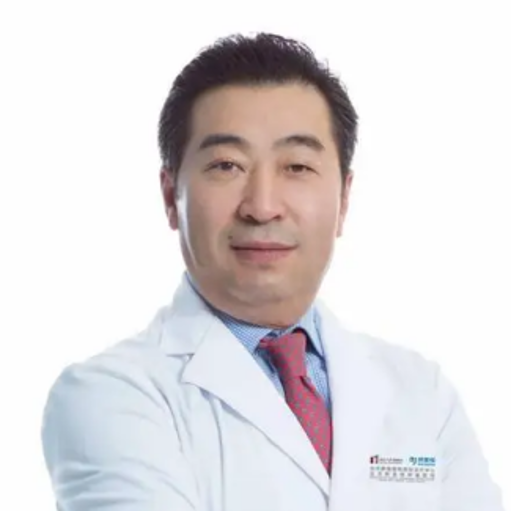
Professor Jun Guo