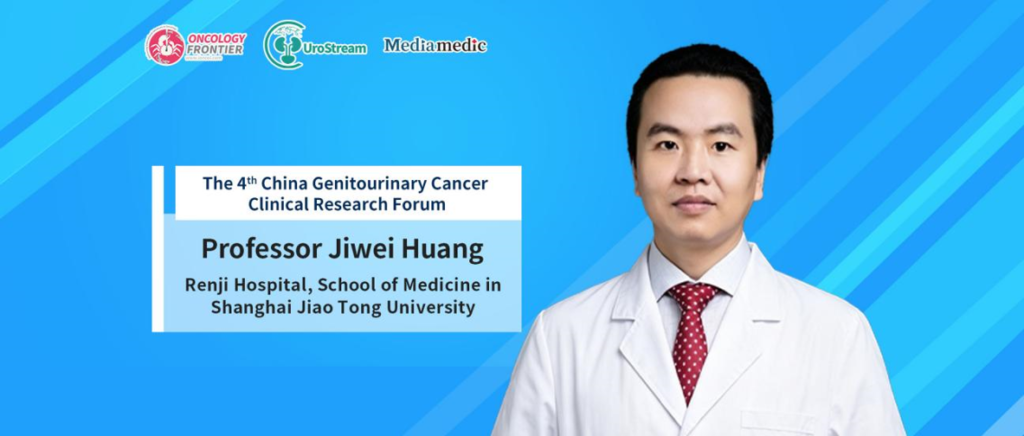
In recent years, both renal cell carcinoma and upper tract urothelial carcinoma (UTUC) have entered an era of rapid transformation, driven by advances in precision oncology, organ-preserving strategies, and systemic combination therapies.From pioneering kidney-sparing approaches for high-risk UTUC to increasingly individualized treatment strategies for non-clear cell renal cell carcinoma (nccRCC), and from the redefinition of surgery in metastatic disease to biomarker-guided patient selection, these developments are reshaping modern urologic oncology practice.
In this interview, Professor Jiwei Huang from Renji Hospital, Shanghai Jiao Tong University School of Medicine, discusses three key areas: kidney-sparing treatment for UTUC, precision therapy for nccRCC, and the evolving role of surgery in metastatic renal cancer.
Redefining Kidney Preservation in High-Risk UTUC
UroStream:
Your team’s DISTINCT-I study explored a novel kidney-sparing strategy combining endoscopic ablation with minimally invasive reconstruction. Could this eventually become a standard treatment for high-risk UTUC?
Professor Jiwei Huang:
The DISTINCT-I study focused on two major kidney-preserving approaches for high-risk UTUC.
For renal pelvic tumors, we utilized endoscopic tumor ablation. For ureteral tumors, we performed segmental ureterectomy with reconstruction or ureteral reimplantation. Combined with perioperative systemic therapy, the goal was to achieve both oncologic control and preservation of renal function.
At this stage, however, it would still be premature to define this strategy as a universal standard of care.
DISTINCT-I was a prospective, multicenter, open-label phase II study with a relatively limited sample size. Many enrolled patients either had strong desires for kidney preservation or were poor candidates for radical nephroureterectomy because of impaired renal function, solitary kidneys, or other clinical limitations.
Broader adoption will require larger studies and longer follow-up.
Importantly, patient selection remains critical. Patients with T4 disease, nodal involvement, or distant metastases are generally not suitable candidates for kidney-sparing approaches, and radical surgery remains the cornerstone for these populations.
That said, the results were encouraging. At one year, approximately 70% of patients successfully preserved their kidneys. Renal function remained stable in the kidney-sparing group, whereas patients undergoing radical surgery experienced nearly a 30% decline in renal function.
However, about 30% of patients eventually required radical nephrectomy due to recurrence or progression, indicating that the strategy still requires refinement.
One of the key future directions is biomarker-guided patient selection. In our study, HER2-positive patients—especially those with IHC 2+/3+ expression—appeared more likely to achieve deep responses with the HER2-targeted ADC plus PD-1 inhibitor combination.
We also explored urinary tumor DNA (utDNA) as a predictive biomarker. Patients who achieved dynamic molecular clearance during treatment demonstrated better long-term tumor control following kidney-sparing therapy.
These findings suggest that molecular stratification may become essential for optimizing future organ-preserving approaches.
Precision Therapy in Non-Clear Cell RCC
UroStream:
What makes non-clear cell RCC particularly challenging in the era of targeted therapy and immunotherapy?
Professor Jiwei Huang:
Non-clear cell RCC represents one of the most heterogeneous groups of kidney malignancies.
It accounts for roughly 20%–25% of renal cancers and includes multiple distinct subtypes such as papillary RCC, chromophobe RCC, collecting duct carcinoma, TFE3-rearranged RCC, and FH-deficient RCC.
The biological behavior and genomic landscape vary dramatically across these subtypes, which is precisely why treatment remains so challenging.
Although immune-targeted combinations have become the standard first-line therapy for clear cell RCC, applying the same strategies directly to nccRCC is far less straightforward.
Certain subtypes with angiogenesis-driven biology and “immune-hot” tumor microenvironments may respond relatively well to combination therapy. Others—such as collecting duct carcinoma or chromophobe RCC—often demonstrate poor responsiveness to immunotherapy alone.
This means that individualized treatment based on pathology and molecular profiling is becoming increasingly important.
Papillary RCC, for example, shares some biological similarities with clear cell RCC and has shown encouraging responses to targeted-immunotherapy combinations.
In contrast, rare molecular subtypes such as FH-deficient or TFE3-rearranged RCC may require entirely different therapeutic approaches because of their distinct biology and resistance patterns.
Future breakthroughs will depend on precise molecular classification, tumor microenvironment profiling, and identification of predictive biomarkers rather than relying on a “one-size-fits-all” treatment strategy.
Encouragingly, several Chinese studies in nccRCC have recently gained international recognition and are contributing important evidence to this evolving field.
Is Surgery Still Important in Metastatic RCC?
UroStream:
In the era of immunotherapy and dual-immunotherapy combinations, has surgery become less important in metastatic RCC?
Professor Jiwei Huang:
The value of cytoreductive nephrectomy has remained controversial for years.
During the targeted therapy era, studies such as CARMENA suggested that cytoreductive surgery does not provide universal benefit for all metastatic RCC patients. In the current immunotherapy era, we still lack large randomized trials definitively clarifying its role.
However, this absolutely does not mean surgery has become obsolete.
Instead, surgery is becoming more selective, more technically refined, and far more individualized.
For example, patients whose primary tumor accounts for the majority of total tumor burden—particularly those without extensive metastases and with good performance status—may still derive meaningful benefit from cytoreductive nephrectomy.
Removing the primary tumor can reduce overall tumor burden, alleviate symptoms such as pain and hematuria, and potentially improve the effectiveness of systemic therapy by reducing immunosuppressive signaling from the tumor microenvironment.
Another major unresolved issue involves treatment sequencing.
Should surgery be performed first, followed by systemic therapy? Or should patients receive systemic therapy initially to assess response before selecting surgical candidates?
We still do not have definitive answers.
Patients achieving complete response after systemic therapy may not require surgery at all. Meanwhile, those with partial response or stable disease might potentially benefit from consolidative surgery. Conversely, patients with progressive disease are unlikely to benefit from surgical intervention.
Ultimately, surgery is not disappearing from metastatic RCC management—it is evolving toward a far more personalized role within multidisciplinary treatment strategies.
Expert Profile
Professor Jiwei Huang Renji Hospital, Shanghai Jiao Tong University School of Medicine Expert in Urologic Oncology and Precision Surgical Oncology