The Chinese Society of Clinical Oncology (CSCO) Renal Cancer Guidelines have become one of the most influential and widely adopted clinical references in the field of kidney cancer in China. Built upon evidence-based medicine while remaining highly practical for everyday clinical use, the guidelines continue to evolve alongside rapid advances in renal cancer therapeutics.As the 2026 edition approaches release, several important updates—particularly in advanced renal cell carcinoma (RCC)—are expected to reshape treatment strategies for Chinese patients.
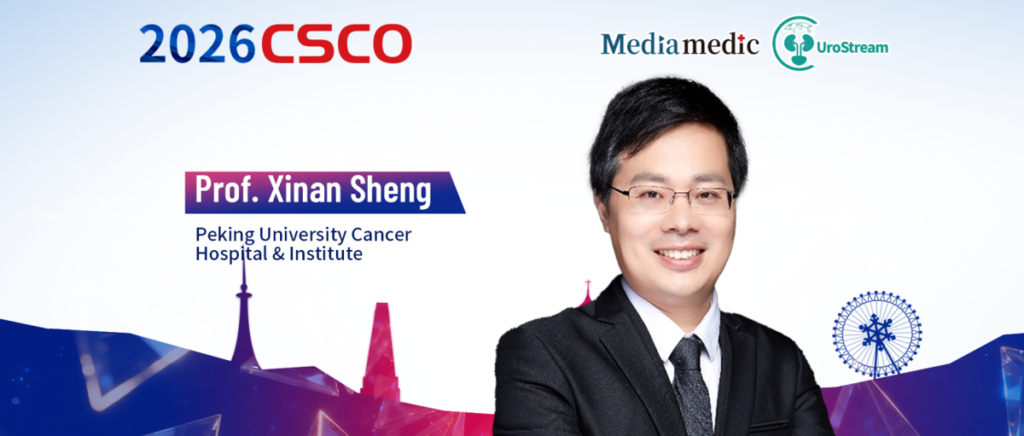
In this interview, Professor Xinan Sheng, Secretary-General of the CSCO Renal Cancer Expert Committee and Associate Director of the Department of Genitourinary Oncology at Peking University Cancer Hospital, discusses the unique strengths of the CSCO guidelines and highlights the major anticipated updates in advanced RCC management.
Why the CSCO RCC Guidelines Are Widely Adopted in China
Oncology Frontier:
The CSCO Renal Cancer Guidelines are highly recognized among clinicians across China. What makes them so practical and widely applicable in real-world clinical practice?
Professor Xinan Sheng:
The greatest strength of the CSCO Renal Cancer Guidelines is that they are designed specifically around real clinical practice in China.
The format itself is highly practical. Recommendations are presented in streamlined algorithms and tables, allowing clinicians to quickly identify appropriate treatment strategies for different clinical scenarios. This makes the guidelines easy to consult during daily practice.
Two principles guide every recommendation.
First, all recommendations are grounded in high-level evidence-based medicine. Second, the guidelines carefully consider drug accessibility within China.
This balance is extremely important. A treatment recommendation is only truly meaningful if it is both scientifically validated and realistically available to Chinese patients.
The guideline also uses a tiered recommendation system—Level I, II, and III recommendations—which clearly distinguishes the strength of evidence and clinical applicability. This structure helps physicians make standardized treatment decisions while also improving patient understanding of therapeutic options.
Another key advantage is the annual update cycle. The CSCO guidelines rapidly incorporate newly published pivotal trials, newly approved indications, and emerging treatment paradigms in genitourinary oncology.
Most importantly, the guidelines prioritize evidence generated from Chinese patient populations whenever possible. Compared with overseas datasets, Chinese clinical data often provide more relevant information regarding efficacy, safety, tolerability, and real-world accessibility for domestic practice.
Ultimately, the reason the CSCO RCC Guidelines have become deeply integrated into Chinese clinical care is simple: they address real-world clinical needs with clear, actionable recommendations.
Two Major Expected Updates in Advanced RCC
Oncology Frontier:
Advanced RCC remains one of the fastest-evolving fields in oncology. What are the most important updates expected in the 2026 guidelines?
Professor Xinan Sheng:
The most important anticipated updates this year are concentrated in the post-first-line treatment setting for advanced RCC.
Over the past year, several major phase III trials reported positive results and generated high-level evidence likely to influence future recommendations.
Two studies are especially noteworthy.
Fruquintinib Plus Sintilimab After Prior Targeted Therapy Failure
The first is a Chinese multicenter phase III trial evaluating fruquintinib plus sintilimab in advanced RCC patients who had progressed after prior targeted therapy.
This study was particularly important because it was led by Chinese investigators and focused specifically on Chinese patients.
Fruquintinib is an oral anti-angiogenic tyrosine kinase inhibitor developed in China, while sintilimab is a domestically developed PD-1 inhibitor.
The combination demonstrated significant survival benefits in patients who had failed prior targeted therapy, providing high-level evidence for immune-targeted combination therapy in the post-targeted treatment setting.
Historically, there has been a relative lack of guideline-supported options after targeted therapy failure. This study helps address that gap.
The indication is currently under regulatory review and may soon receive formal approval in China.
Lenvatinib Plus Belzutifan After Frontline IO-TKI Therapy Failure
The second major update is expected to come from the LITESPARK-011 phase III study.
As IO-TKI combinations have become standard first-line therapy in advanced RCC, the number of patients progressing after frontline immunotherapy-targeted combinations continues to grow rapidly. Managing this population has become a major unmet clinical need.
LITESPARK-011 evaluated lenvatinib plus belzutifan versus standard therapy in patients whose disease progressed after first-line immune-targeted treatment.
Belzutifan, the first approved HIF-2α inhibitor, represents a completely new therapeutic mechanism in RCC.
The study demonstrated significant improvement in progression-free survival and other key endpoints, establishing strong evidence for this combination in a difficult-to-treat population.
Importantly, both drugs are already available in China, making clinical implementation more feasible.
How These Studies May Reshape the Guidelines
Professor Xinan Sheng:
Based on these two pivotal studies—and considering both the strength of evidence and domestic drug accessibility—the upcoming CSCO guideline update will likely revise recommendation levels in the advanced RCC treatment section.
These updates are expected to significantly expand post-line treatment options and further improve treatment standardization across China.
As renal cancer therapy continues to evolve rapidly, the goal of the CSCO guidelines remains consistent: to provide Chinese clinicians with clear, evidence-based, and clinically applicable recommendations that truly improve patient outcomes.
Expert Profile
Professor Xinan Sheng Secretary-General, CSCO Renal Cancer Expert Committee Associate Director, Department of Genitourinary Oncology Peking University Cancer Hospital