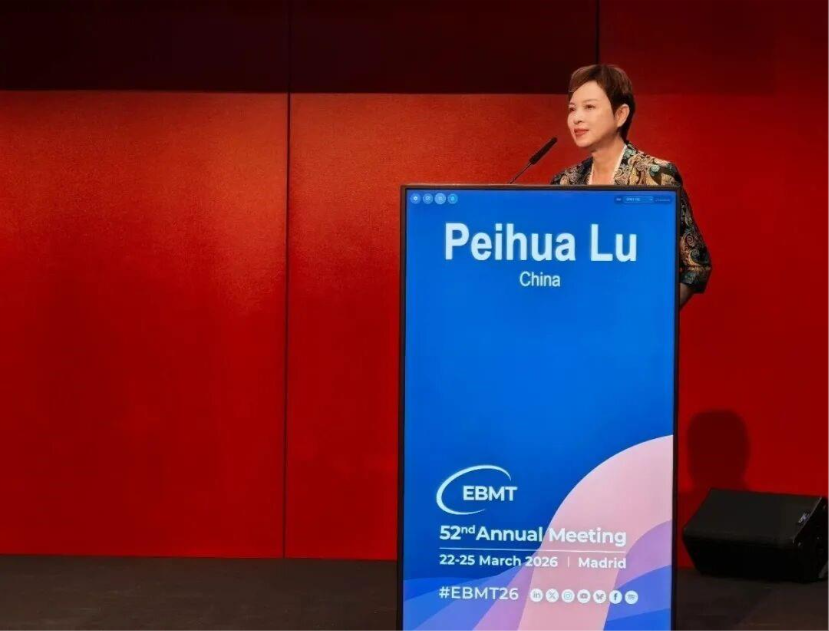
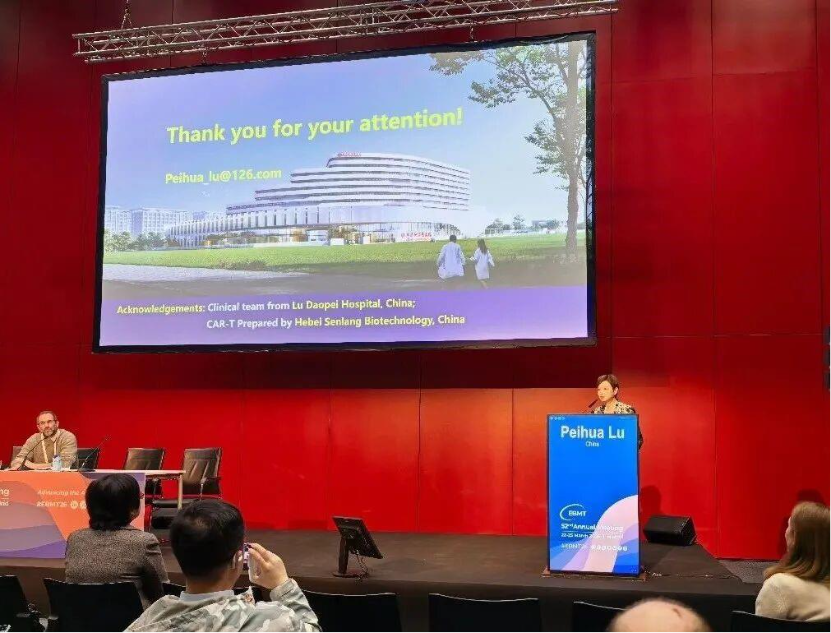
As hematologic malignancy treatment advances toward precision medicine and cellular therapy, relapsed/refractory mixed phenotype acute leukemia (MPAL) remains a major clinical challenge due to its rarity and aggressive nature. At EBMT 2026, Prof. Lu Peihua presented the latest clinical data on CD7-targeted CAR-T therapy in MPAL, highlighting the efficacy and safety of NS7 CAR-T in high-risk populations, and exploring optimized strategies combining CAR-T with transplantation. This work provides important new clinical evidence and opens a promising therapeutic pathway for MPAL.
Q1. How should CD7 CAR-T be positioned in MPAL treatment?
MPAL is an extremely rare subtype, accounting for only 1%–3% of adult acute leukemias. Once the disease becomes relapsed or refractory, prognosis is very poor and conventional therapies are often ineffective.
Against this backdrop, CD7-targeted CAR-T therapy has emerged as a meaningful breakthrough. At our center, more than 400 patients have been treated with CD7 CAR-T—particularly NS7 CAR-T—with overall encouraging outcomes. In the MPAL subgroup, results have been especially notable despite the high-risk nature of the cohort: about 30% of patients had relapsed after a prior allogeneic transplant (with one patient having undergone two transplants), and 40% had extramedullary disease.
Even in this setting, a 90% MRD-negative complete remission rate was achieved. Among patients with bulky extramedullary lesions, the response rate exceeded 60%. These outcomes represent a significant advancement for a population that previously had extremely limited options.
However, given the aggressive biology of MPAL, CAR-T alone is not yet sufficient for long-term disease control. Current evidence supports a combined strategy in which CAR-T is followed by allogeneic hematopoietic stem cell transplantation. With this approach, the 3-year disease-free survival reaches approximately 55%, suggesting a potential for cure—something rarely achievable before the advent of CAR-T.
Looking ahead, there is strong interest in moving this strategy earlier in the treatment course, not only for MPAL but also for T-ALL/LBL and other suitable patient populations.
Q2. What are the advantages of the “natural selection” NS7 CAR-T approach?
NS7 CAR-T employs a “natural selection” strategy that avoids gene editing while overcoming CD7-mediated fratricide. In our clinical experience, the manufacturing success rate approaches 98% or higher, even in patients with a high burden of circulating malignant cells—up to 60% in some cases.
The production cycle is relatively short, around two weeks, and most patients require only a single infusion. Importantly, the process avoids complex gene-editing steps, making it more streamlined and potentially more accessible.
That said, as an autologous product, NS7 CAR-T still requires individualized manufacturing for each patient, which remains a logistical limitation. While most current CAR-T therapies—including CD7 CAR-T—are autologous, there is growing global interest in universal, off-the-shelf CAR-T products. Our center is actively involved in developing and testing such approaches, which may further expand treatment accessibility in the future.
Q3. How should CAR-T and transplantation be integrated?
Ideally, both patients and clinicians would prefer a single therapy capable of achieving cure. However, in T-cell malignancies, including MPAL, this goal has not yet been realized due to the highly aggressive nature of the disease.
Current evidence—both from our center and from published studies—consistently demonstrates the benefit of consolidation with allogeneic transplantation after CAR-T therapy. Without transplantation, relapse remains common. In contrast, patients who undergo transplant after CAR-T show significantly improved long-term outcomes, with approximately 50%–60% achieving durable survival at 3 to 5 years.
Timing is critical. Based on our experience, transplantation within three months after CAR-T is optimal. In particularly high-risk cases, especially those treated with off-the-shelf CAR-T products, transplantation may need to be performed even earlier—within two months—to minimize relapse risk. Achieving complete remission, especially MRD negativity, before transplantation is key to maximizing outcomes.
While CAR-T alone may eventually evolve into a curative approach, at present, a sequential strategy combining CAR-T and transplantation remains the most effective option.

Study Overview
Abstract ID: OS08-05 CD7 CAR-T Therapy Demonstrates Promising Efficacy and Safety in R/R MPAL
This phase I study (NCT04938115) evaluated CD7 CAR-T therapy in CD7-positive relapsed/refractory MPAL.
A total of 20 patients were included, with a median age of 26.5 years (range 8–58). At baseline, the median bone marrow blast percentage was 12.0% (0.08–74.4%), and 8 patients had extramedullary disease. Six patients had relapsed after prior allogeneic transplantation.
All patients received a single infusion of NS7 CAR-T cells, with 5 receiving low-dose (1–5 × 10⁵/kg) and 15 receiving medium-dose (1.0 × 10⁶/kg). The median transduction efficiency was 96.6% (32.0%–99.1%), and the median manufacturing time was 14 days.
At one month post-infusion, 18 of 20 patients (90%) achieved MRD-negative complete remission. Among the 8 patients with extramedullary disease, the overall response rate was 75% (5 CR, 1 PR). Overall, 15 patients achieved complete remission in both bone marrow and extramedullary sites.
With a median follow-up of 248 days (range 55–1810), the 3-year overall survival and leukemia-free survival for the entire cohort were 52.6% and 36.4%, respectively. Among 12 patients who underwent consolidation transplantation within three months, 3-year OS and LFS improved to 64.2% and 55%.
In terms of safety, most patients experienced only mild cytokine release syndrome (95% grade ≤2), with one case of grade 3 CRS and no neurotoxicity observed. Among patients with prior transplantation, two cases of GVHD were reported (one grade I, one grade IV).
CAR-T expansion peaked at a median of 82.5% in peripheral blood (day 14), while the median peak CAR copy number was 3.64 × 10⁵ copies/µg DNA (day 19).
Conclusion
NS7 CAR-T represents a highly promising therapeutic option for CD7-positive MPAL, including patients who relapse after transplantation. Consolidation with allogeneic transplantation further improves survival outcomes. Longer follow-up and larger studies are needed to confirm long-term durability.
Expert Profile

Prof. Lu Peihua is a leading hematologist at Lu Daopei Hospital and serves as President of the Beijing Lu Daopei Institute of Hematology. She has extensive experience in stem cell transplantation and cellular immunotherapy, with major contributions to translational research and clinical innovation in hematologic malignancies.