
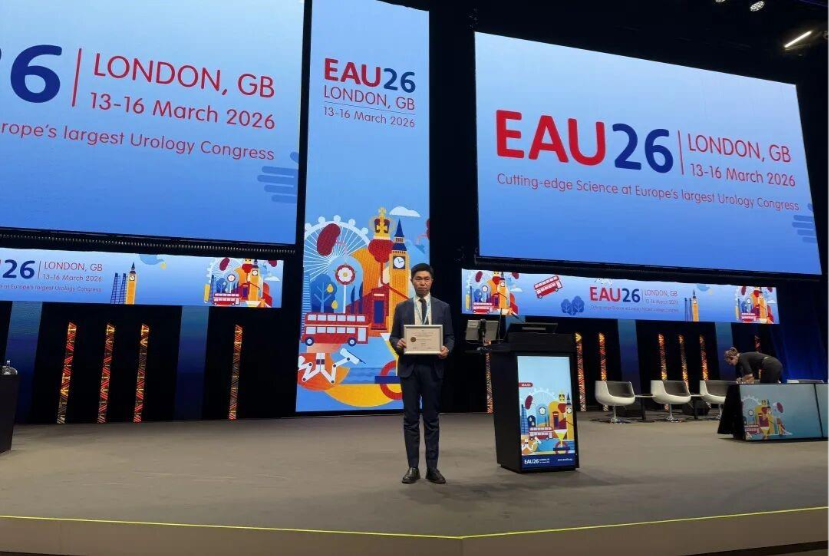
With the publication of landmark studies such as EV302 and RC48-C016, the combination of antibody–drug conjugates (ADCs) and immunotherapy has firmly established its role as a new standard in the treatment of advanced urothelial carcinoma. Despite these advances, variability in clinical benefit remains evident, highlighting the need to identify more refined predictive biomarkers. At the 2026 European Association of Urology Annual Congress (EAU26), the team led by Prof. Peng Wu from Nanfang Hospital, Southern Medical University, presented an exploratory study focused on biomarkers associated with response to ADC–immunotherapy combinations. The study was awarded the Second Prize for Best Abstract in the Oncology category, underscoring both its scientific merit and clinical relevance. In light of this recognition, Prof. Wu shared key insights into the rationale, findings, and future implications of this work.

Expanding Beyond Tumor-Centric Biomarkers
In clinical practice, Prof. Wu and his colleagues observed a clear disparity in outcomes among patients receiving disitamab vedotin in combination with tislelizumab. While some patients achieved substantial and durable responses, others derived only limited benefit. Traditional biomarkers such as HER2 expression and PD-L1 status, although important, proved insufficient to fully account for these differences.
This observation prompted the team to explore the gut microbiome as a potential determinant of treatment response. Increasing evidence suggests that the gut microbiota exerts systemic effects on host immunity, influencing immune tone far beyond the gastrointestinal tract. In the context of immunotherapy, the microbiome may serve as a critical factor in determining whether a patient possesses a favorable immune environment capable of mounting an effective antitumor response.
The key clinical implication of this study lies in its conceptual shift. Rather than focusing solely on tumor-intrinsic characteristics, it incorporates host-related biological factors, thereby broadening the framework of precision oncology. This approach opens new possibilities for patient stratification and individualized therapeutic decision-making.
Mechanistic Insights: From Gut to Tumor Microenvironment
Although the gut microbiome is anatomically distant from the bladder, it functions as a systemic regulator of immune activity. Certain microbial communities promote the activation of dendritic cells, enhance cytokine signaling, and improve the functional capacity of CD8-positive T cells. These immune effects are ultimately reflected within the tumor microenvironment, influencing whether it adopts an immune-active or immune-suppressed state.
In this study, patients with a favorable microbiome profile demonstrated a tumor microenvironment characterized by increased IL-12 signaling, elevated CXCL9 and CXCL10 expression, and greater infiltration of CD8-positive T cells, alongside reduced M2 macrophage polarization. This immunologically active environment was associated with improved responses to the combination of RC48 and tislelizumab.
At the compositional level, enrichment of Akkermansia, Ruminococcaceae, and Bifidobacterium correlated with higher response rates and longer progression-free survival, whereas increased abundance of Fusobacterium and Enterococcus was associated with poorer outcomes. Importantly, functional validation in preclinical models confirmed that the microbiome plays an active role in modulating treatment efficacy. Antibiotic exposure diminished therapeutic response, while fecal microbiota transplantation from responding patients or supplementation with Akkermansia-enriched communities restored antitumor activity.
Toward Clinical Translation
Building on these findings, the team developed a predictive model termed the Microbiome Response Index. Early results suggest that this model has promising predictive performance; however, several steps are required before it can be integrated into routine clinical practice. These include validation in larger and more diverse patient populations, standardization of sample collection and analytical pipelines, and consideration of practical factors such as cost and turnaround time.
Beyond prediction, the study also raises the possibility of therapeutic intervention. Preclinical data indicate that modulation of the gut microbiome may enhance sensitivity to ADC–immunotherapy combinations. Strategies such as dietary modification, probiotic supplementation, and fecal microbiota transplantation may, in the future, offer avenues to improve outcomes in patients who are initially less responsive. Nevertheless, these approaches will require rigorous prospective clinical validation before widespread adoption.
A Biological Basis for Synergy
A key insight from the study is the mechanistic interplay between ADCs and the host immune system. Disitamab vedotin does not merely induce tumor cell death; it may also trigger immunogenic cell death, leading to the release of danger-associated signals that enhance immune recognition. The gut microbiome, in turn, primes the immune system, ensuring that dendritic cells and cytotoxic T cells are prepared to respond effectively to these signals. The therapeutic synergy observed between ADCs and immunotherapy may therefore depend, at least in part, on the underlying immune readiness shaped by the microbiome.
Redefining Precision Oncology
Compared with traditional biomarker strategies centered on HER2 or PD-L1, this research introduces a more comprehensive paradigm that integrates both tumor characteristics and host biology. Treatment response is no longer viewed as a function of tumor features alone, but as the result of dynamic interactions between the tumor and the host immune environment.
This perspective represents a meaningful step forward in precision oncology, emphasizing the importance of systemic factors in shaping therapeutic outcomes.
Future Directions
Prof. Wu emphasized that the broader significance of this work lies in its demonstration of multidisciplinary integration. Modern oncology increasingly relies on the convergence of tumor biology, immunology, microbiome science, and computational analysis. Such approaches are driving the evolution of urology toward a more research-oriented and translationally focused discipline.
Looking ahead, the team plans to expand multicenter validation efforts to enhance the robustness and generalizability of microbiome-based predictive models. At the same time, they aim to explore interventional strategies that may enable clinicians not only to predict treatment response, but also to actively improve it. This shift from prediction to intervention may ultimately represent one of the most promising frontiers in the management of urothelial carcinoma.
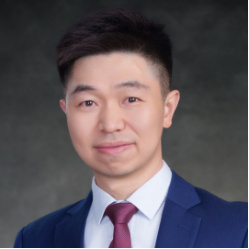
Prof. Peng Wu