
The 41st Annual Congress of the European Association of Urology (EAU26) was held in London, UK, from March 13–16, 2026, serving as one of the most influential academic platforms in global urology.
This year’s meeting featured a dedicated session on “Cytoreductive Treatment in mHSPC”, highlighting cutting-edge research in metastatic prostate cancer.
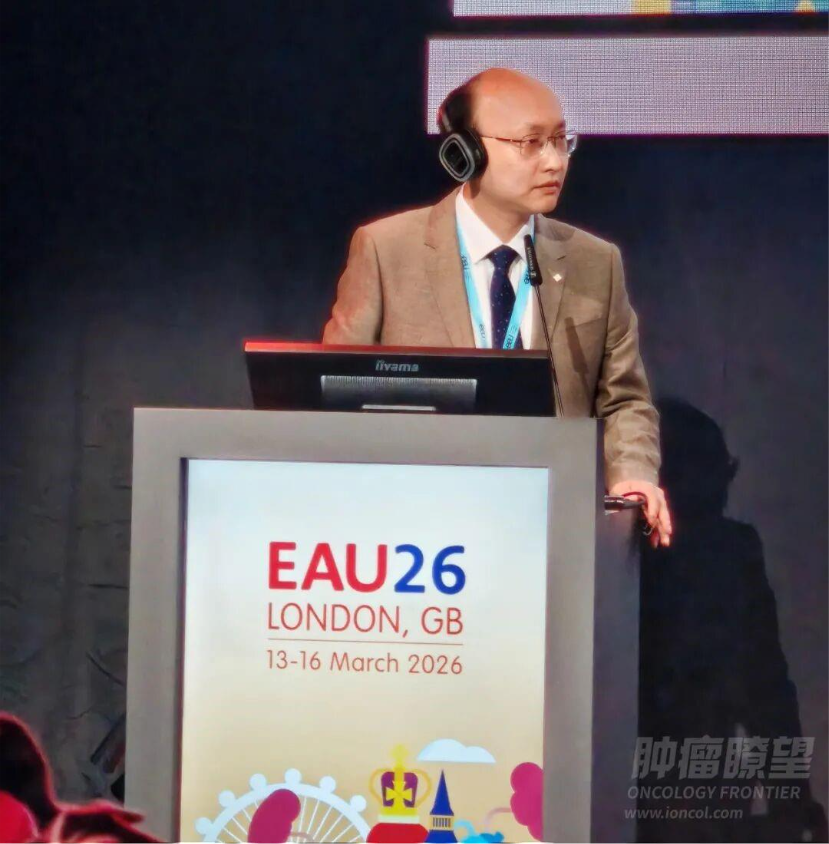
A study led by Prof. Jianming Guo from the Department of Urology at Zhongshan Hospital, Fudan University, presenting a novel treatment strategy for oligometastatic prostate cancer—combining hormone therapy with cytoreductive surgery (CHoM)—was selected for this session (Abstract No. P0156). The findings were presented on-site by Dr. Lei Xu, facilitating in-depth discussion and academic exchange.



A New Strategy for a Challenging Disease State
Prostate cancer is the second most common malignancy among men worldwide and represents a major threat to men’s health. In China, 20.5% of newly diagnosed prostate cancer cases present with metastatic disease, significantly higher than the 8% reported in the United States, posing substantial challenges for clinical management.
Among these patients, oligometastatic prostate cancer (omPC) represents an intermediate state between localized disease and widespread metastasis. The optimal treatment strategy for this subgroup has long remained controversial.
Recently, a multicenter prospective study led by Prof. Jianming Guo and Associate Chief Physician Dr. Lei Xu, in collaboration with several medical institutions, has provided new hope for these patients. The study explored a combined treatment approach of hormone therapy (HT) plus cytoreductive surgery, demonstrating significant benefits in delaying disease progression and improving quality of life.
Study Design
Oligometastatic prostate cancer is defined as a disease with limited metastatic burden, typically three or fewer bone metastases without visceral metastasis. Due to its relatively less aggressive biological behavior, this condition may provide a therapeutic window for intensified local treatment.
Traditionally, treatment for such patients has mainly relied on systemic hormone therapy alone, which often yields limited efficacy and may lead to progression to castration-resistant prostate cancer (CRPC), significantly complicating subsequent treatment.
To identify a more effective strategy, the research team conducted a five-year prospective multicenter study, ultimately enrolling 201 eligible patients with oligometastatic prostate cancer:
- 69 patients received hormone therapy alone
- 132 patients received hormone therapy combined with robot-assisted radical prostatectomy
Significant Clinical Benefits with Combined Therapy
The results demonstrated clear clinical advantages for the combined treatment strategy.
PSA Response
- 93.9% of patients in the combination group achieved PSA <0.2 ng/mL, a key prognostic indicator in prostate cancer
- This was significantly higher than the 76.8% observed in the hormone therapy–only group
Time to PSA Nadir
Patients in the combination group reached PSA nadir significantly faster:
- 27 weeks in the combination group
- 39 weeks in the hormone therapy group
Disease Progression
Most importantly, the combination therapy significantly prolonged time to disease progression (P = 0.002).
Multivariate analysis confirmed that cytoreductive surgery was an independent protective factor for prognosis:
- Hazard ratio (HR) = 2.201
- P = 0.008
This indicates that patients undergoing surgery had a substantially lower risk of disease progression.
Safety and Quality of Life
The combined treatment strategy also demonstrated favorable outcomes in terms of safety and patient-reported quality of life.
Surgical Safety
- Postoperative complication rate: 62.2%
- All complications were mild (Clavien–Dindo grade I–II)
- No severe adverse events were observed
Functional Recovery
At 12 months after surgery:
- Urinary continence rate reached 89.4%, comparable to outcomes observed in patients undergoing surgery for localized prostate cancer.
Improved Quality of Life
Patients in the combined therapy group reported significantly better quality-of-life outcomes.
After one year:
- Urinary retention incidence:
- Combination group: 4.5%
- Hormone therapy group: 17.4% (P = 0.002)
Quality-of-life assessments using the EQ-VAS and EQ-5D-5L scales showed significantly higher scores in the combination group across multiple domains, including:
- Overall health status
- Life satisfaction
(P < 0.001 and P = 0.001, respectively)
These findings highlight the ability of the combined approach to improve both oncologic outcomes and patient quality of life.
Rethinking Treatment for Metastatic Prostate Cancer
This study challenges the traditional notion that metastatic prostate cancer should be treated exclusively with systemic therapy.
By removing the primary tumor, cytoreductive surgery can:
- Rapidly reduce tumor burden
- Enhance the efficacy of systemic therapy
- Alleviate local symptoms such as urinary retention
The use of robot-assisted surgery further provides advantages of precision and minimal invasiveness, reducing surgical trauma and facilitating faster recovery.
Future Perspectives
Local treatment strategies for oligometastatic prostate cancer are rapidly emerging as a major research focus in urology.
This multicenter prospective study, with its large sample size and long-term follow-up, provides high-level clinical evidence supporting the use of cytoreductive surgery in oligometastatic prostate cancer and may help inform future clinical guideline updates.
Looking ahead, with the expansion of randomized controlled trials and the increasing use of advanced imaging technologies such as PSMA-PET, treatment for oligometastatic prostate cancer is expected to become increasingly personalized and precise, offering new hope for long-term survival in more patients.

Prof. Jianming Guo

Dr. Lei Xu