Editor’s Note: The 9th West China Uro-Oncology Tianfu Academic Conference and the 11th Annual Meeting of the Sichuan Anti-Cancer Association Genitourinary Tumor Committee was successfully held in Chengdu from November 10–16, 2025. The event brought together leading domestic and international experts in urologic oncology, covering clinical data interpretation, translational research advances, challenging case discussions, and the exploration of diagnostic and therapeutic frontiers. Oncology Frontier – UroStream invited Prof. Qiang Wei, Conference Chair and Professor at West China Hospital of Sichuan University, to share conference highlights, China’s cutting-edge breakthroughs, and future challenges.
01
Oncology Frontier – UroStream: As the Conference Chair, could you share the major highlights of this year’s meeting?
Prof. Qiang Wei:
This year’s conference—our 9th Tianfu Uro-Oncology Academic Meeting and the 11th annual congress of the provincial association—was truly distinctive.
First, in terms of faculty, the speaker lineup was exceptionally strong. We welcomed world-leading experts such as Prof. Allen Gao (University of California, Davis), Prof. Haojie Huang (Mayo Clinic), and Prof. Yuzhuo Wang (University of British Columbia). Key leaders from major national organizations—including Academician Zhang Xu (CUA), Prof. Xing Nianzeng (CUDA), and Prof. Guo Jun (CSCO)—as well as chairs of CACA prostate, urothelial, and kidney cancer committees, all attended. It was genuinely a gathering of distinguished scholars and the most influential voices in the field.
Second, the scientific program was exceptionally rich. The meeting provided a comprehensive review of global advances over the past year across urologic oncology, while also showcasing major contributions from Chinese researchers. From basic science to clinical innovation, the quality of presentations reached an all-time high.
Finally, I must highlight the remarkable performance of young investigators. Their curiosity, innovation, and academic maturity were fully displayed—from active participation in our three-day pre-conference reading workshop to impressive presentations during the main sessions. Their emergence demonstrates that the future of urologic oncology in China is bright and full of talent.
02
Oncology Frontier – UroStream: Chinese uro-oncology research is increasingly featured in top international journals. Which studies do you believe have the potential to reshape future clinical practice?
Prof. Qiang Wei:
A representative example is the RC48-C016 study, which evaluated the ADC disitamab vedotin (RC48) combined with toripalimab for advanced urothelial carcinoma. The impressive efficacy results were published in the New England Journal of Medicine, underscoring its global impact.
This study not only marks a milestone for Chinese original research but is also poised to change future clinical practice. More related trials are underway, and we expect broader benefits for patients as evidence continues to accumulate. RC48-C016 stands as an iconic example of China’s capacity for practice-changing innovation.
03
Oncology Frontier – UroStream: West China Hospital has accumulated substantial experience in precision medicine and translational research. What opportunities and challenges do you foresee as these findings move toward broader clinical implementation? How do you view the future treatment landscape in uro-oncology?
Prof. Qiang Wei:
Under the leadership of Prof. Zeng Hao, our team—together with multiple top-tier Chinese centers—has conducted a series of investigator-initiated trials (IITs) in non–clear-cell renal cell carcinoma, achieving noteworthy results.
However, scaling these early-phase successes into large, multinational phase III trials presents significant challenges, including funding, coordination, and operational complexity. Therefore, we look forward to closer partnerships with pharmaceutical companies to advance these early findings into global multi-center studies.
Looking ahead, treatment for urologic cancers will become increasingly diversified and integrated. In addition to surgery—still a cornerstone—systemic therapy will play an expanding role. Emerging modalities such as PARP inhibitors, antibody–drug conjugates (ADCs), and radioligand therapies offer new avenues to improve patient outcomes. These innovations hold great promise for reshaping the therapeutic landscape and improving survival for patients with urologic malignancies.


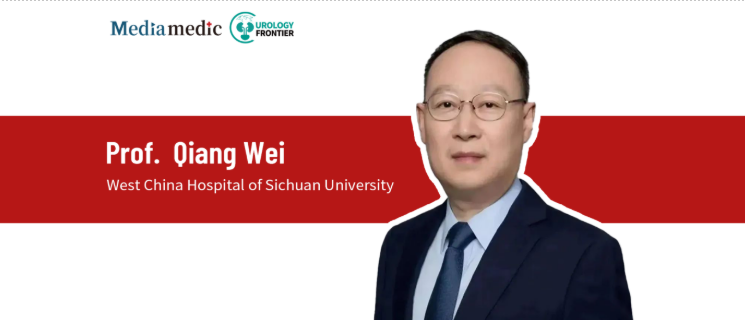
Prof. Qiang Wei
West China Hospital, Sichuan University